
ISSUE 02
GrimFest: The never-ending garden party
2026
Words & visuals: Maria Halse
It began with 320 handwritten invitations, a paddling pool filled with beer cooled by foul-smelling ice cubes, and a concert programme held together by favours and goodwill. On a run-down farm outside Aarhus, Aage Stokholm and his friends built a festival that kept growing — but never enough to lose the feeling of a garden party. Over the past twenty years there have been financial crises, a pandemic, and painful growing pains, but Grim is still driven by the same idea: that people want to stick around when you let them become part of something.
In the winter of 2004, a car packed to breaking point with twenty-something guys and their ski gear headed towards the Norwegian mountains. Aage and his friends were chasing a cheap ski holiday, but Aage tends to leave his mark wherever he goes. Before he had even made it down the slopes, he had gained both new Norwegian friends and a job offer at the ski resort. And why not? The few obligations waiting for him back in Aarhus could wait, and thankfully, the shared farmhouse he lived in was not going anywhere.
He stayed on as a ski bum for the rest of the season and earned decent money, despite the price of Norwegian beer. And speaking of beer: the Norwegians had heard rumours about cheap lager in Denmark and wanted to come visit. There was plenty of room at the shared farmhouse back home, so to celebrate their return, the plan was to throw a garden party.
At least, that was the original idea. Aage and the others returned to the Danish spring with money in their pockets, nowhere they needed to be, and the whole summer stretched out ahead of them. »What should we do?« »Whatever we feel like.« »But can we afford it?« »Yes.«
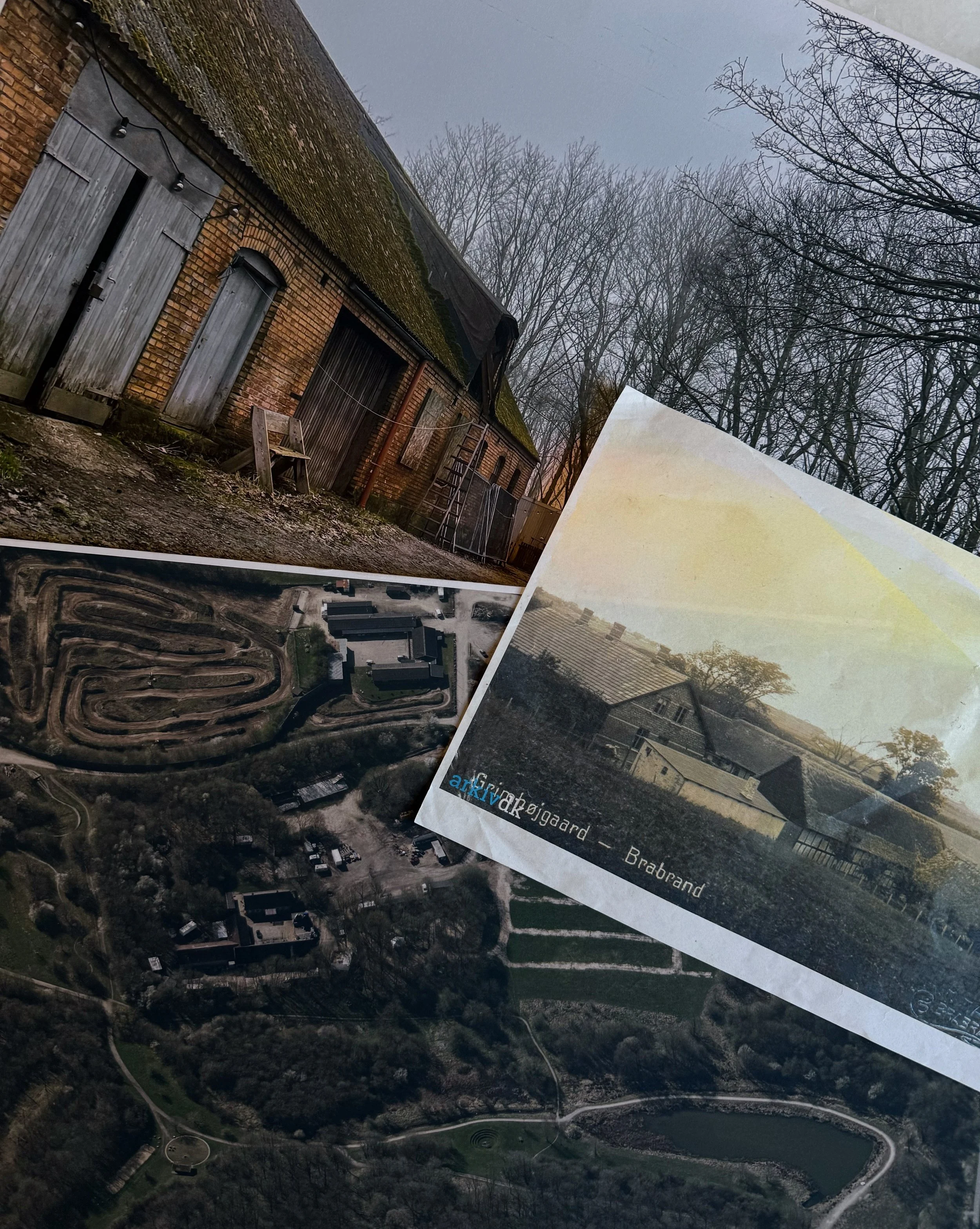
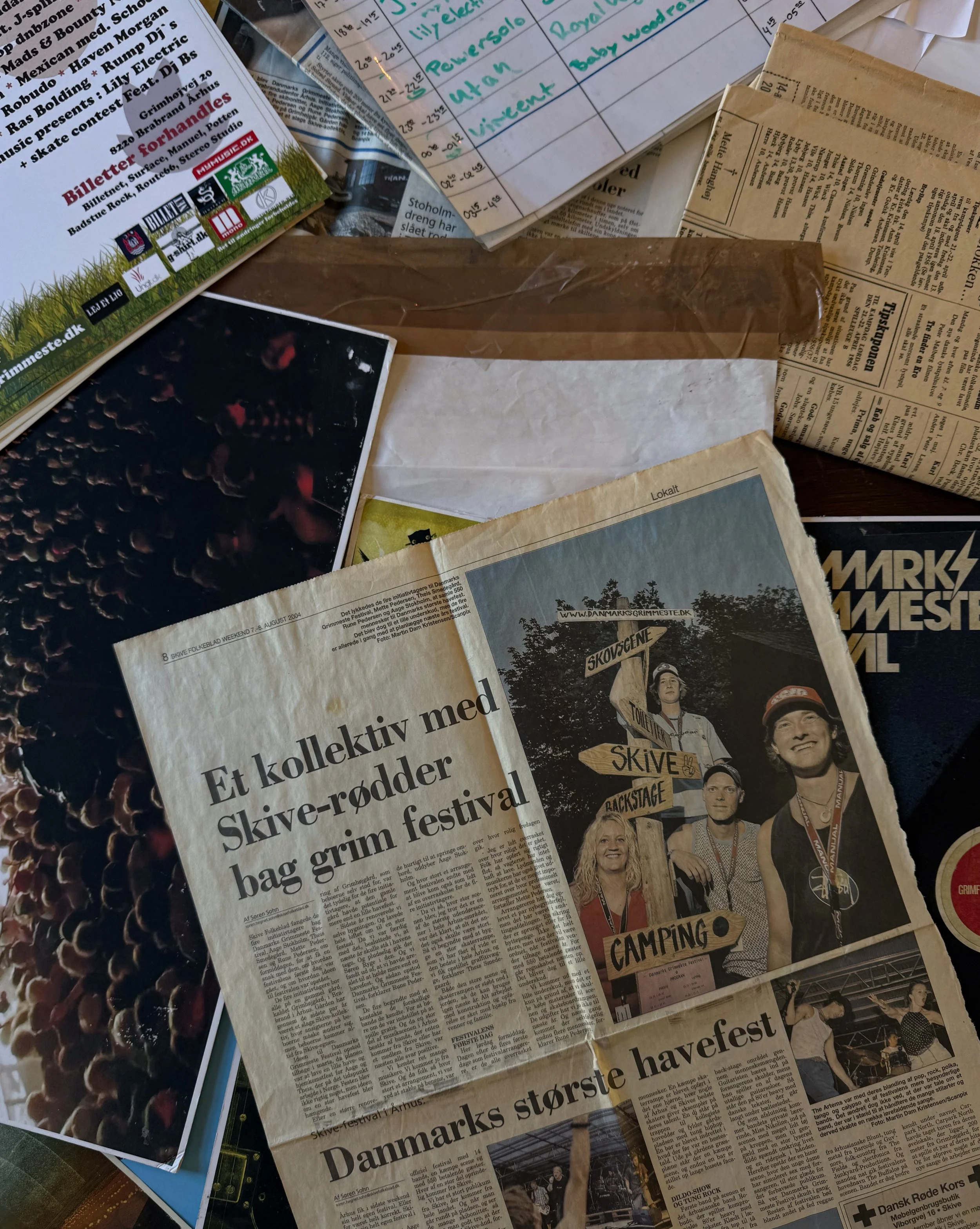
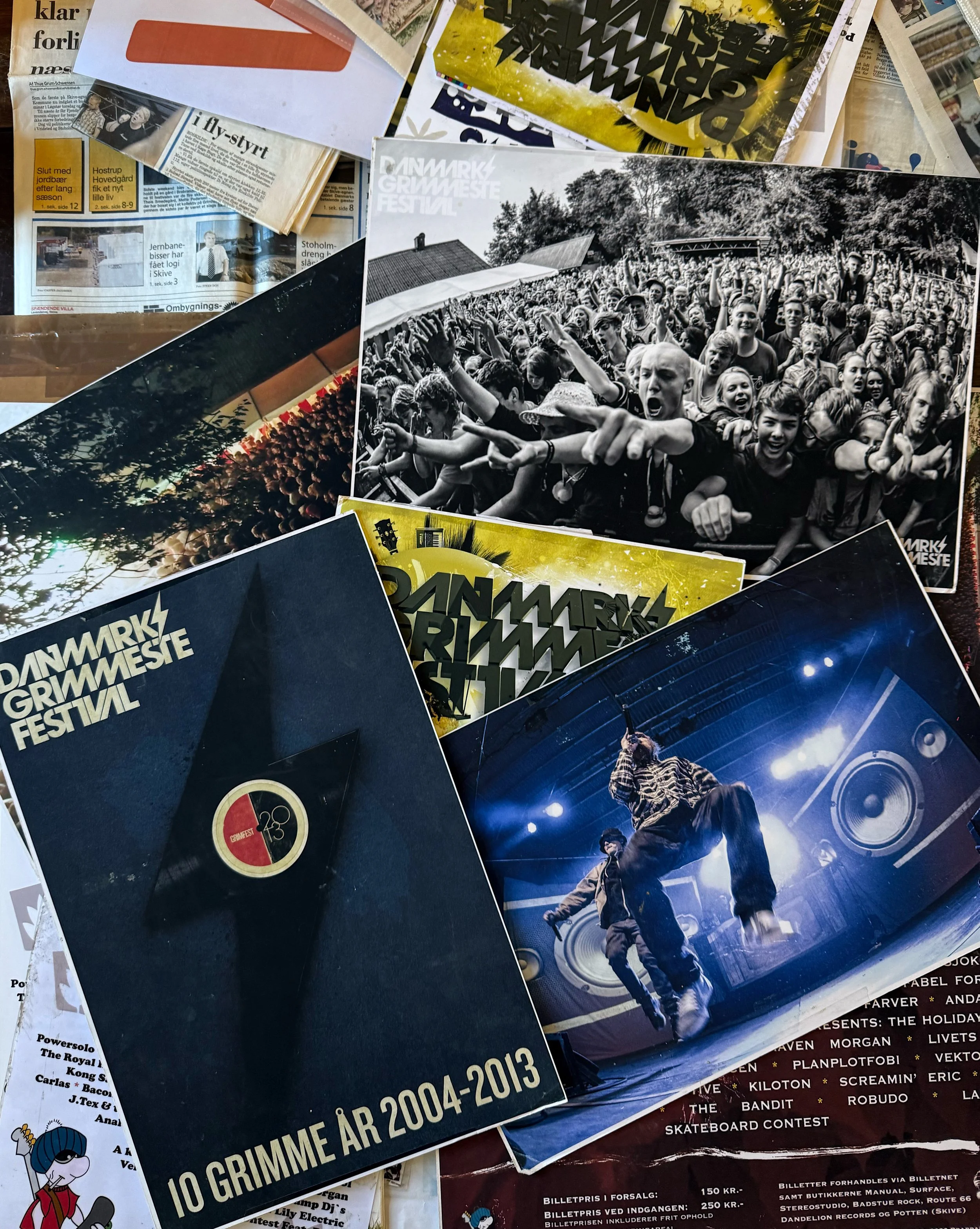
From the GrimFest archives
The only thing on the calendar was the welcome-home party they had promised their Norwegian friends — and that was not until August. Which left them an entire summer to patch up the ramshackle farm they lived on. Somewhere along the way, the idea of a garden party began to take on a life of its own.
They mailed out 320 invitations. Every address was handwritten, every stamp licked and stuck on one by one. Back in 2004 there were no Facebook events, ticketing systems or newsletters — it was homemade and hopeful:
»Welcome to Grim Fest. Transfer €10 to our account and we’ll provide potato salad, beer and good music.«
»To be 20 years old and have a truckload of beer redirected to your own address — that’s quite an achievement!«
— Aage Stokholm, festival director
From the very beginning, it was ambitious and wholehearted. They registered for VAT, hired an electrician for stage power, set up a campsite for overnight guests, and booked 27 bands. They walked into the local discount supermarket and asked for €6,700 worth of beer, and the bewildered cashier had no idea how to ring up that kind of amount. »To be 20 years old and have a truckload of beer redirected to your own address — that’s quite an achievement!«
It was something of a miracle to persuade bands to play unpaid at an unknown festival on a worn-out farm outside Aarhus. But thanks to roots in the North Jutland music scene, word spread like wildfire, and soon the program was overflowing — including the major Danish electro-rock band Carpark North. It was the coup of all coups, but they were listed under the alias The Buffalos. Aage wanted to avoid them overshadowing the bands plugging in their instruments for the very first time.
»Even though we could sell tickets on the back of it, that was never what it was about. The woman at the bank even asked what the hell we thought we were doing.«
500 guests turned up for the very first Grim Fest, and it was a huge success. But it was never meant to happen again. The beer had been cooled in giant paddling pools with faintly fishy ice cubes hauled in from Aarhus Harbour.
Somewhere along the way the labels floated off, and despite a generous deal with the dear cashier at the supermarket, the remaining beers were suddenly impossible to return. Aage remembers the days after the festival, when he and his friends floated around in 5,000-litre paddling pools on air mattresses, surrounded by beer:
»That whole feeling of the supermarket truck pulling up at our place, the festival having gone well, everything just feeling amazing — and lying there reaching out your hand and finding another cold beer floating beside you — yeah, we really liked that feeling. So we thought: should we do it again? Yes.«
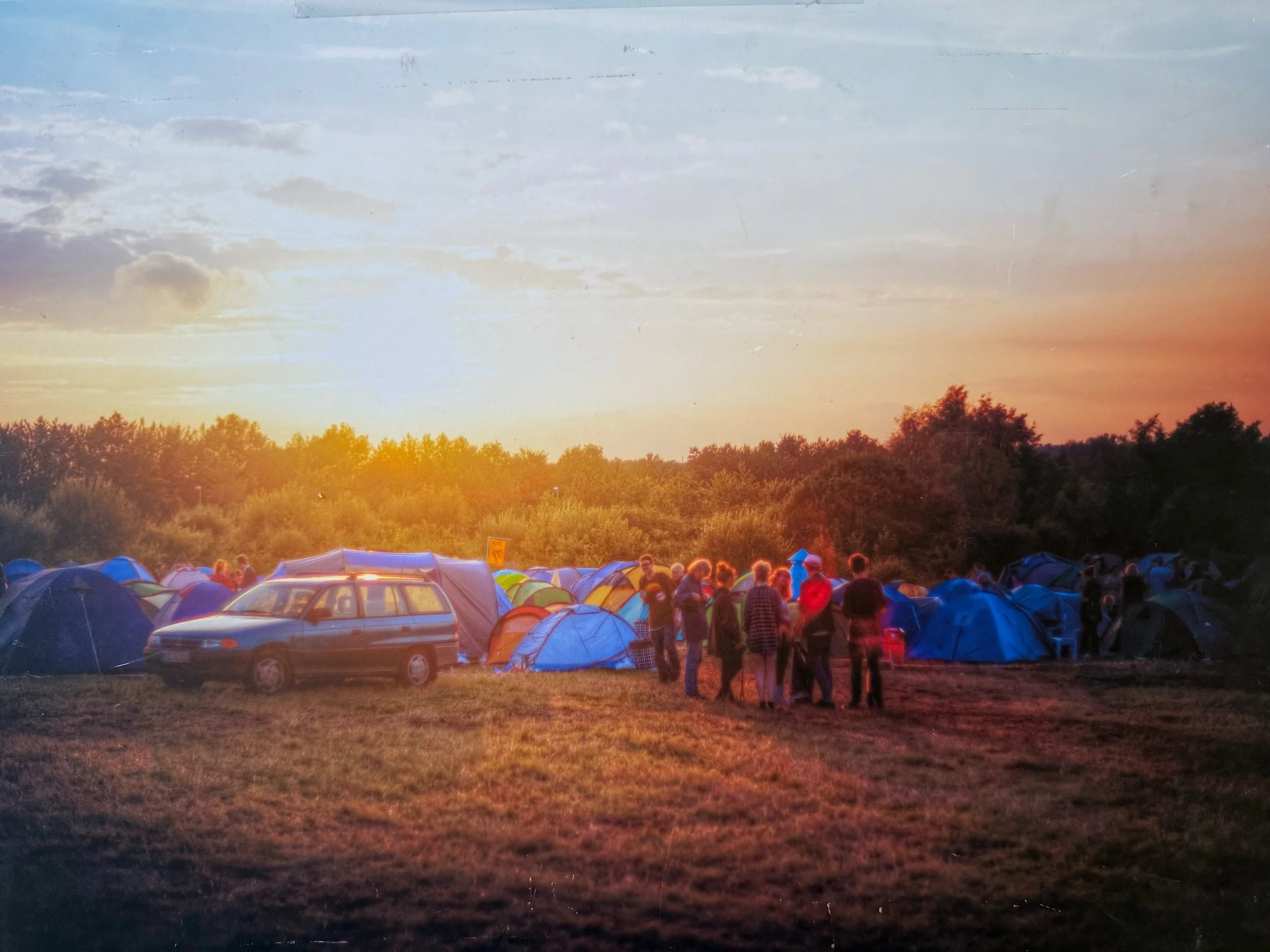
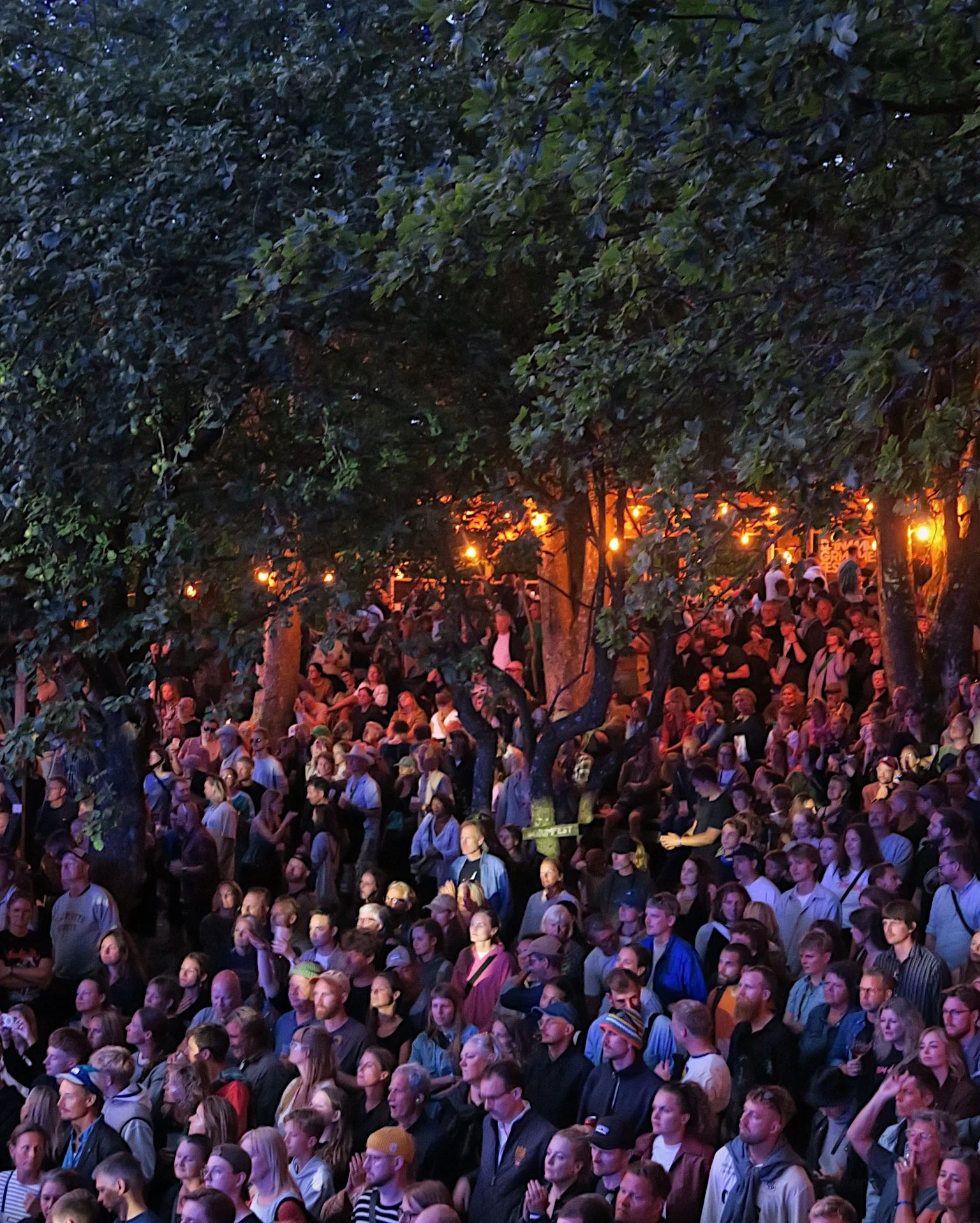
And they did. Every year, the number of guests crept upwards. First, 50 to 100 people a year, then more dramatically as they started booking bigger names. There was never any money, time or skill for branding the festival. Tickets were sold by word of mouth — rumors of a one-of-a-kind party with a crowd unlike anywhere else on an old farm outside Aarhus. And it is that indescribable spirit that still draws 5,000 festivalgoers into Aage’s backyard every late summer.
»And honestly, if only one person had said they were coming — then I’d at least have hoped it was someone I actually wanted to spend three days with, haha. But then I would just have held concerts in the living room, made a lentil stew and plugged in an extension cord. And it still would’ve been cosy as hell.«
— Aage Stokholm, festival director
The party must go on
It is easy to romanticise the naïve beginnings. The story of the boys’ enthusiasm, the paddling pool full of beer, and the endless summer nights sound almost like Woodstock ’69. But this is not just the happy ending of the story.
Aage has never had either the skills or the interest in economics. He has always prioritized the experience over profit — even in the years when most people would have pulled the plug on the amplifier. Summers full of singalongs, dancing in the sunny dust, and cold draft beers were followed by winters where the wind tore through the old farmhouse. The water in Aage’s vases froze solid, and the family slept in front of the fireplace because the heating had failed and the diesel had run out.
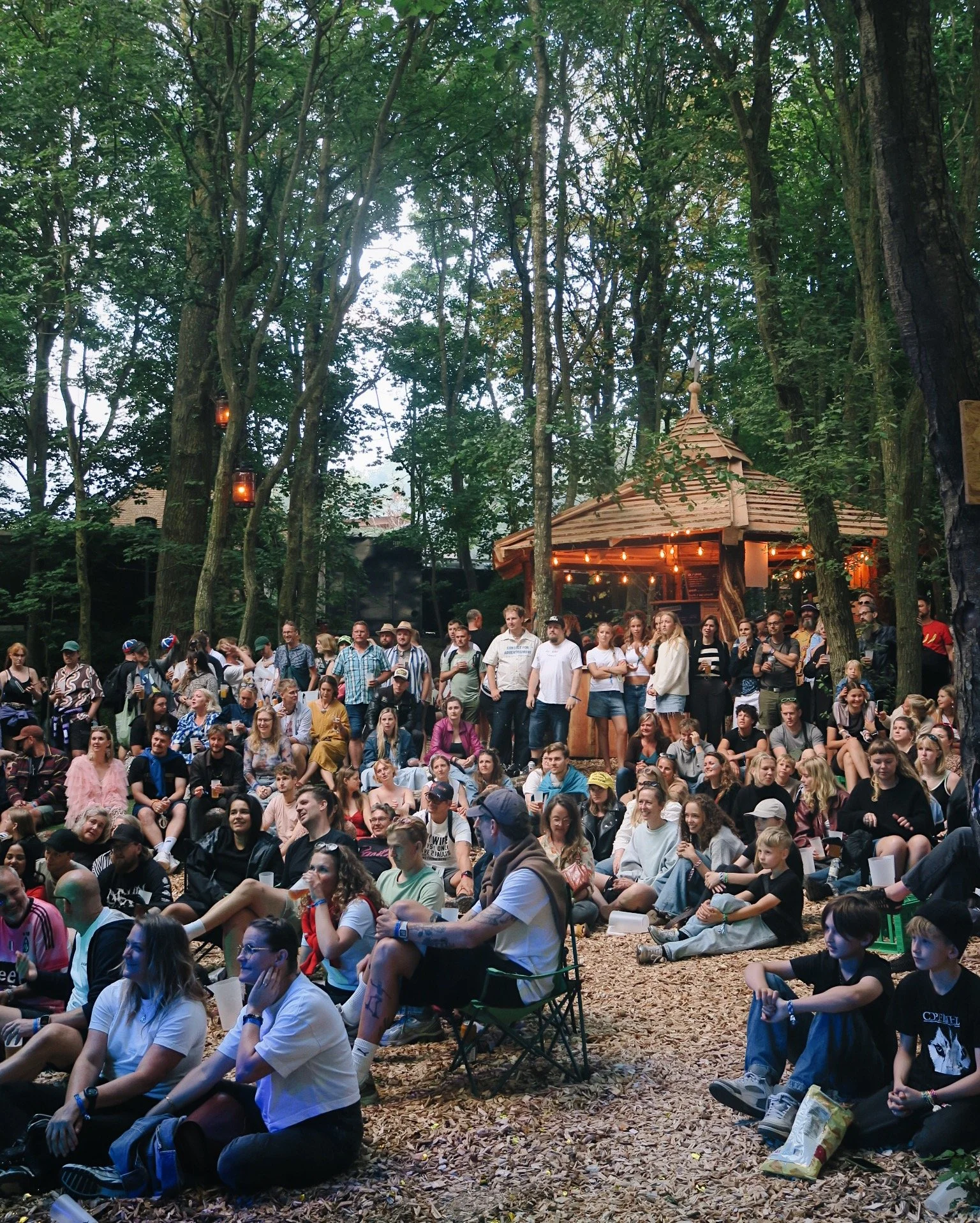
For years, deficits clung stubbornly to the festival, forcing Aage to pull out a calculator and turn the business upside down: Grim announced sold out on 1 May — no matter how few tickets had actually been sold:
»I was completely alone with it, so I had to make it risk-free. If you were inviting people over for dinner, you’d probably also want to know how much shopping to do and whether you needed to borrow chairs from the neighbours — and honestly, it’s exactly the same practical logic. Guests had to RSVP, and then I swore I’d do my best. And honestly, if only one person had said they were coming — then I’d at least have hoped it was someone I actually wanted to spend three days with, haha. But then I would just have held concerts in the living room, made a lentil stew and plugged in an extension cord. And it still would’ve been cosy as hell.«
Aage knows perfectly well that the festival’s strength lies in the feeling of the intimate garden party: »I’m not trying to compete with the giant Danish festivals. If Grim became a big festival, it would require a completely different way of organising things. We wouldn’t all be able to sit in the same meeting room anymore.«
And that distance holds no appeal for him. Growth has never been the point: »When that’s exactly what people choose us for, how stupid would I be if I started pushing for more guests and more money? I honestly don’t want that.« Aage wants to protect the small festival with everything he has, and he has managed to do so, even when it has meant cold nights and backbreaking work.
But then came Covid-19. The world shut down, and culture went into hibernation.
How to throw a festival during a pandemic
Social distancing rules, face masks and lockdowns brought an abrupt halt to sweaty communal dancing, casually shared beers, and the chorus of hoarse voices at live concerts. But the need for it was still there, and Aage could feel that longing out at the Grim farm, which had suddenly fallen strangely quiet. »People missed being together, sharing experiences.«
By now, everyone already knows that unstoppable Aage and his team do not see problems — only tasks waiting to be solved.
»A tiny part of me regrets that the world recovered again. I know that’s a controversial thing to say.«
— Aage Stokholm, festival director
They scaled the festival down and spread it out. De Grimmeste Aftner meant fewer guests spread across several evenings instead. Under the open sky and with careful distance between people, live music once again thudded through people’s chests. Guests brought blankets, measured out their one-meter spacing with sticks, and formed little islands in the grass.
People were not allowed to go to the bar — but the bar was allowed to go to the people: »We turned all our bars into wheelbarrows so we could move around the edges of the crowd and instantly spot who looked thirsty.« And within ten seconds, bacteria-free beers would arrive.
Grim survived the cultural desert that Covid became. And perhaps something new emerged from the dust. In those strange years, when the festival was literally more down to earth, a new crowd found their way there: »I spoke to several older guests who used to send their children to Grim. Now they were sitting here themselves.«
»A tiny part of me regrets that the world recovered again. I know that’s a controversial thing to say. But people genuinely liked the intimacy and the slower pace. And we’ve forgotten all about that now. People still ask for De Grimmeste Aftner, but we can’t recreate them, because you can’t recreate that feeling of sitting together in a tiny life raft. That magic is gone.«
Home at the heart of the festival
Covid-19 passed — whether you liked it or not. The music was turned back up, and crowds once again packed tightly and sweatily in front of festival stages. But Aage carried the calmness and perspective with him into a new era. Perhaps he also needed his own isolated island in the middle of the sea of people.
The farmhouse had always been both Aage’s family home and the festival office. At all hours, people knocked on the door and held meetings between oatmeal and homework. Something had to change if festival-Aage and private-Aage were ever to be separated — if that was even possible.
Now Aage, his grown-up children, and even his elderly parents live in small tiny houses with carefully arranged front gardens and verandas scattered around the farm. When they are there, it is a festival-free sanctuary. But Aage’s island is only a few steps from the farmhouse. Every morning he walks across to Grim’s headquarters, where someone has often already put the coffee on and lit the wood-burning stove. Nobody is paid to do that.
The hangarounds
There are three and a half full-time employees and around 400 volunteers when the festival reaches its peak. But when the final encore has faded, some people stay behind. Aage calls them the hangarounds. Who are they, and why do they stay? According to Aage, they are the ones truly tapped into the energy. They feel appreciated. »We make an effort, and people want to give something back. It feels good. Let’s be more like that with each other.«
Aage wants to nourish the soil future talents grow from. He has »20 years of experience in what not to do«, and he wants to give others a head start. Local kids are offered opportunities in event-making and festival production, the farm is open as a rehearsal space and concert venue for tomorrow’s bands, and Aage’s own background as a schoolteacher lives on in Grim’s own folk high school in the weeks leading up to the festival.
A week before the music starts, volunteers of all ages arrive, camp out in the parking lot, and build the festival together. Every day at noon, a bell rings for lunch break for the work crew. The grounds buzz with activity: forklifts rumbling through the mud, technicians carrying coffee cups and cables, young and not-so-young people in work trousers.
Together, they create chainsaw sculptures, learn how to lay roofing felt, become indispensable right-hand assistants to professional sound engineers, and are encouraged to build a beer holder or an ashtray right where they feel one is needed. Aage knows the must-do tasks, and he is both the man booking Denmark’s hottest new act, APHACA, and the one cleaning the toilets if nobody else does it. But with the trust that forms the DNA of Grim, the volunteers are allowed to unfold in exactly the ways they want.
More than twenty years have passed since the supermarket truck and the Norwegians arrived at the farm on the outskirts of Aarhus. Ticket sales have gone digital, the finances are more streamlined, and the festival has grown new branches in the form of another stage, more bars and a slightly longer payroll.
But the ideology remains the same. An unshakeable faith in the idea that people succeed together. Aage opens his garden to family, volunteers, associations and festival guests, as long as he can still feel the beat of it. Maybe you want to join the party?
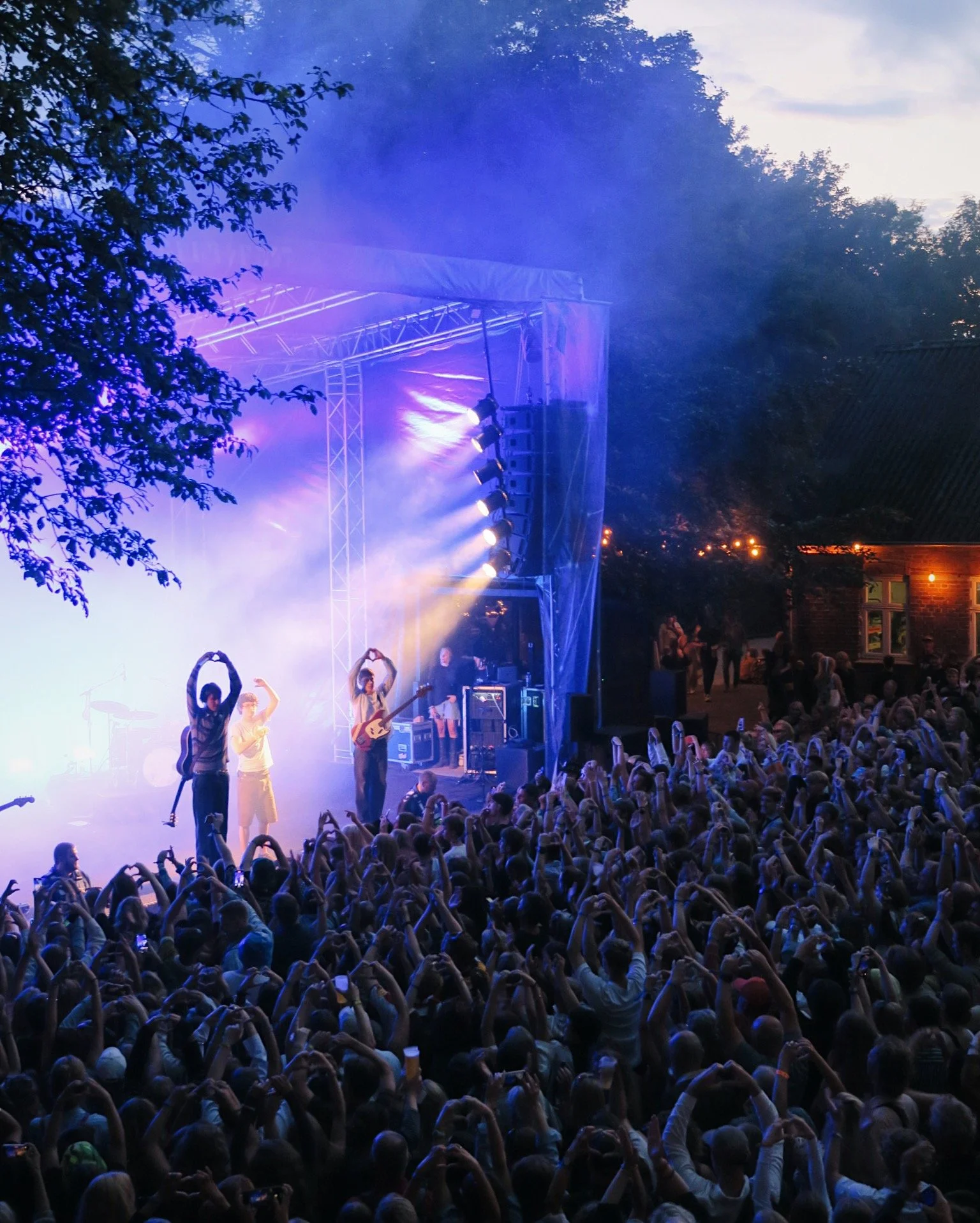
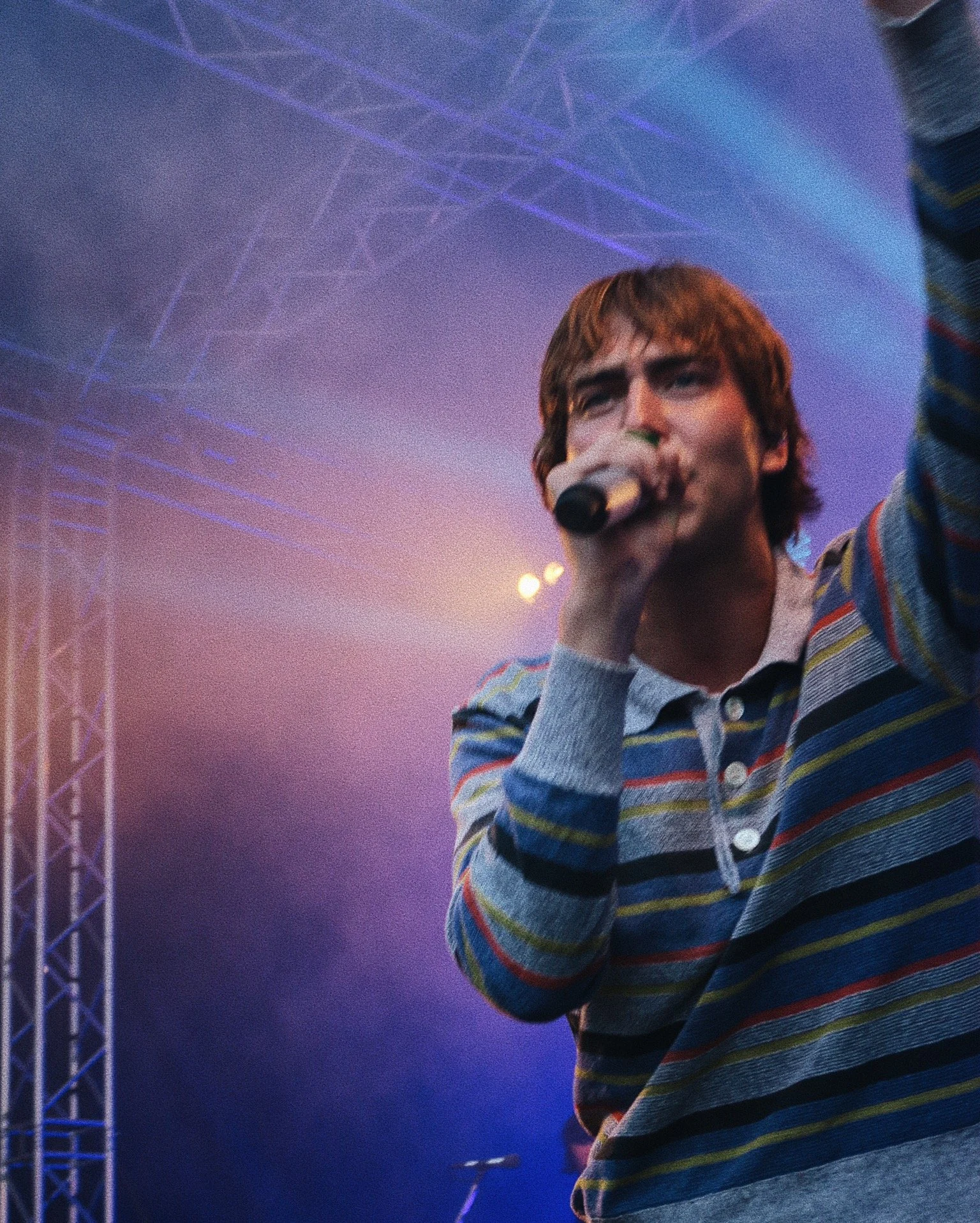
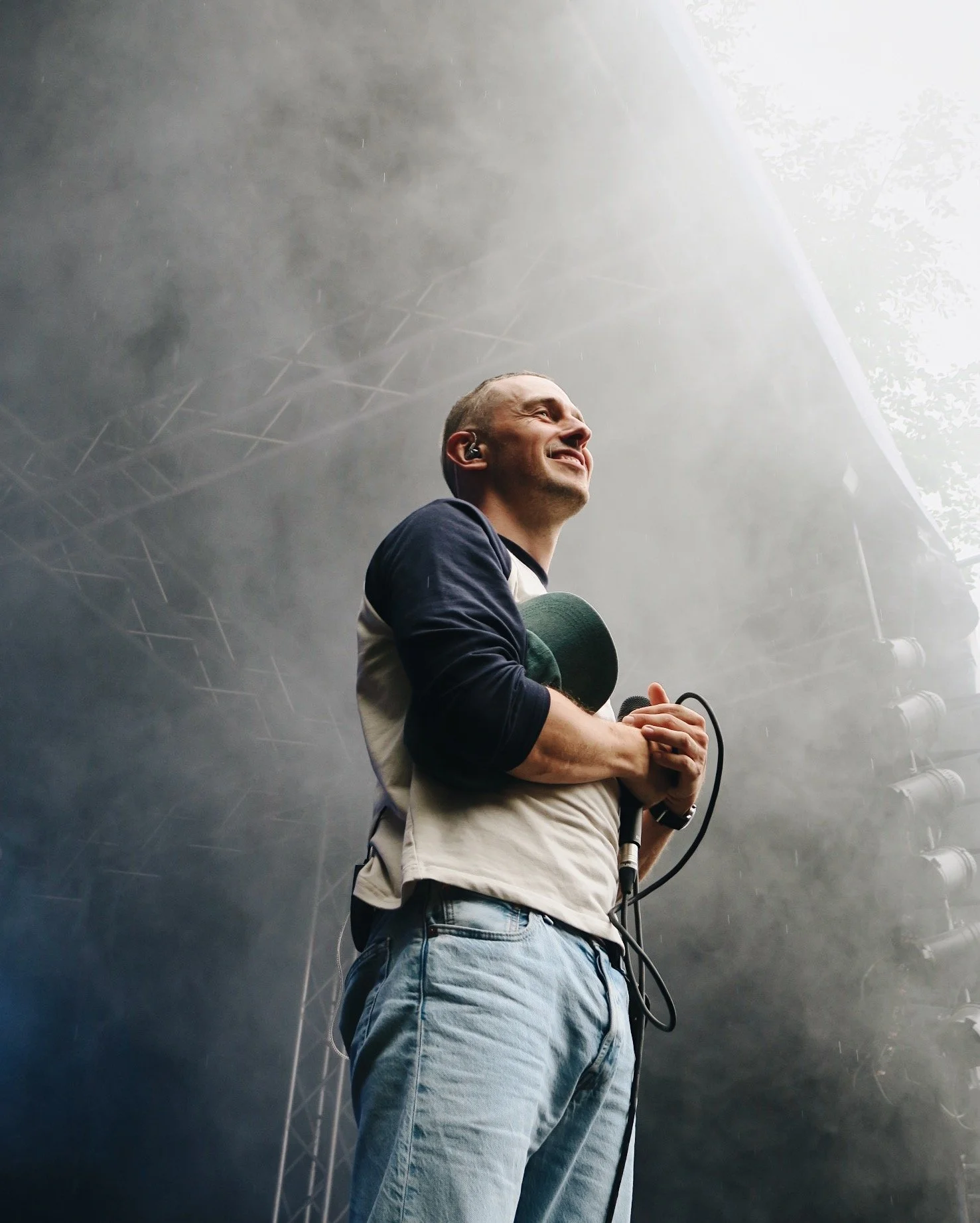
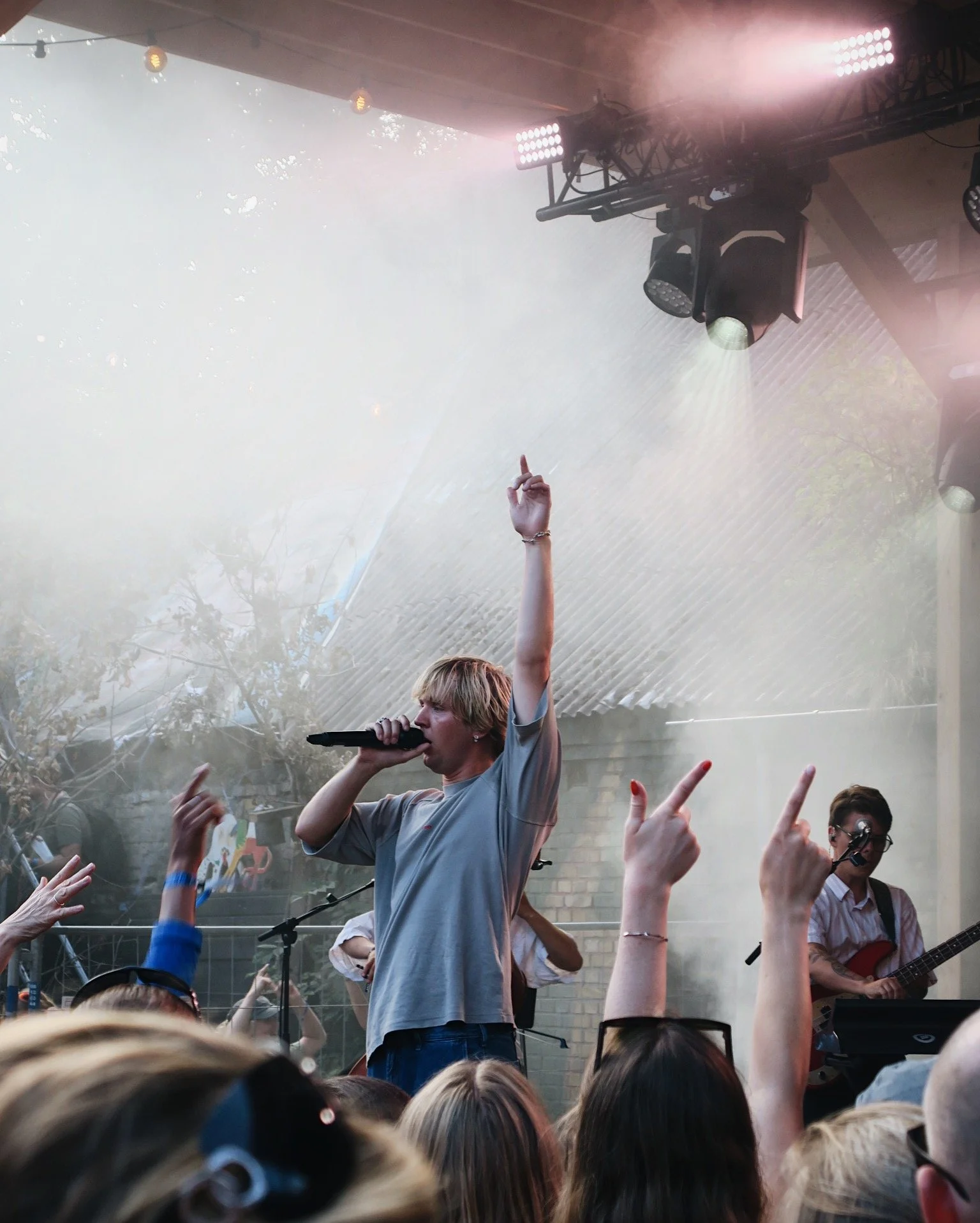
Jonah Blacksmith at GrimFest 2025
About GrimFest
GrimFest is three summer days in Brabrand, Aarhus, featuring the best of Danish music. Experience both emerging talents from the grassroots scene and established names performing up close in green, intimate surroundings.
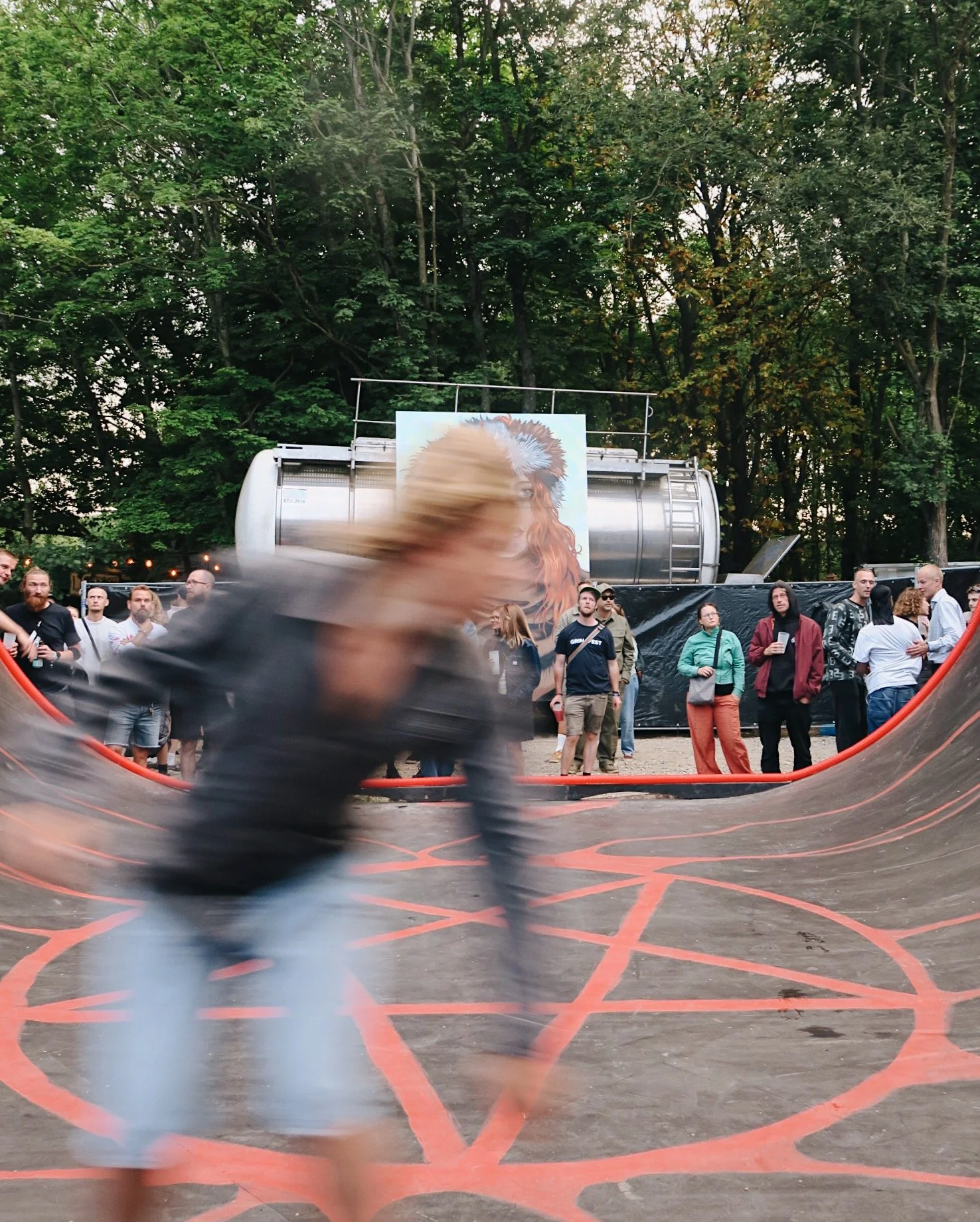
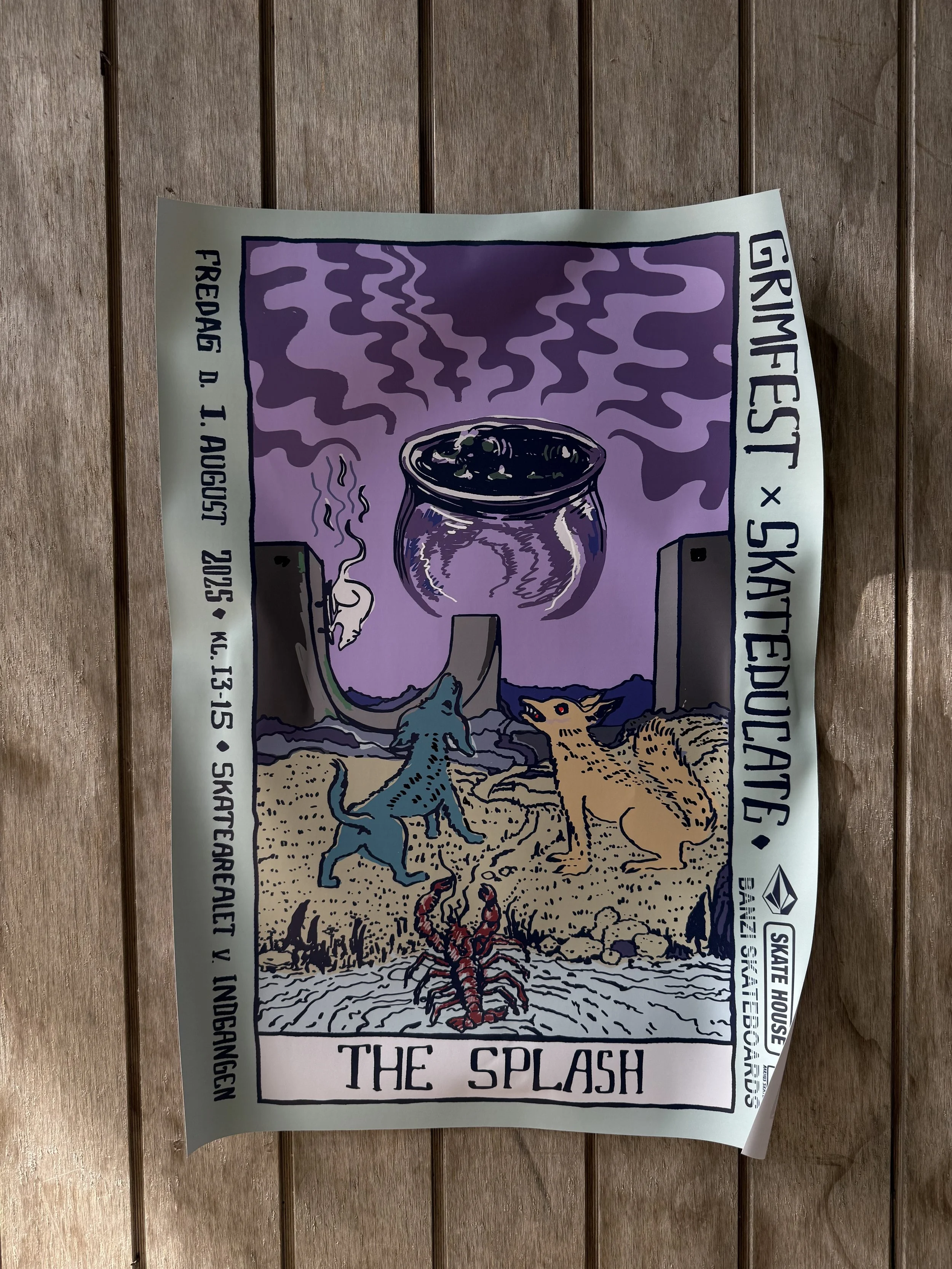
In addition to the music, you can enjoy stand-up, poetry slam, talks and workshops, as well as skate shows.
For more than 20 years, Grimhøjgaard has provided a safe and welcoming setting for GrimFest, and the farm’s informal, intimate atmosphere is the hallmark of a festival whose only ambition is to grow even better — not bigger.