
ISSUE 01
Is The Infinite Bridge actually infinite?
2026
Words: Maria Halse
Visuals: Jakob Vingtoft + danskebilleder.dk
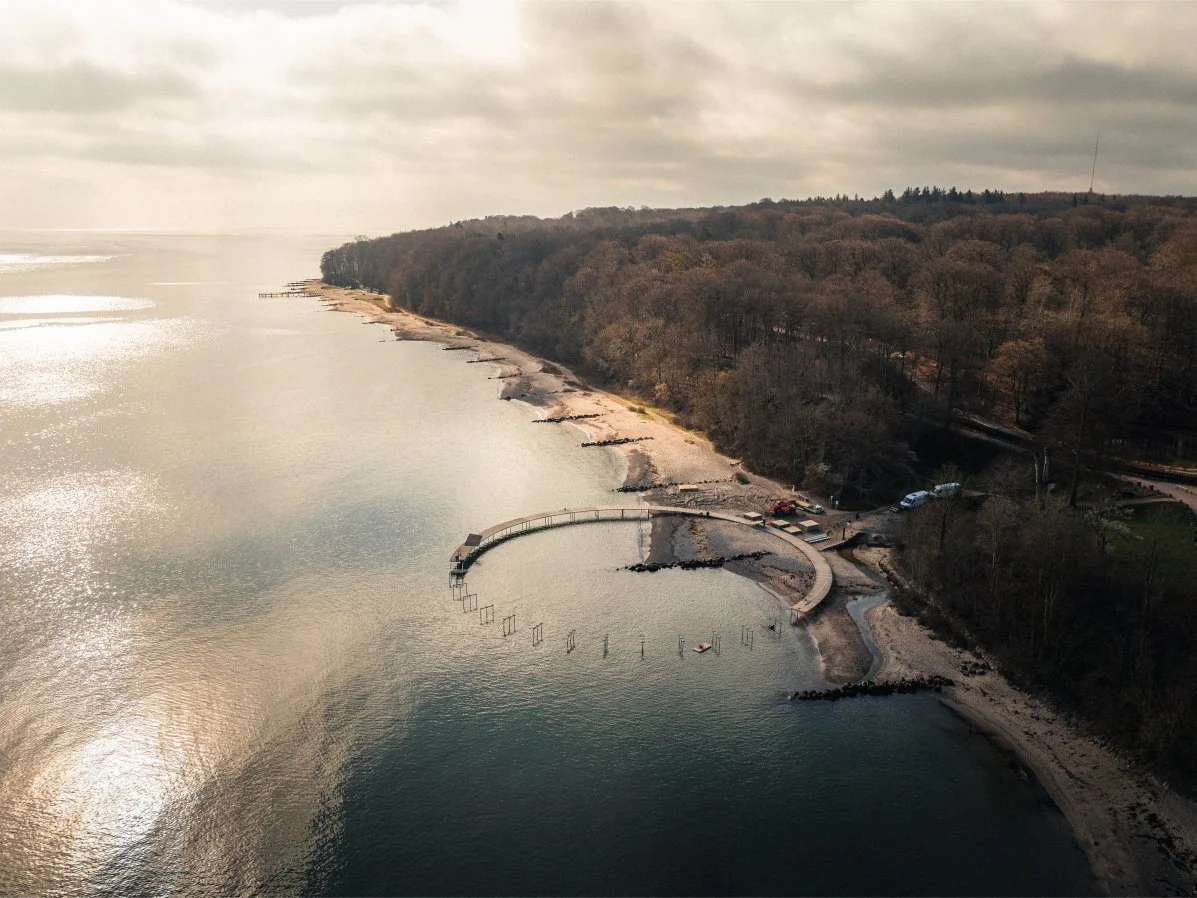
You may go there in vain. Because Den Uendelige Bro — The Infinite Bridge — is not infinite. At least not in its physical form. Every autumn, it is taken down before the harsh easterly winds across Aarhus Bay can reduce it to splinters. In winter, the bridge disappears completely. The sea closes over the base plates, leaving only an empty space in the bay. In spring, it is rebuilt as a sign of spring above the waves. But according to the architect behind the artwork, there is always something new to see — even when the bridge is gone.
On an overgrown car park between old Aarhus and the new silhouettes of Aarhus Ø stands an anonymous 1980s office block. Behind its weather-beaten façade, the architecture studio Gjøde & Partnere Arkitekter has its home. A model of Den Uendelige Bro hangs on the wall. Architect Johan Gjøde offers black coffee and leads the way into a bright meeting room. This is where the infinite story begins.
Even as a student, Gjøde designed exhibitions for renowned art museums. Their studio grew out of a playful approach to architecture and art, and they said yes to a little bit of everything: from custom-designed public toilets and day centres for homeless and vulnerable citizens in Aarhus to creative urban spaces for children and large-scale projects on Holmen in Copenhagen that are now in their eleventh year of development.
When Sculpture by the Sea came to Aarhus for the first time in 2009, locals and visitors flocked along the bay and through the Marselisborg forests in search of art woven into nature. Along the south coast of the city, sculptures suddenly appeared in the branches of beech trees, on the steep slopes and right out at the water’s edge. And it resonated with the exhibition design Gjøde’s studio was already working with. »Sculpture by the Sea was a huge crowd-puller, and it made us start seeing nature as a gallery,« he says.
The idea of walking in circles above the waves grew out of the way people moved through the landscape: out and back in straight lines between forest and bay. The studio began working with the idea of a circular structure that was not supposed to lead anywhere but instead draw people further out into the landscape and let them turn slowly between sea, forest and city.
»How do you force the gaze to keep moving around? That was the basic idea.«
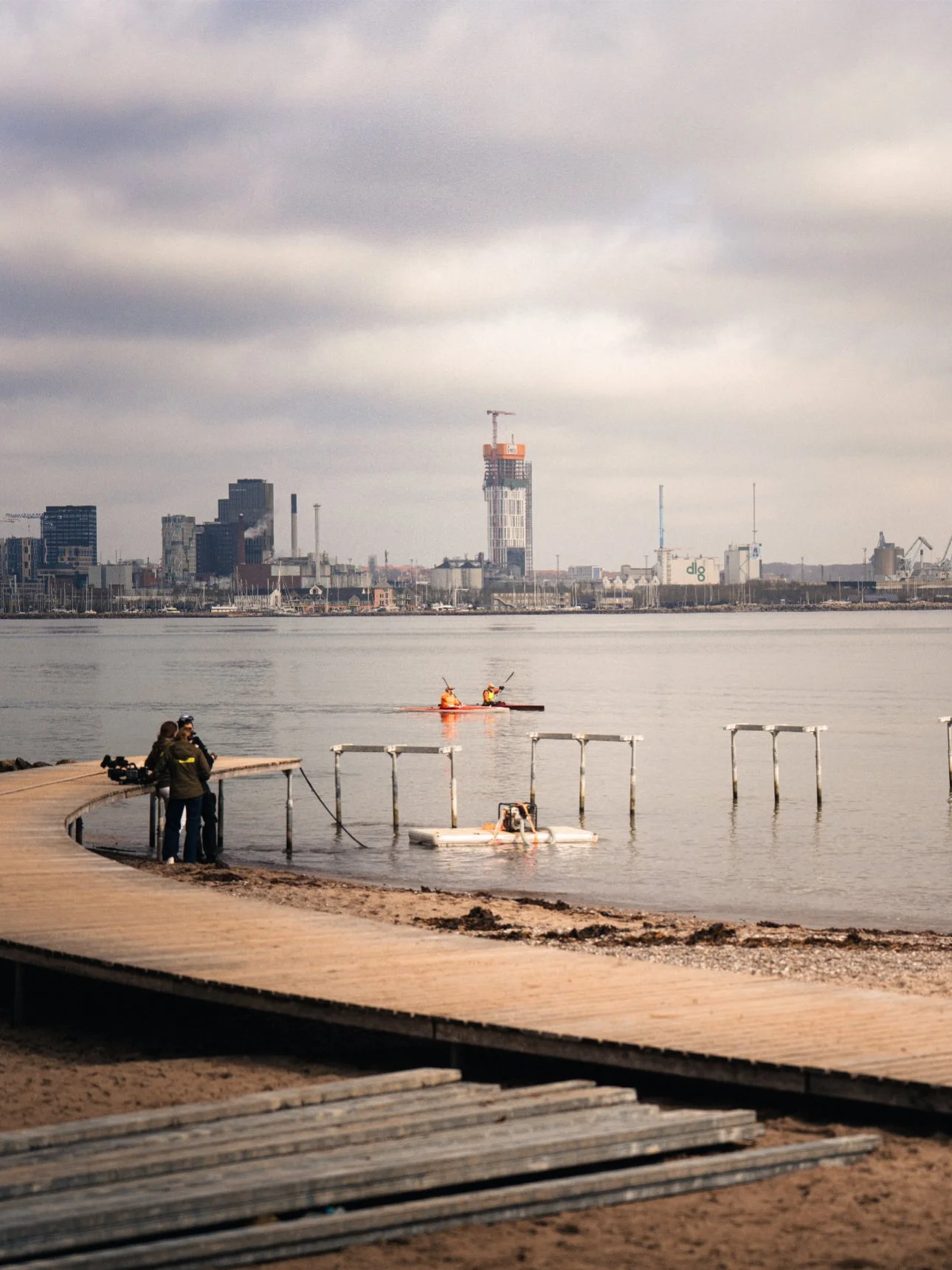
The bridge to old Aarhus
»It was easy enough to draw a circle. That came quickly,« says Johan Gjøde. But the geometry had to be right. His eye fell on Varna Palace. Back then, seen from the water, it was a somewhat overlooked place: a beach hidden from the road, with a murky outflow from the mills up in the forest. »But it is actually a pretty fantastic place. The landscape folds itself into beautiful contours as it enters the forest right there.«
»We spent four years trying to convince people — without success.«
— Johan Gjøde, architect
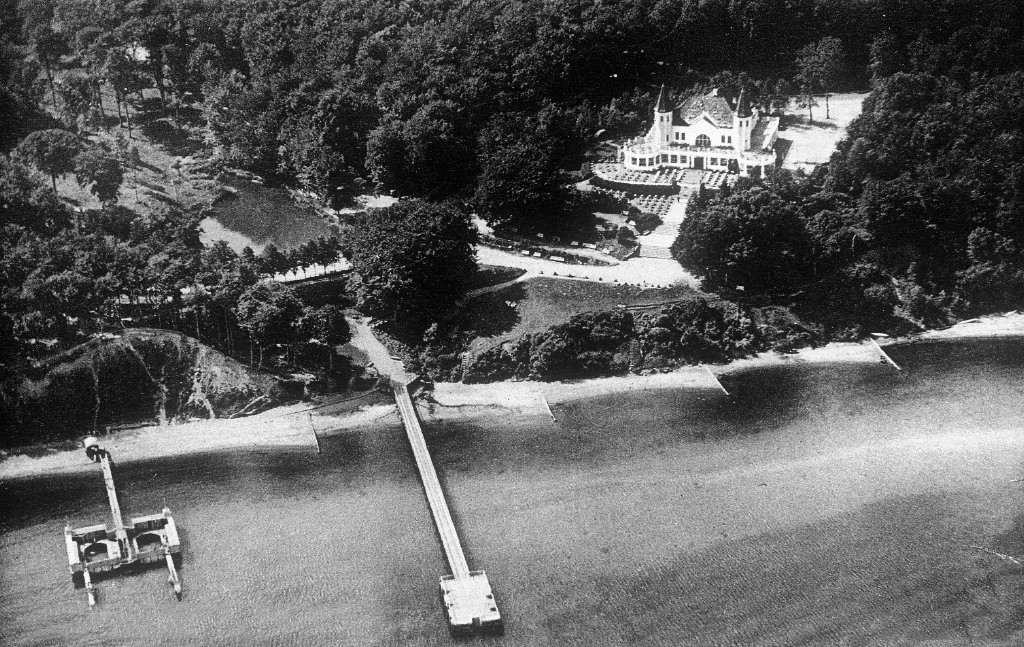
»When I began reading up on the history, the old steamship routes along the coast started to appear.« A hundred years ago, Aarhusians would sail out on Sunday excursions to the leisure pavilions along the forests north and south of the city, experiencing nature from the water. »There was a connection in the landscape that had disappeared again.«
One of these old establishments was the elegant Varna Palace, which still stands today as a castle-like backdrop for weddings and other grand occasions. This was where people came ashore, with a carefully composed architectural view up towards the building between the trees.
The studio found old photographs and decided that the outermost point of Den Uendelige Bro should touch that exact place. »So suddenly, all these layers began opening up where we thought, “Okay, this is incredible!”« Gjøde explains. »The bridge could make a forgotten place visible again. There were loops back into history.«
The studio made project proposals, models and economical calculations. They knocked on doors at the municipality and at various foundations in an attempt to realise the good idea.
»But no one could really understand what that bridge was supposed to do,« says Gjøde. »We spent four years trying to convince people — without success.« It was as if no one else could really picture it: a bridge that went in a circle, half on land, half in the water.
Built by chance
Time passed, and in the middle of the chaos of moving office, they were left holding the dusty model, wondering whether to throw it out. As one last shot, they decided to submit the project to Sculpture by the Sea — the event that had started it all
And the selection committee was wildly enthusiastic. »And then we got 10,000 kroner,« Gjøde laughs. Not exactly a budget that would stretch far for a bridge meant to carry thousands of guests out over Aarhus Bay for four weeks. »So what were we supposed to do now?«
»The school had never experienced anything like it. The students’ absence rate was below two per cent, which was completely unheard of. They came in voluntarily on weekends and kept building.«
— Johan Gjøde, architect
But soon, good contacts and old acquaintances gathered around the project.
»We had a sense that it could be done if we found the right people, people who wanted to play along.« Aarhus Tech, the local technical college, came on board, and the carpentry apprentices built the bridge elements as part of their practical training.
»It was amazing to see the way they approached it,« says Johan Gjøde. »The school had never experienced anything like it. The students’ absence rate was below two per cent, which was completely unheard of. They came in voluntarily on weekends and kept building.« The metalwork students built small cranes to lift and place the bridge elements out in the water, and little by little, the circle took shape between forest and bay. »The collective effort made something completely impossible possible. That is what a city like Aarhus can do.«
After Sculpture by the Sea, the bridge was taken down again, and the waves washed away the traces. Only when mysterious rumours began to circulate that the bridge might be rebuilt in another municipality did Aarhus wake up and buy the structure. »Without that rumour, it would never have been rebuilt. The whole story of the bridge has been so strange — so many coincidences have played a part in its creation.«
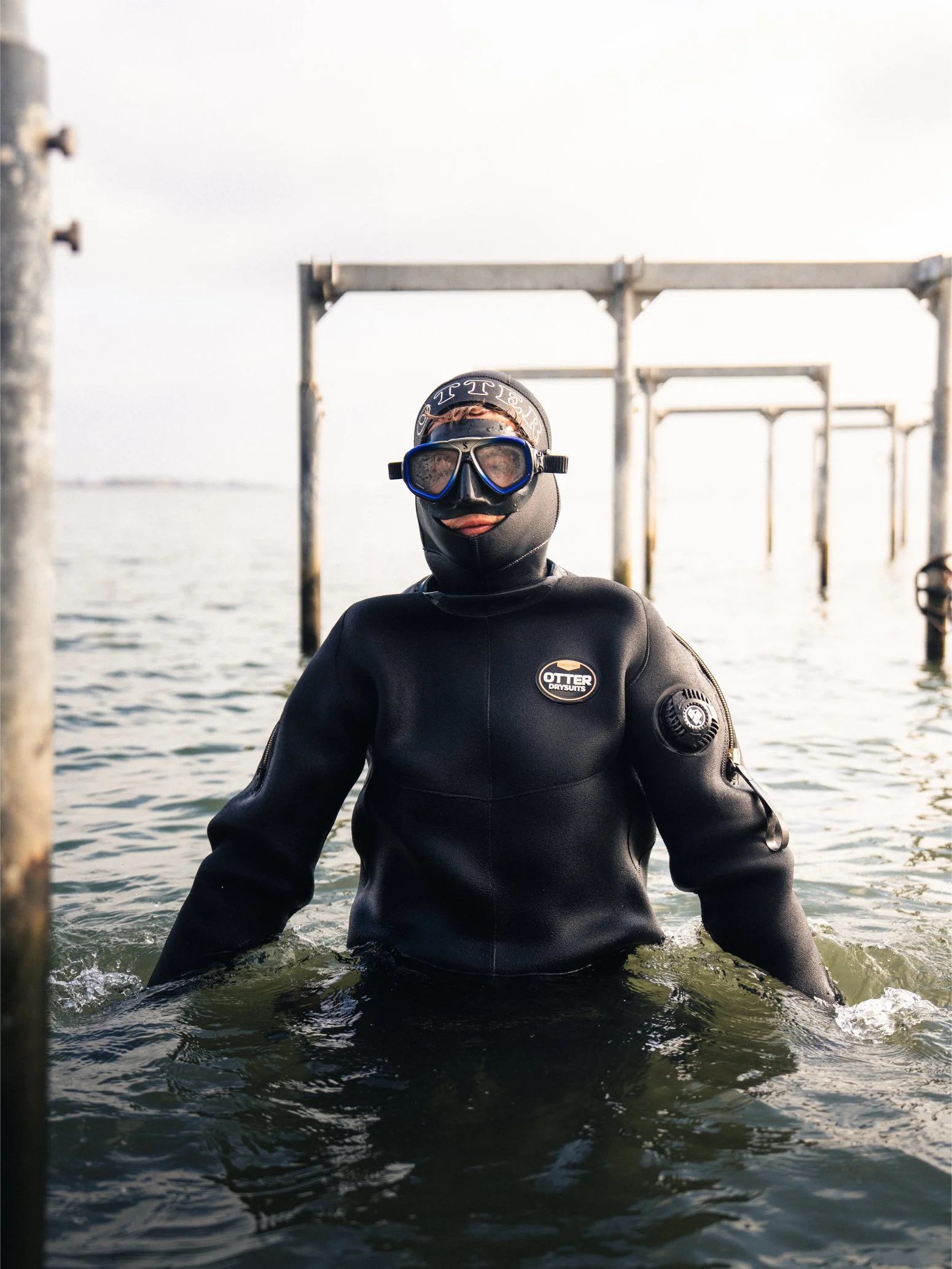
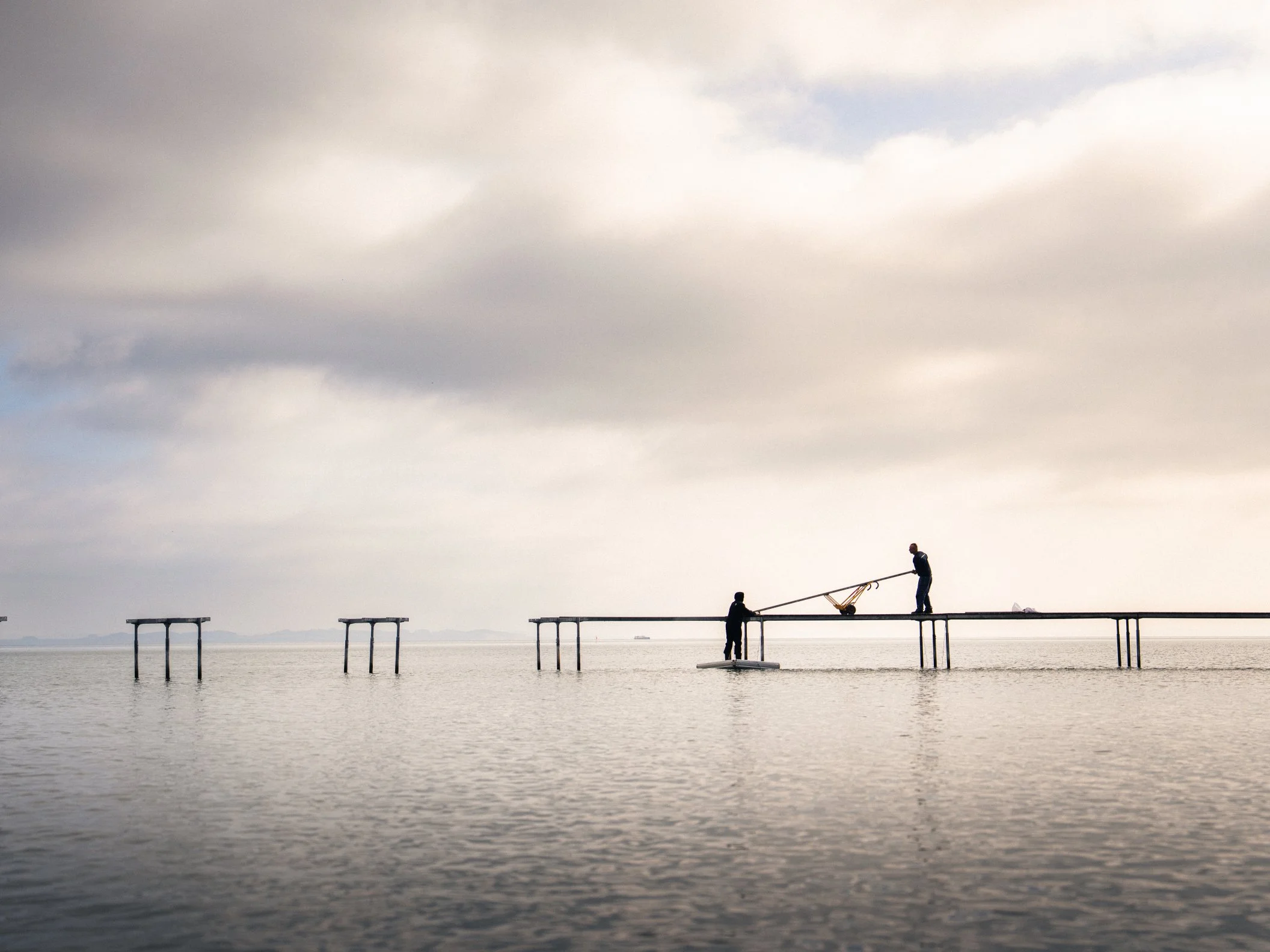
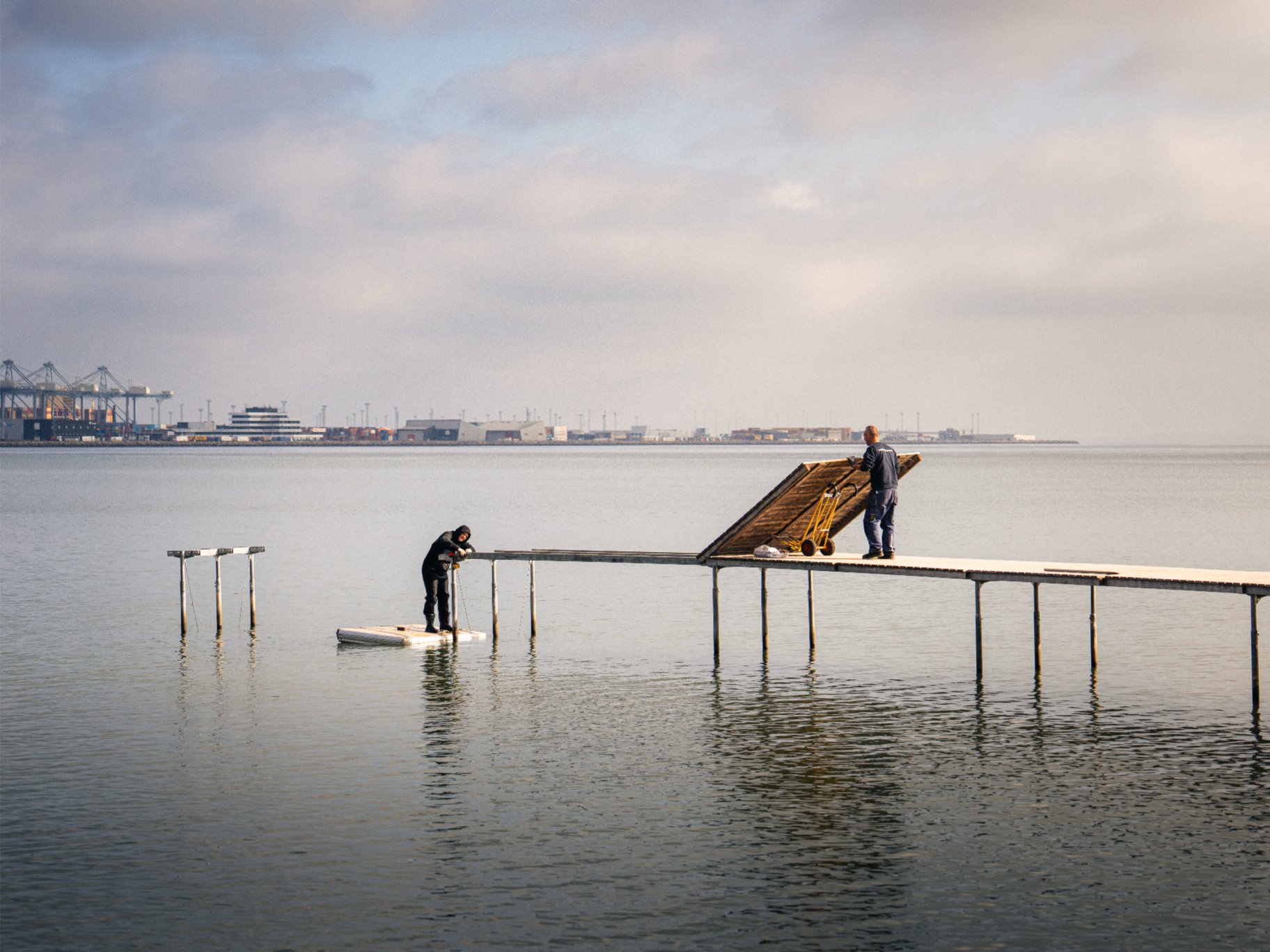
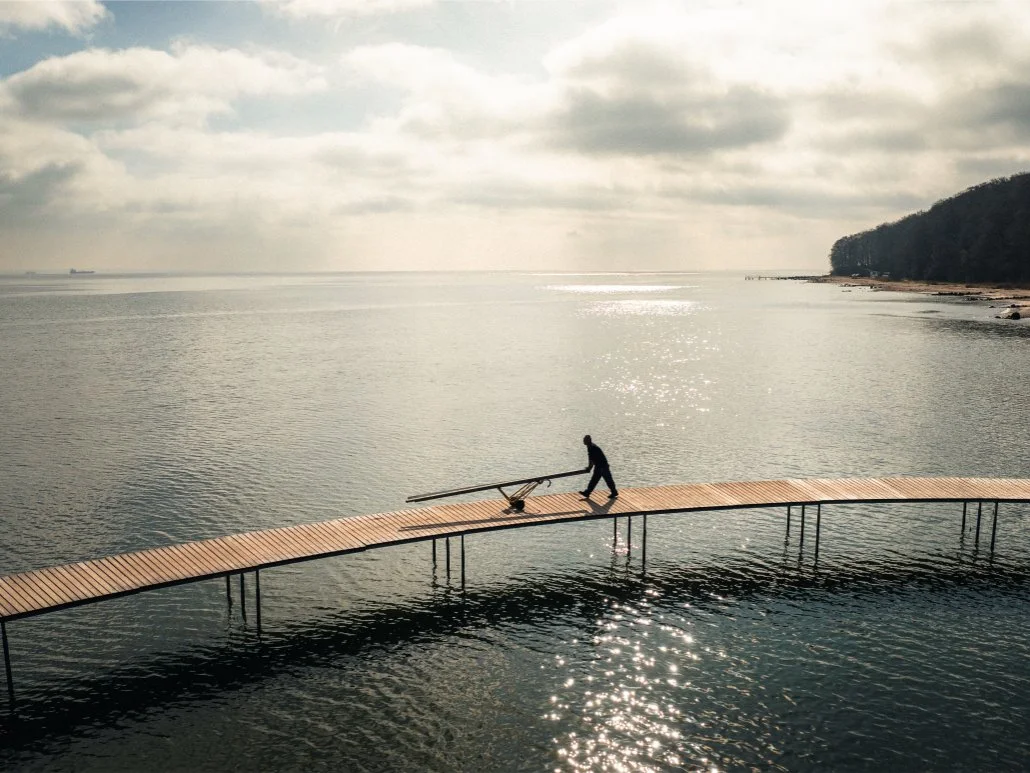
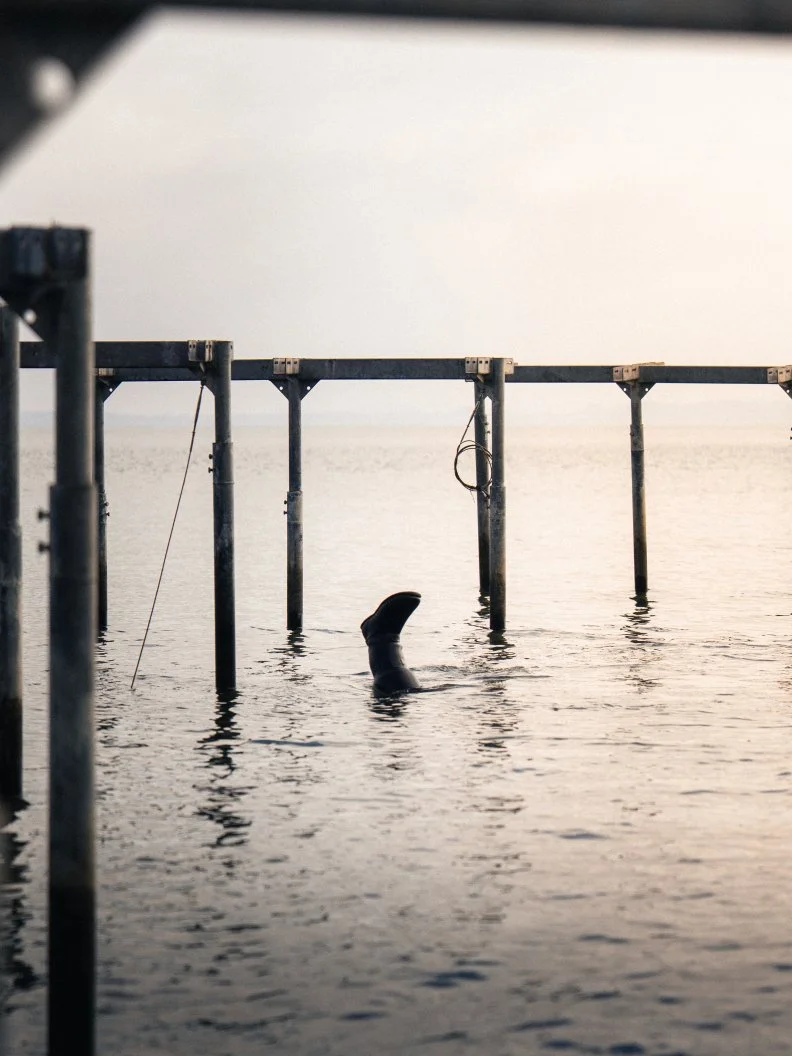
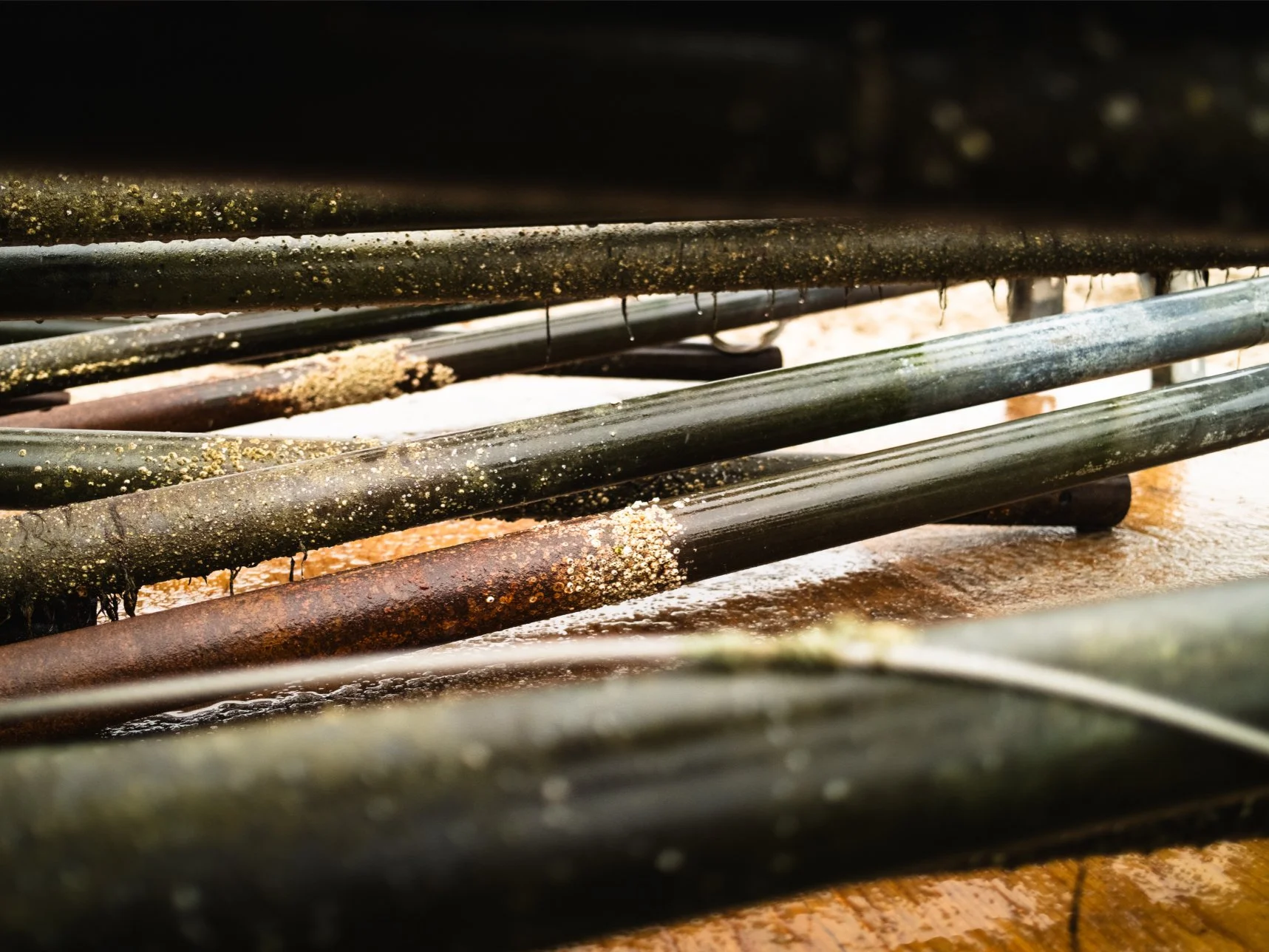
In 2017, the bridge became permanent. Or as permanent as Den Uendelige Bro can ever be. Every winter, the bridge deck is unscrewed and the steel legs are removed, so winter storms and hungry waves do not tear the structure apart. All that remains is the empty space out in the bay, until spring returns and the circle once again draws itself across the water.
A place to walk in circles
Den Uendelige Bro has become one of Aarhus’ most recognisable motifs: a viewpoint, a photo spot and a symbol. But according to Johan Gjøde, it is slightly odd that the structure itself has become the symbol. »The bridge itself is not the point,« he says. »It is all the layers around it, the history and the nature, and what you get the chance to experience on and around the bridge.«
When you stand out there, the artwork recedes into the background while the surroundings take over. First dates with takeaway coffee walk in circles in the spring sunshine, on warm summer days children splash around in the inner circle, and on late-summer evenings solitary silhouettes sit on the outermost curve with their feet dangling above the water and their eyes turned towards Djursland. Runners add a loop on the bridge, and dog walkers trudge past in the morning mist. For a moment, city dwellers find calm in nature.
»It has a double nature,« the architect says. »If you want to feel alone, you can sit on the outside and have the whole horizon in front of you. But it also creates an inner space. If you turn towards the middle, you become part of the circle.«
»I seek it out at important moments in life. For our wedding, but also during low points, like when my parents became ill. To have a place like that, somewhere you can go, somewhere that can hold both the celebrations and the things that hurt. There is something powerful about sitting out there one morning with the sea lying still as glass and watching the sun rise at 5:30 a.m.«
— Johan Gjøde, architect
What the bridge carries
Perhaps that is exactly why people take the bridge to heart and fill it with their own memories. Already during its construction in 2015, the municipality began receiving requests for wedding ceremonies out there. More than twenty couples were married on the bridge in the first year alone.
»We had not seen that coming,« says Johan Gjøde. »And I had sworn that I would not get married out there myself — but my wife called city hall and booked a time for our wedding on the bridge. It was a fantastic day.« The wedding was held on a summer day in 2019. Guests on blankets in the sand, champagne and cakes from the local bakery, children swimming in the sunshine.
He circles back to the place again and again: »I seek it out at important moments in life. For our wedding, but also during low points, like when my parents became ill. To have a place like that, somewhere you can go, somewhere that can hold both the celebrations and the things that hurt. There is something powerful about sitting out there one morning with the sea lying still as glass and watching the sun rise at 5:30 a.m.«
It is the mornings, especially, that he loves. When the beach is still almost empty, and the sun slowly gathers strength over Aarhus Bay while the city has not quite woken up yet.
»And I actually think the period when the bridge is gone is important.« In winter, the bridge doesn’t exist, often to the disappointment and confusion of both visitors and locals. But the emptiness and rawness are part of the artwork and of the rhythm of the seasons. »There is something enormously powerful in the fact that it has its time and then disappears again,” says Johan Gjøde, “and rises again in spring, time after time.«
Perhaps that is precisely where the infinite lies. Not in the planks or the steel out in Aarhus Bay, but in everything that keeps returning: the light over the water, the old connections in the landscape, people making their way out there with swimwear and thermos coffee, with heavy thoughts or sand in their wedding shoes. The seasons, drawing the circle around the city again and again.
About
Den Uendelige Bro: A circular wooden bridge and artwork in Aarhus Bay, first built as part of Sculpture by the Sea in 2015.
Location: By Varna Palace and Marselisborg Beach, south of Aarhus.
Created by: Johan Gjøde.
Season: The site can be visited all year round, but the bridge itself is typically in place from May to October.
Dimensions: 60 metres in diameter, 2.4 metres wide and 188 metres in circumference.
Get married: Aarhus Municipality offers wedding ceremonies on the bridge. Contact the wedding office on +45 89 40 22 22.
Don’t miss: A mindful walk all the way around, the view towards Djursland, mornings with a glassy sea and a cool dip.