
ISSUE 03
Anholt: The most remote place in Denmark — and why the journey is worth it
2026
Words & visuals: Maria Halse
Download as PDF
In summer, Anholt harbour overflows with sailboats, gin & tonics and parties that stretch deep into the bright Nordic night. But when high season burns out, the real magic begins. The isolated juniper island in the Kattegat reveals its true nature: a place of meditative walks through the desert, morning coffee in the dunes, star-filled skies untouched by light pollution, and old summer houses with wood-burning stoves and unreliable internet. Life moves slower here, almost as if time runs in revers, and the greatest adventure is the feeling of having plenty of time, very far away from everything.
»It’s like going 50 years back in time.« The taxi driver picking us up from the light rail station in Grenaa looks at us somewhat sceptically: »Have you been there before?« He loads our hiking backpacks into the taxi and drives us the three kilometres to the ferry. Ahead of us lies a three-hour crossing to the most remote place in Denmark: an island in the middle of the Kattegat, halfway to Sweden.
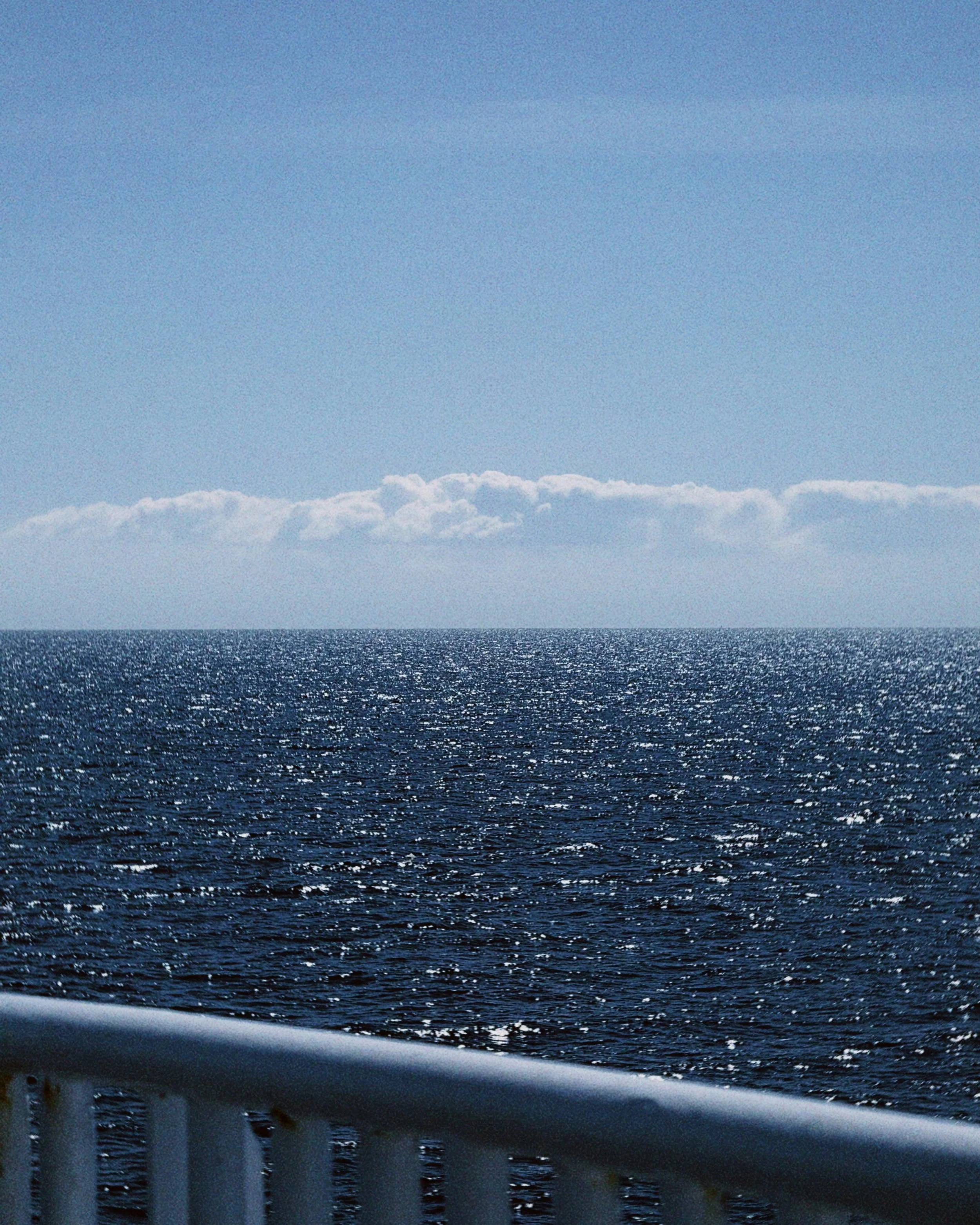
After 45 minutes on the ferry, the quay still seems impossibly close. The ferry veterans have sleeping mats spread out on deck and nap to the monotonous hum of the engines. Dogs lounge beneath the benches, barking loudly whenever they catch each other’s scent.
A group of young women in colourful hand-knitted sweaters sit reading in the sun, eating pasta salad from plastic containers brought from home. But you can also go below deck, where the little cafeteria with striped curtains serves old-fashioned filter coffee, classic Danish open-faced sandwiches, and chocolate bars.
When land finally appears on the horizon, passengers gather by the railing and wave excitedly at the people waiting in the harbour to collect their guests — on bicycles, in cars, even on a tractor with a padded trailer. We, with no one waiting for us, swing our hiking packs onto our shoulders and step ashore to the comment of a local islander: »Wow, there are a lot of people on board today.«
The roughly forty ferry passengers gradually disperse, heading towards permanent homes and borrowed summer houses. Two cars quickly disappear up the main road, then a moped, the tractor puttering behind, a few bicycles creaking into gear — and then there is only us, on foot.
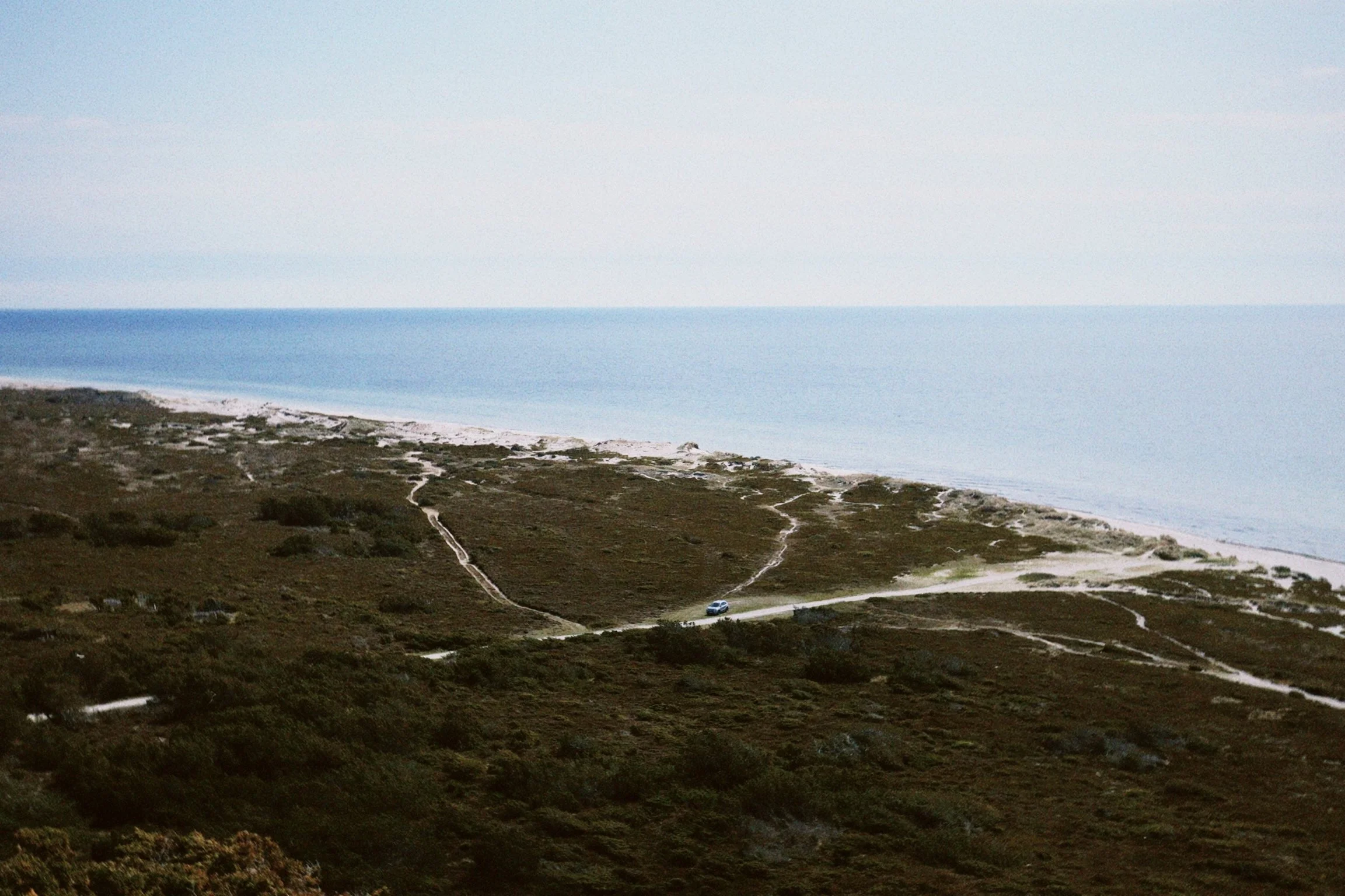
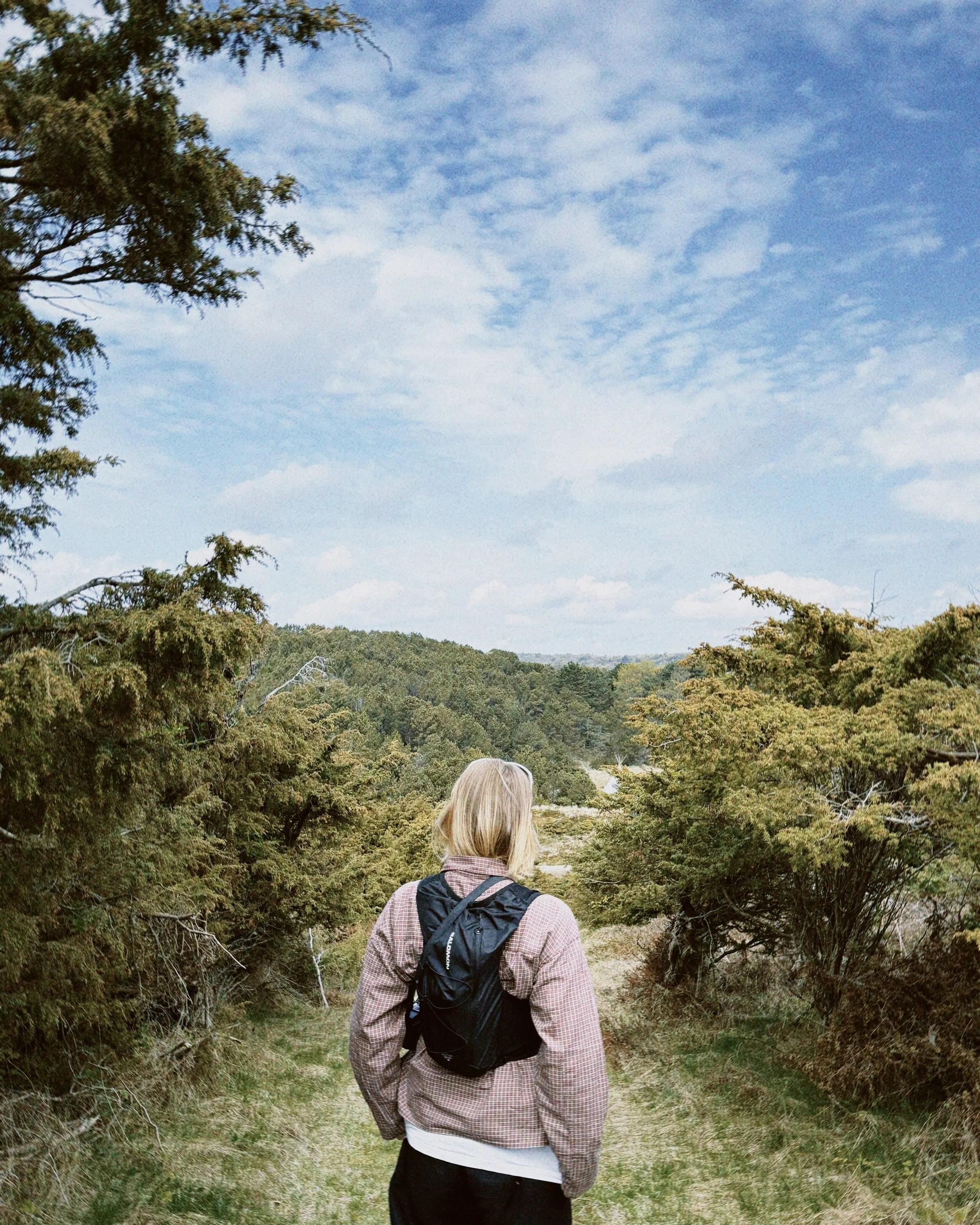
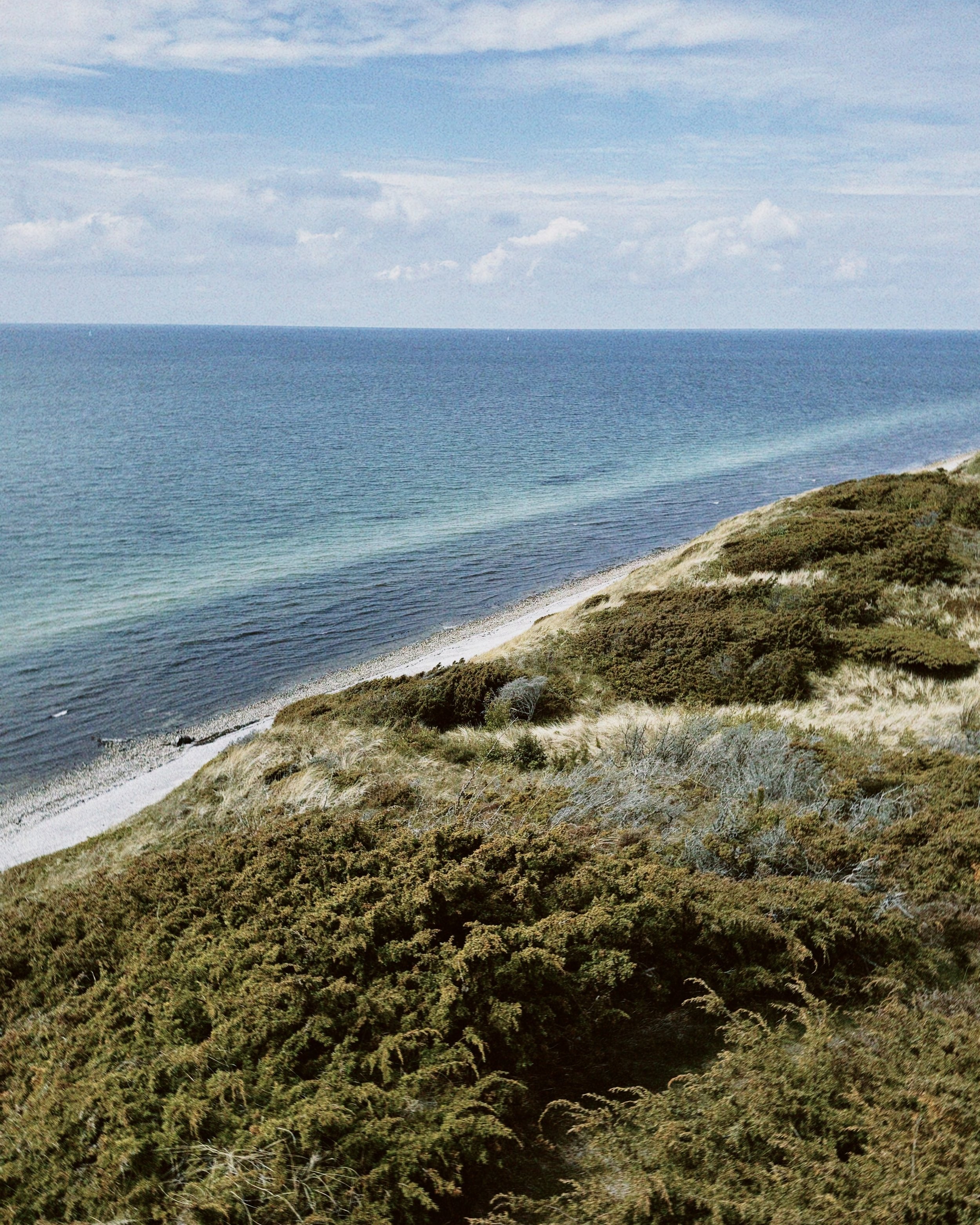
After little more than a kilometre, everyone has turned off onto their respective paths, and we are the last ones left on the road leading into the island jungle of juniper and mountain pine. The air smells of resin, a hare darts past at the edge of our vision, and we walk straight down the middle of the road — one of only two paved roads on the island’s 22 square kilometres.
On the edge of the desert
The wooden summer houses nestle into soft, glowing reindeer lichen, all secluded and undisturbed. You usually only notice them once they announce themselves with a mailbox out by the roadside. There is no such thing as a bad location here.
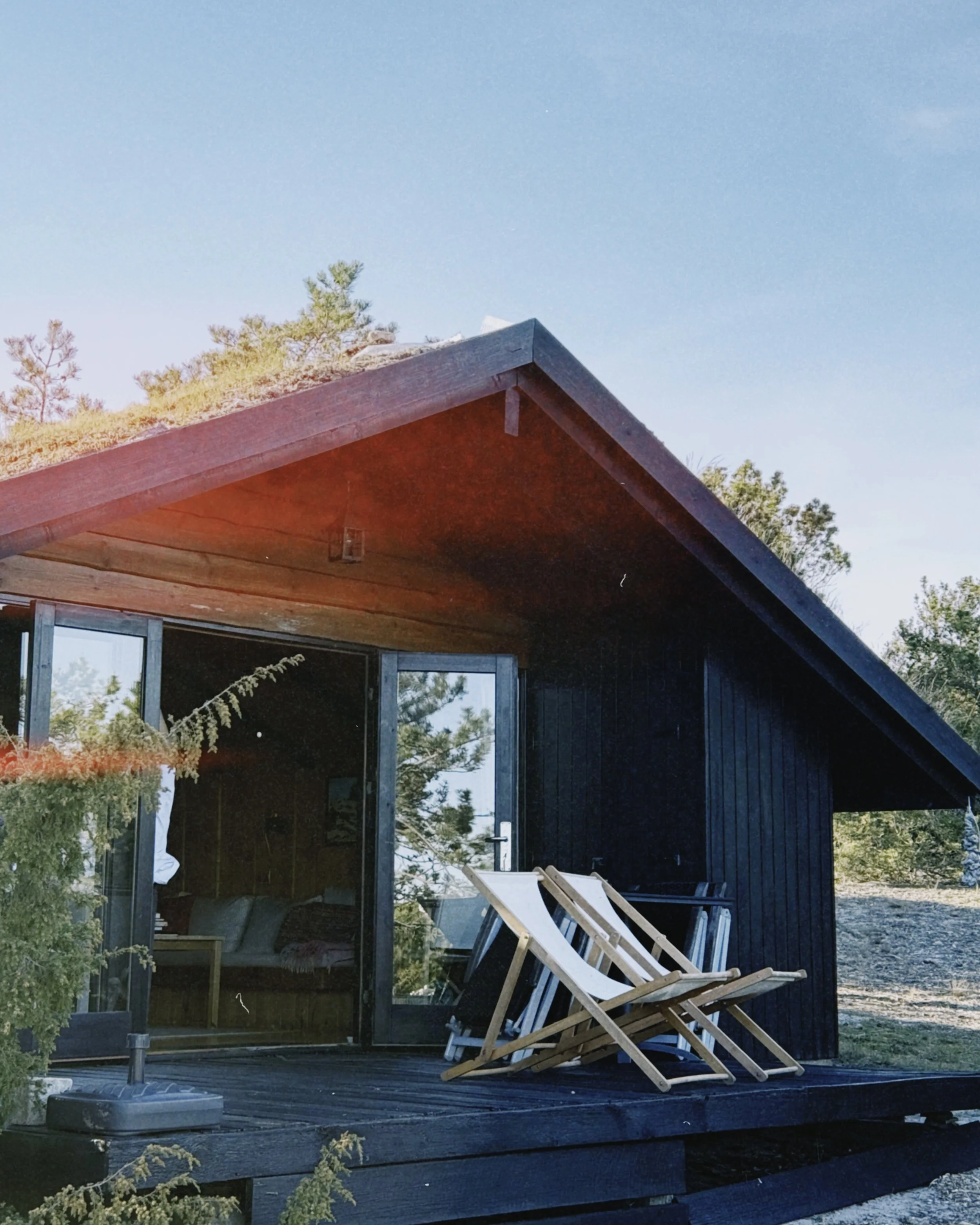
And the cabins are exactly the kind of time capsule the taxi driver described. On Kistehøjvej stands a small black house on the edge of the desert. Its roof is camouflaged beneath moss and windswept grass. The kitchen and bathroom seem abandoned somewhere in the 1970s, with old cabinet doors, avocado-green fittings, and no dishwasher in sight. Coffee cups and plates are mismatched and chipped, the knives blunt, yet the cupboards overflow with utensils and crockery collected over decades. Three corkscrews and four cheese slicers say something about the summer-house diet.
In an age of fast trends, IKEA flat-pack furniture and overconsumption, objects and materials on Anholt are simply used until they fall apart. Everything new must be transported here by the small ferry that sails only every other day, so things are used, reused, and repaired.
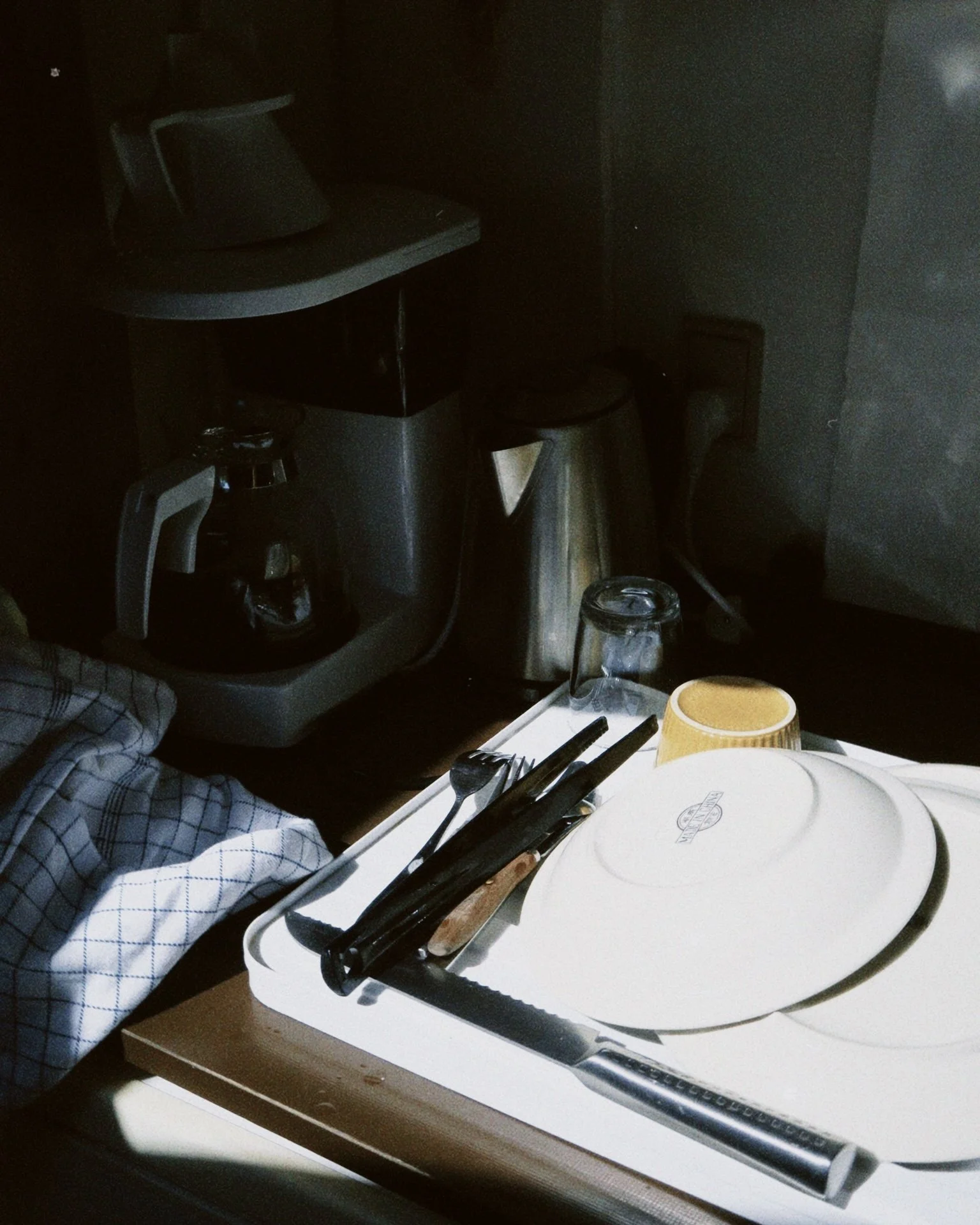
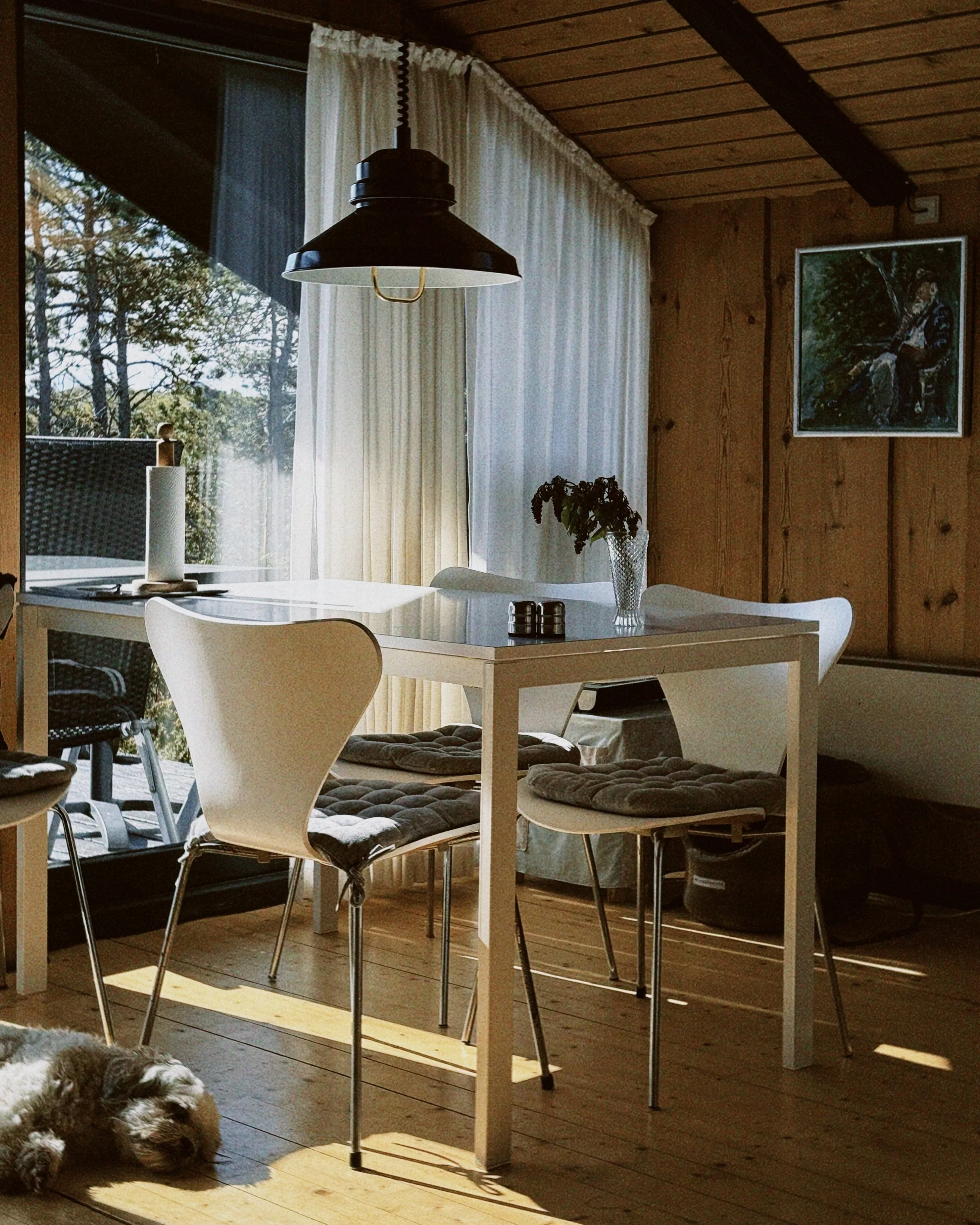
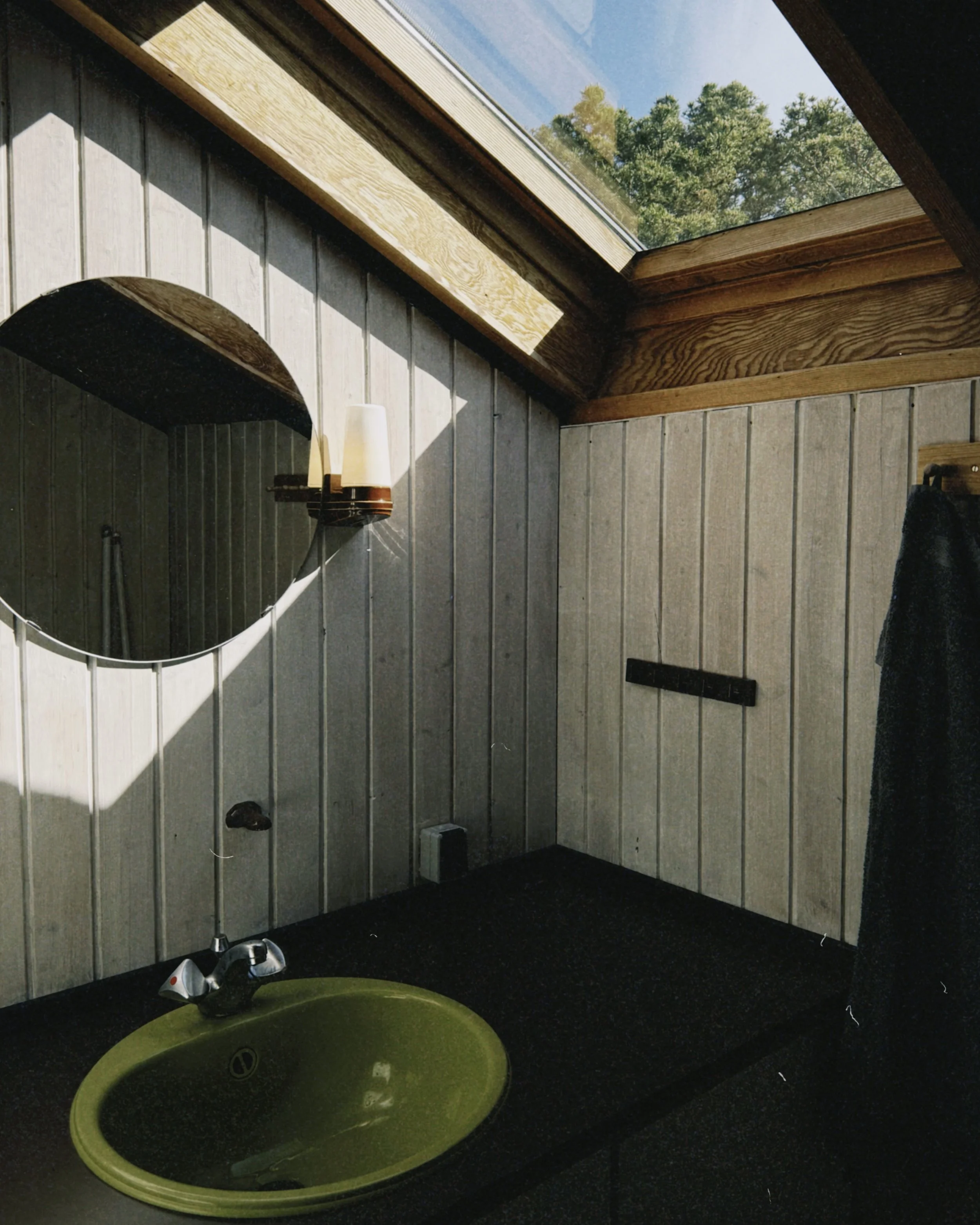
We settle in on the edge of the desert. It is so quiet that it almost presses against the eardrums. The radio drifts in and out of frequency. A small colony of ants swarms triumphantly around the crumbs from our breakfast. The little television barely draws the eye, and streaming services are non-existent. We will probably switch off the flickering screen altogether and play dice games on the coffee table instead, pour another glass of red wine. Or simply stare out across the desert.
The birdsong sounds almost tropical. Suddenly, we find ourselves scanning the sky like amateur ornithologists and googling “birds on Anholt”. A bird of prey — the internet suggests a western marsh harrier — circles above the desert. Far below, nothing small and furry can feel entirely safe. If you look long enough, you will probably find a pair of binoculars in every summer house on the island, ready for watching the hovering hunters.
The fireman makes gin
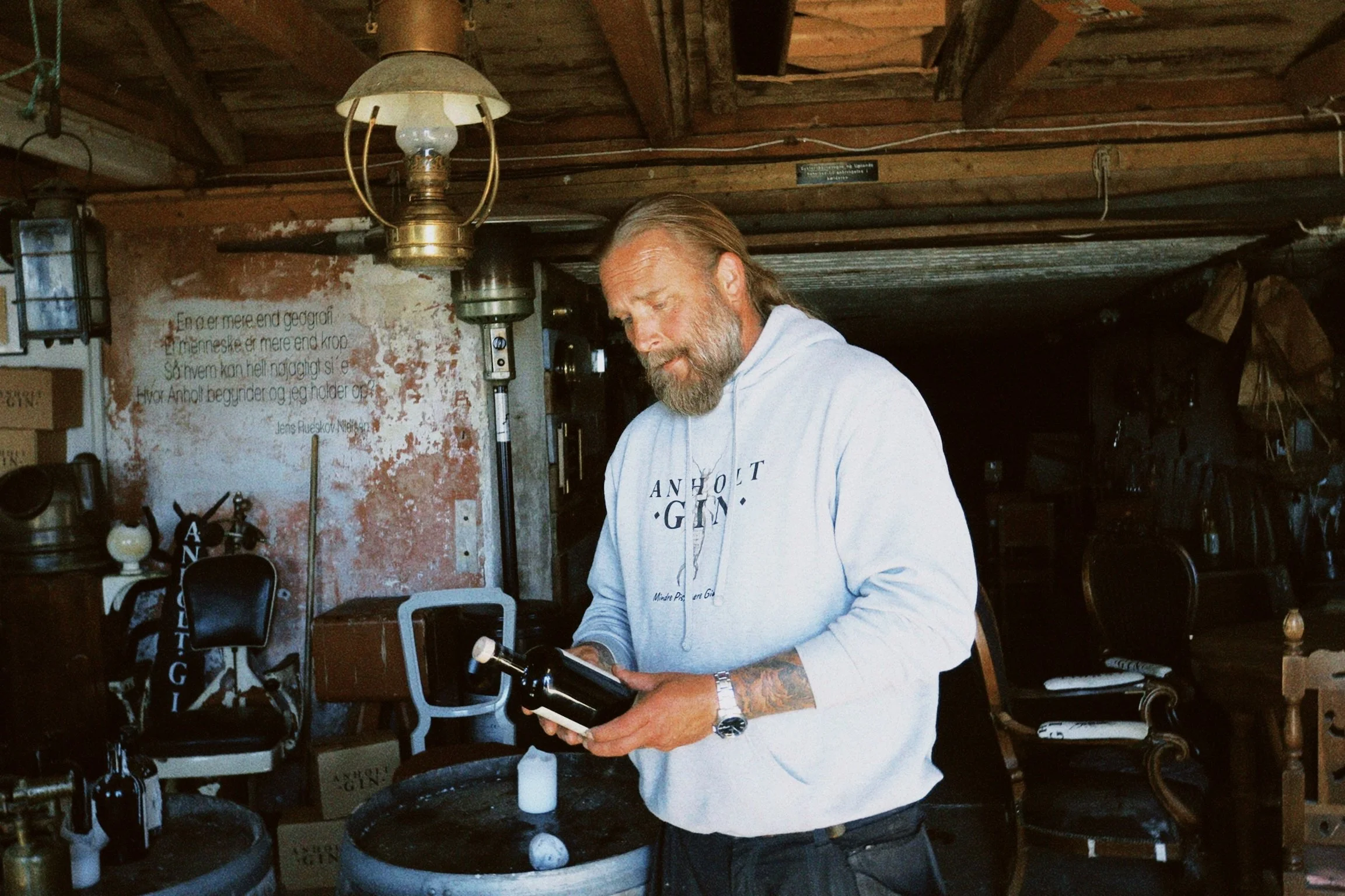
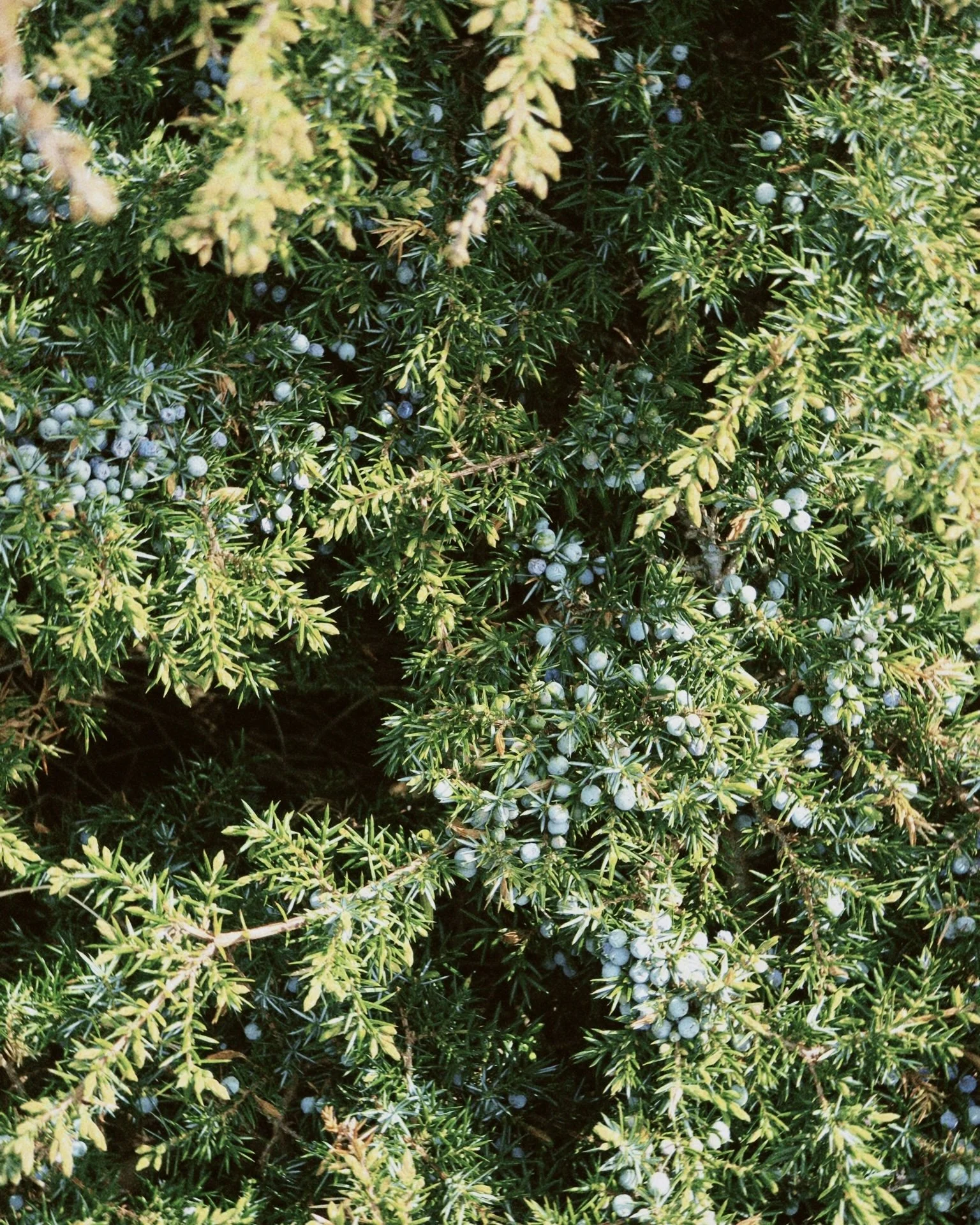
The island is covered in juniper bushes, and they are put to excellent use. Local islander Jakob Kjaergaard distils an award-winning gin from the berries and the island’s exceptionally pure groundwater. Under the slogan “Less bullshit, more gin”, he has spent a decade developing his annual gin, recognisable by the distinctive sand earwig on the label. The very same one he has tattooed on his left hand, above the initials of his five children.
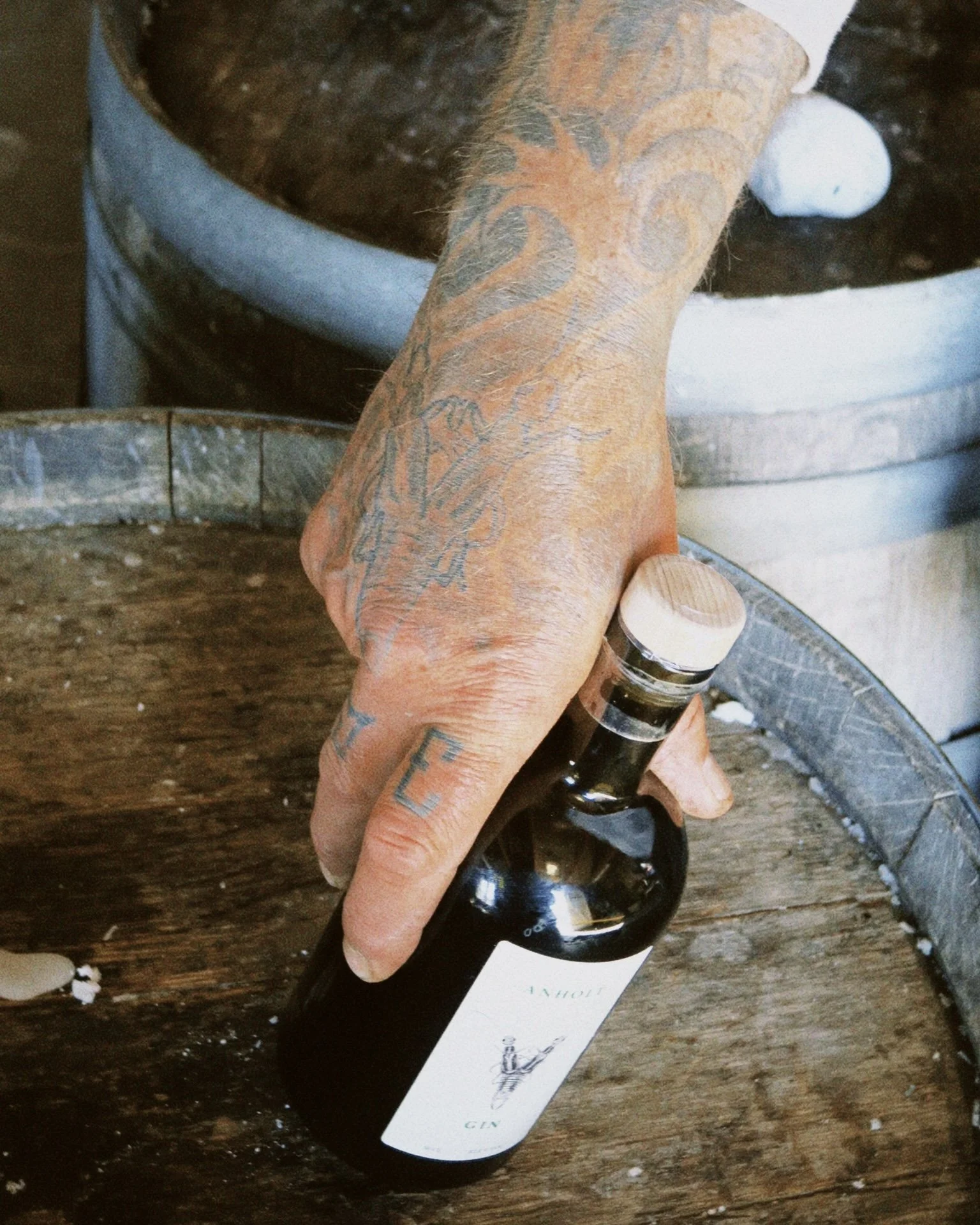
Jakob — gin distiller/fireman/carpenter/bar owner — has lived on Anholt since 2006. What began as a clever little idea for parental leave in near-isolation turned into twenty years and four more children, and now he probably will not leave again, he says with a smile. His partner, Signe Hylby — nurse/marriage officiant/writer for the Anholt newspaper and former museum curator — has family roots on the island herself.
The two of them have countless job titles on their CVs, and according to Jakob, that is simply how things work on Anholt: »You have to want this life. And you take on whatever work there is.« With 127 island residents — several of them children or elderly — the workforce is small, and capable hands must step in wherever needed to keep the tiny community functioning. The postman, for example, is also head of the rescue station and grave digger at the cemetery.
Disclaimer
Stay away from Anholt in weeks 27–35. During peak summer season, the island is packed with holidaymakers. Accommodation is booked far in advance, the harbour is tightly crowded, and restaurants and bars stay open late into the night. Visit instead outside the high season, when the pace is slower, accommodation easier to find, and there is more room to experience the nature, the darkness and the silence.
The island’s extremes
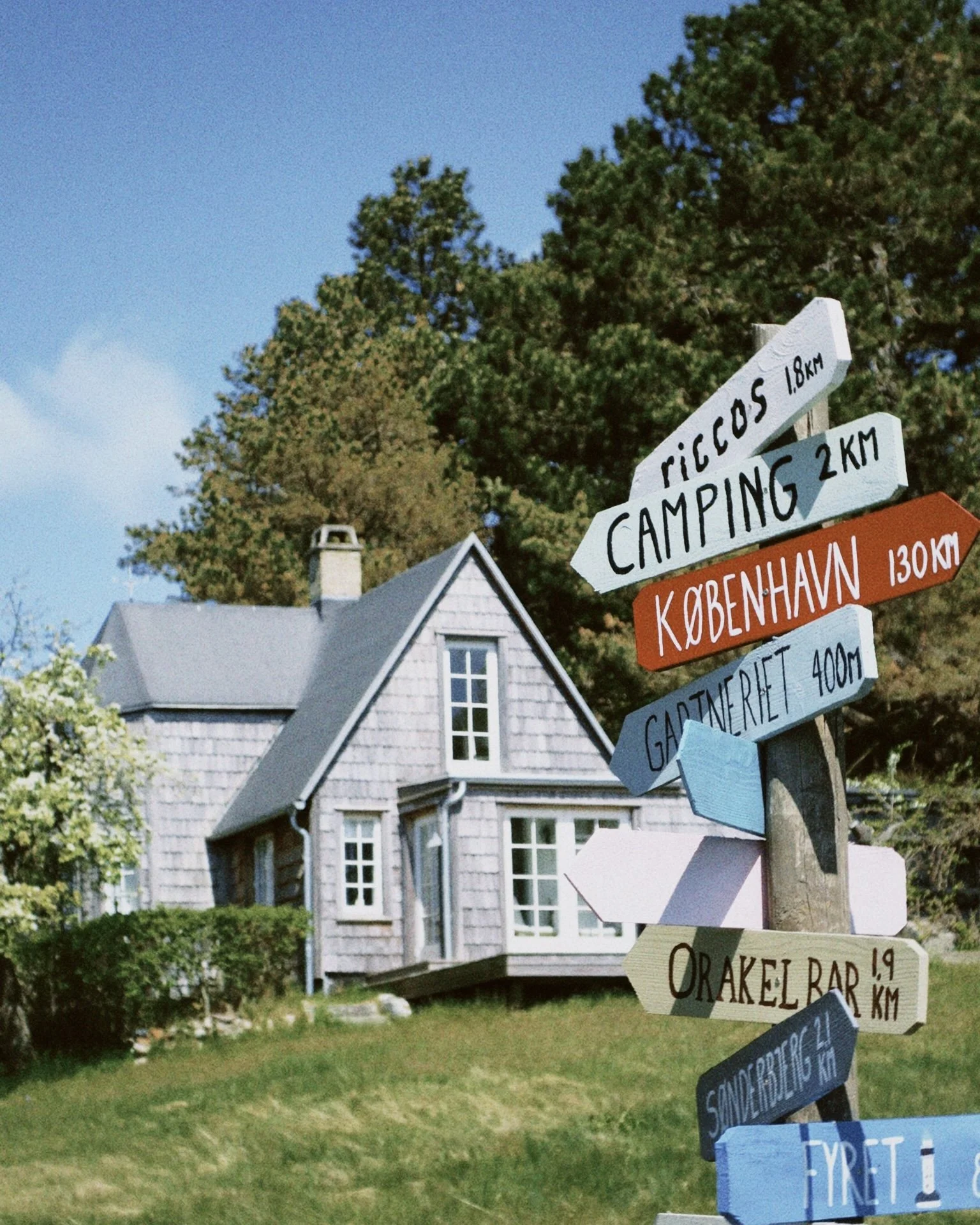
During the summer months, the island buzzes like an agitated beehive. The harbour overflows with sailboats from the rest of Denmark, as well as Sweden and Germany. They say the idyllic little marina officially has space for 200 boats — but that as many as 600 are moored side by side when summer peaks in week 30. The cabins are rented out long beforehand, the campsite is overflowing, and tents appear on every patch of grass.
The harbour office has even found it necessary to put up signs banning portable party speakers. Every shed is transformed into a bar or restaurant, and the locals work themselves to exhaustion servicing the roughly 60,000 visitors. There is dancing at Orakelbar, langoustines on the quay, and ice-cold gin & tonics at Dørken. In everyday life, there is no police presence on the island, but during the summer months a couple of mainland officers are stationed here to keep the bright nights under control.
»Summer is completely extreme. And winter is equally extremely quiet. But I think you need both. Either one would kill you if you didn’t have the contrast.«
— Jakob Kjaergaard, gin distiller/fireman/carpenter
Jakob’s gin bar, Dørken, is one of the focal points of summer. Tourism is the island’s primary source of income, and summer is when the money must be made. The islanders could not survive without the guests. The gin distiller hesitates slightly when we ask whether he actually enjoys the frenzy of high season: »It goes from one extreme to the other. Summer is completely extreme. And winter is equally extremely quiet. But I think you need both. Either one would kill you if you didn’t have the contrast.«
And perhaps it is the feverish summer that keeps them from going quietly mad during the dark, silent winter.
The final visit from the outside world comes in October. The extraordinary juniper berries are harvested in week 42. More than 200 volunteers from the mainland gladly flock to the island, camping out, hanging around, and gathering berries. Their reward comes in the form of special-edition gin bottles equivalent to the weight of the berries they collect — bottles that are never sold commercially.
After juniper week and until Easter, not a single tourist is seen.
We enjoy the May sunshine, dare to eat the year’s first breakfast outdoors, and we even dare the season’s first plunge into the cold sea — yet shudder a little at the thought of what this place must feel like on a windswept day in February. The bent direction of the trees bears witness to the winter gales. The worn old summer houses, charming in a dusty ray of sunlight, could easily appear haunted on a November afternoon when the Danish sun sets at 3:30 pm.
What do people even do once winter arrives? Jakob chuckles and says they »close Anholt.«
»But what people don’t see is that we’re still a society that has to function. We have all the things a society needs: home care, the school, the church, the fire brigade, the fishing industry, the grocery store. And really, we have even more to do, because we can’t expect help from the neighbouring town’s fire department or just shop somewhere else.« A “mountain of work” piles up over the busy summer. Winter is spent making sure the island survives. »But yes, life moves slower. That’s when close relationships become essential.«
Picture-postcard views and glazed pork
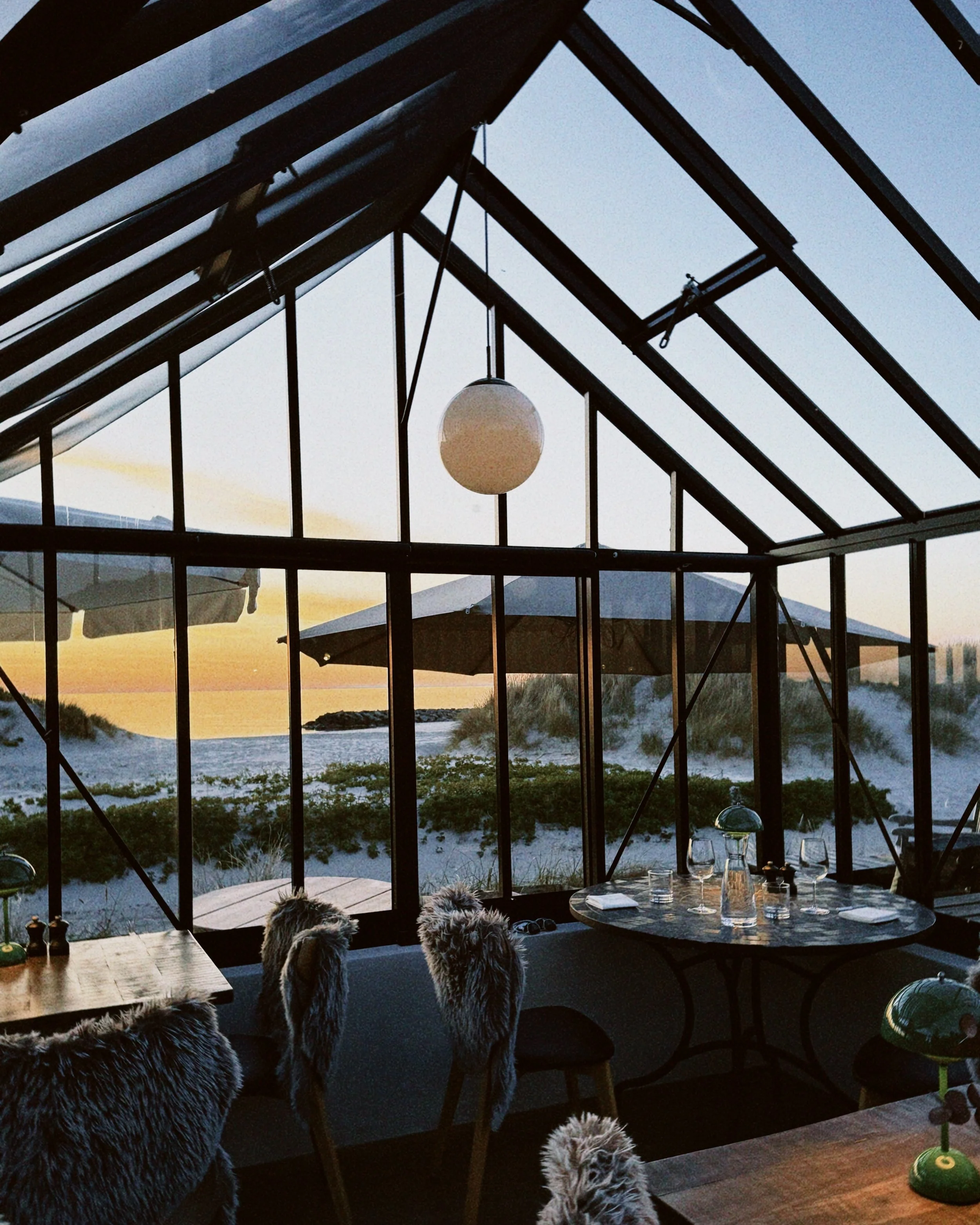
We were prepared for the fact that not a single eatery would be open outside high season. Still, the aroma from Deng’s Thai Food drifts invitingly from the small extension attached to a suburban house. And on the ferry we spotted a note saying Spiseriet would be open on carefully selected dates. We book a table, and when evening arrives, we pedal rusty bicycles Through the Countryside — literally, that is the name of the road — and arrive at a collage of structures that together make up Spiseriet: a van with a serving window functioning as the bar, a large shipping container with a hatch serving as a highly tuned kitchen, and a remarkable greenhouse with around fourteen seats acting as the restaurant itself. Scattered garden furniture out front functions as a beach lounge. And wherever you sit, you are treated to the most beautiful view.
Like a Danish Golden Age painting, the sea glimmers invitingly, framed by white dunes and waving marram grass. The sun sets before our eyes, casting a golden glow across one course after another: Danish oysters, Finnish fish soup with sustainably caught Danish saithe, Georgian khinkali with spicy filling, rich crispy pork and Cambodian pepper — postcards from around the world, brought home to this Danish picture postcard by the couple Kat and Jacob. When Anholt falls quiet, they travel to the Balkans, Asia, Paris, feeding their appetite for the lights and sounds of big cities — and gathering inspiration for the menu.
As we sit eating magnificent world cuisine on this almost deserted speck in the Kattegat, a swan glides past, and for a moment the beauty of it all borders on cliché.
No one locks their bicycle here, so of course they are still leaning against the marram grass exactly where we left them. We wobble home, and a pair of roe deer look up indignantly. Clearly, they feel just as entitled to wander the gravel path at dusk as we do.
Time to count the stars
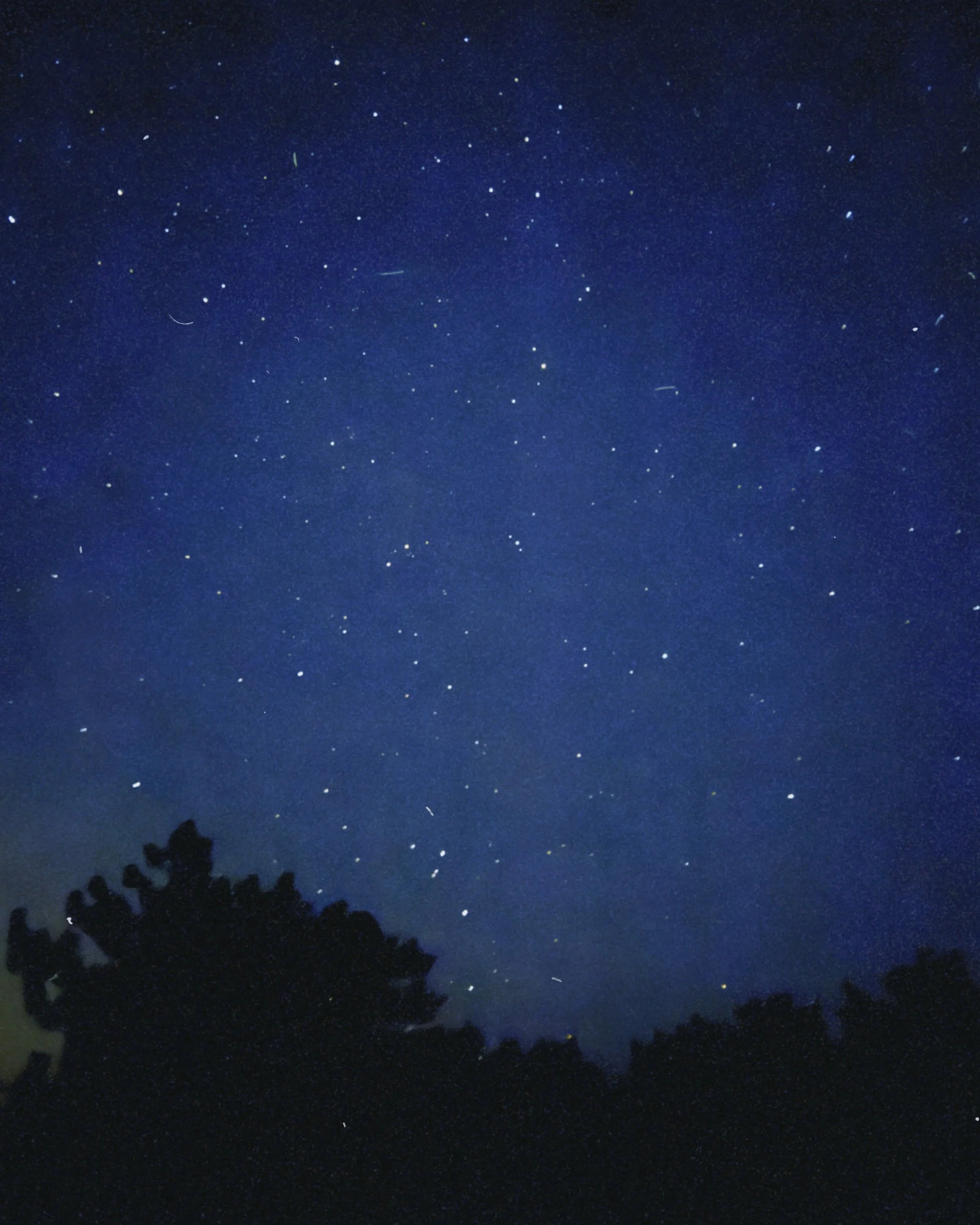
We go to bed early in the bright May night, but wake again at 1:49 am. Faint flashes through the skylight remind us of what the night sky here has to offer. Wrapped in warm duvets, we step out into the cool night, lean back in deck chairs on the small terrace and look up: Endless stars shine across the undisturbed dome of the sky.
Under this sky, it suddenly makes sense why people in the past believed themselves enclosed beneath a great vaulted canopy sprinkled with stars. Anholt is renowned for its night sky because the island lies so remote, far from the light pollution of major cities. In 2025, the island was officially Dark Sky certified as one of the best places in the world to observe the stars — a distinction only around 200 places worldwide can claim.
We close our eyes once more inside the shoebox-sized summer house, exhausted from fresh sea air and gin & tonics. There are no plans for tomorrow. Perhaps a Kalaha tournament. A hike through the desert to the lighthouse. Rumours speak of a stranded whale at Flakket. And we must remember to buy coffee before the grocery store closes at noon.
About Anholt
Location: In the middle of the Kattegat, between Denmark and Sweden
Area: 22 km²
Residents: 127
Annual visitors: 50,000–60,000
Paved roads: 2
How to get there: Ferry from Grenaa or flights from Roskilde
Don’t miss: The desert, Dark Sky, the langoustine fishermen in the harbour, gin & tonics, and homemade cinnamon buns in a summer house with bad wifi and a good view.