ISSUE 04
The man behind Denmark’s Graceland - Elvis’ second home
2026
Words: Henrik Grønvald
Photos: Jakob Vingtoft / Henrik Grønvald
Museum Director Henrik Knudsen’s immense fascination with the great Elvis Presley began with a simple song and ultimately led to the creation of his very own Graceland. Along the way, he was met by scepticism as well as pushback, but at the same time heartfelt recognition that peaked when Priscilla Presley herself spent five days at Memphis Mansion in Randers.
‘It’s now or never.’
Elvis’s velvety baritone voice greets you the moment you arrive at the white gates, ornamented with notes curling and winding their way all the way across.
‘… come hold me tight.’
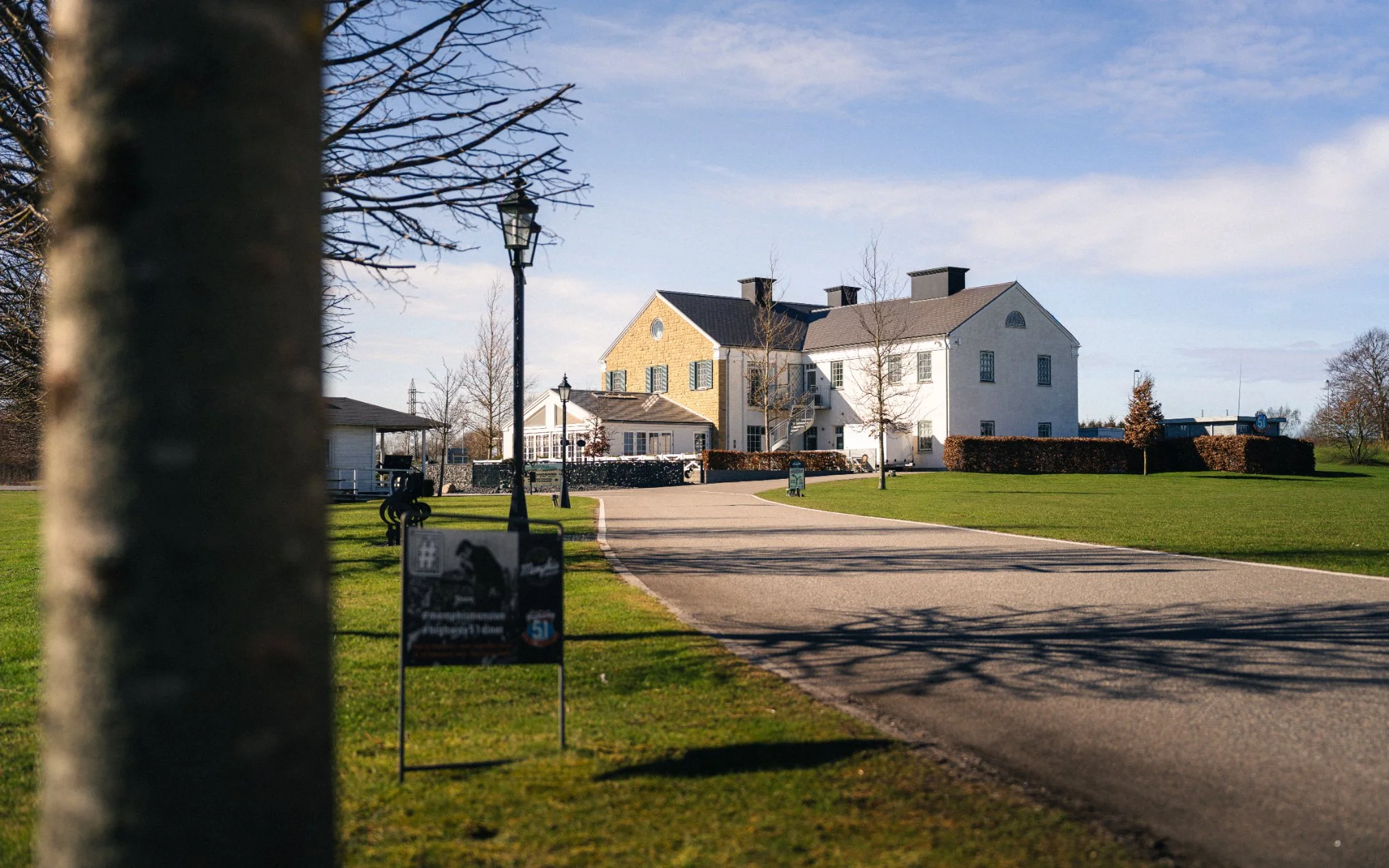
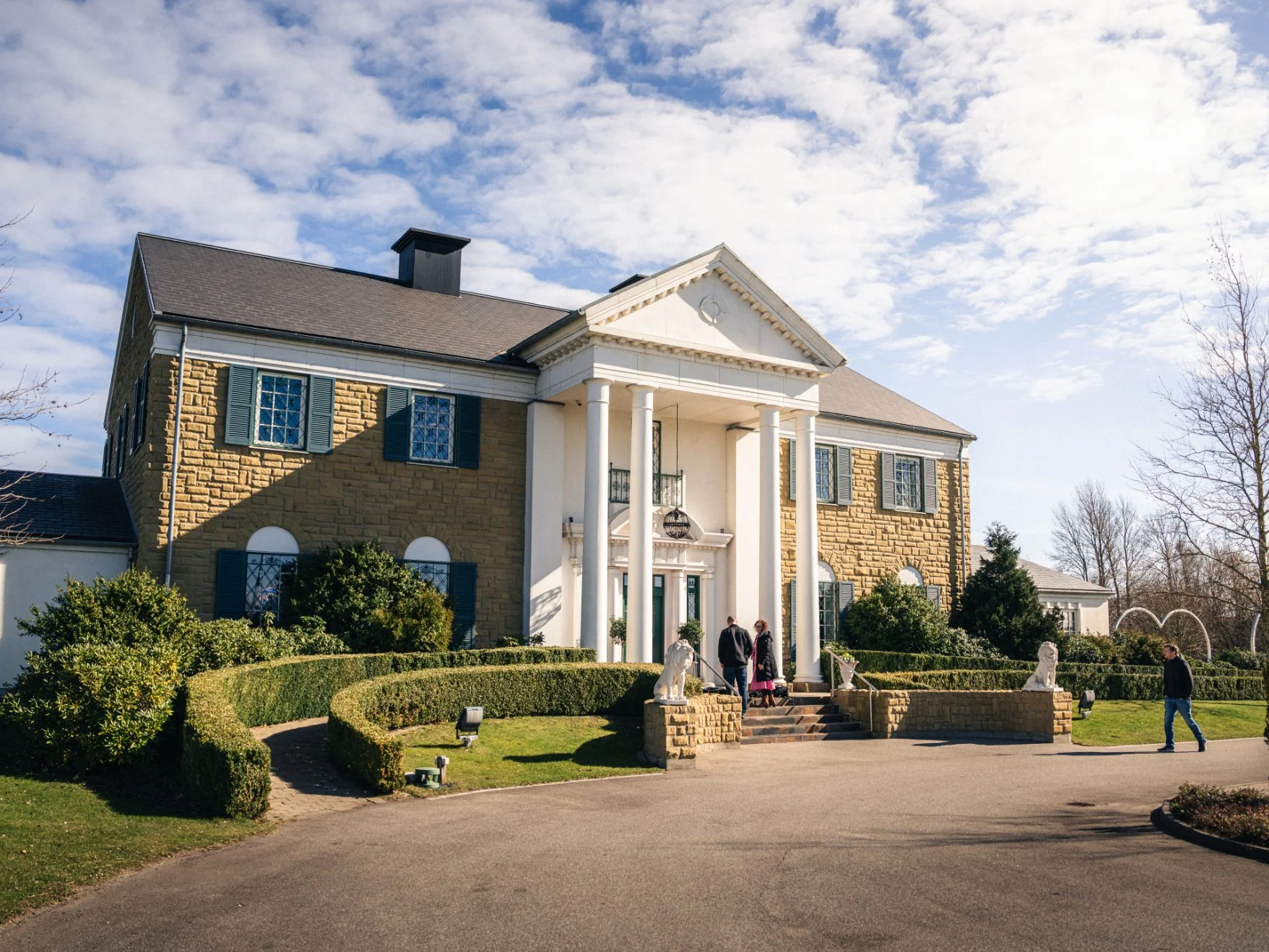
At the end of the winding drive stands a two-storey mansion looking as if it belonged in the American South.
Taking it all in, there is something almost rather provocative about the place.
Not because the house makes a spectacle of itself. Not because it appears ostentatious. But simply because, in its very conception, it refuses to conform to its surroundings – much like Elvis himself.
Because what is an exact replica of the world-renowned American Graceland doing in the middle of an industrial district in the provincial town of Randers, Denmark, surrounded by hardware stores and a car wash?
It is as though someone took a piece of American cultural history, wrapped it up with meticulous care and transported it all the way to Denmark – only to put it in what would appear to be completely out of place.
However, according to Henrik Knudsen, the man who conceived the idea of recreating Elvis’s home in Randers, of all places, the chosen location could not have been more perfect for the house.
‘Some 65,000 vehicles pass along that road every single day,’ he says, pointing his thumb over his shoulder towards the junction behind us, connecting two of the town’s main roads.
‘You could not ask for a better location to be on display.’
The original Graceland, he points out, is hardly tucked away in a posh residential area in a quiet suburb of Memphis, Tennessee, either. It too is surrounded by large shops, car dealerships and motor repair garages.
‘A lot has changed since Elvis fell for the house in 1957.’
And Henrik Knudsen should know. He has visited Graceland more than 100 times.
Head or heart?
Passing through the impressive entrance, framed by soaring white columns, we enter the world of Elvis – and for just a moment, it feels as though we have been granted a glimpse into the life of the King of Rock ’n’ Roll.
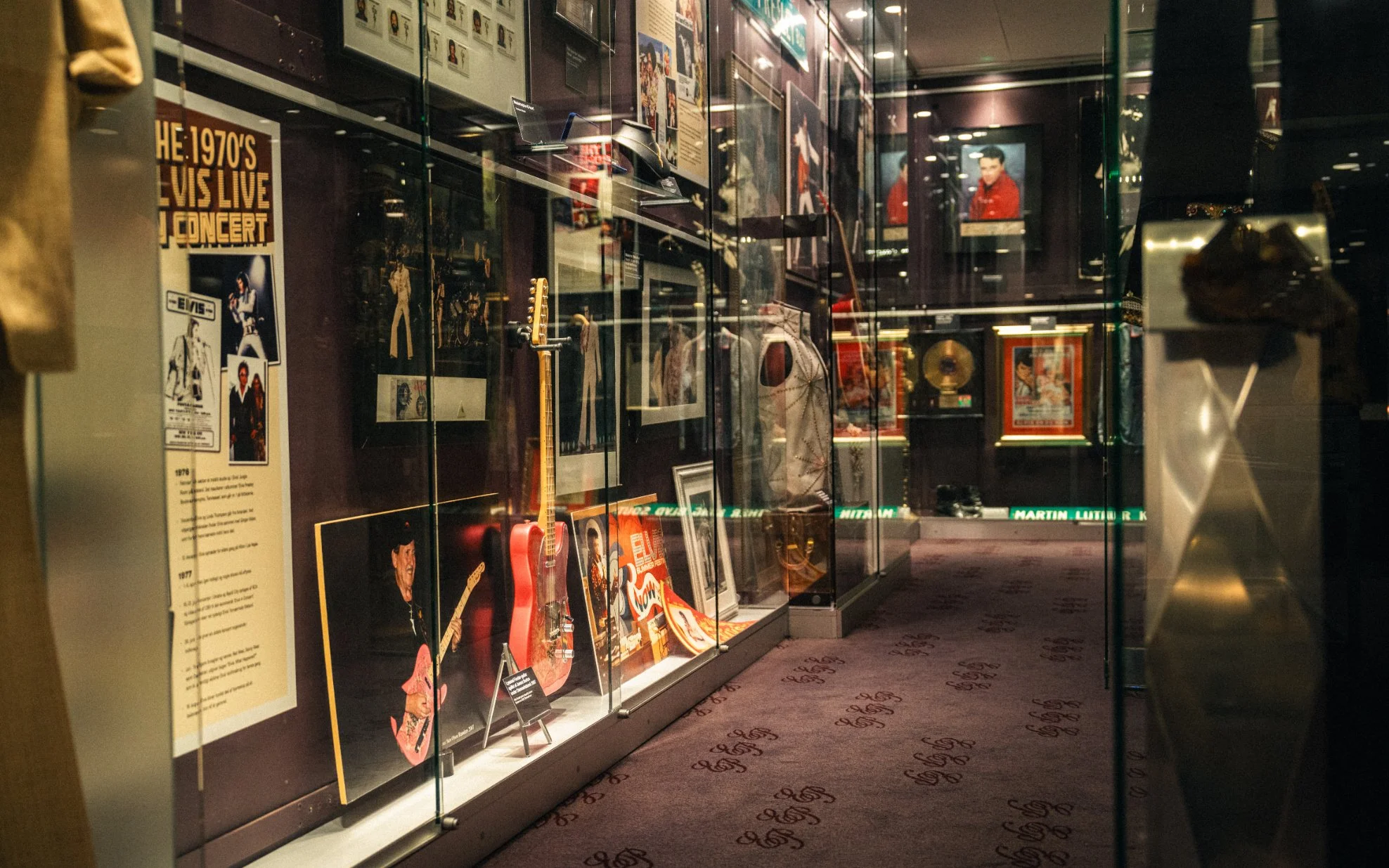
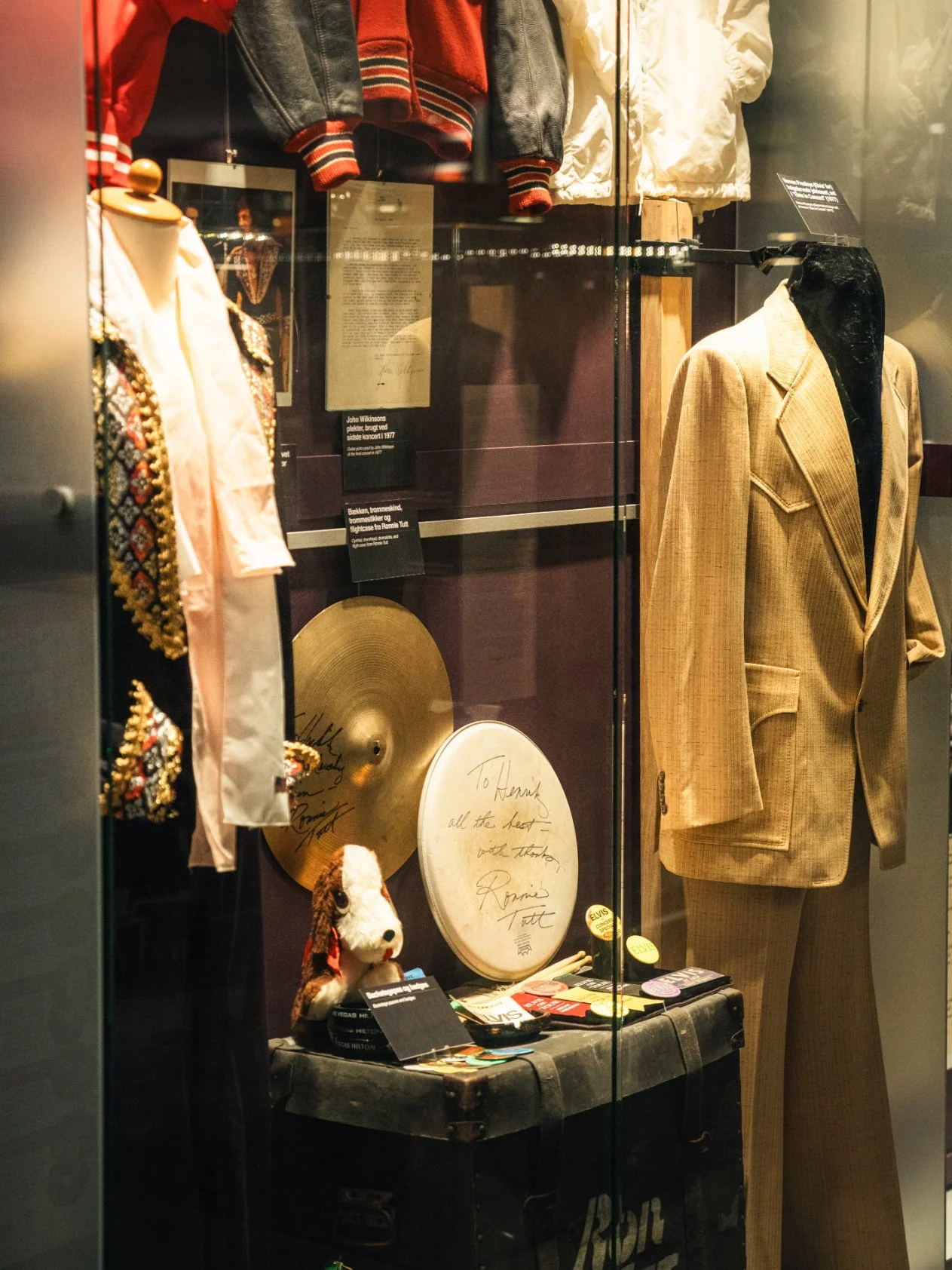
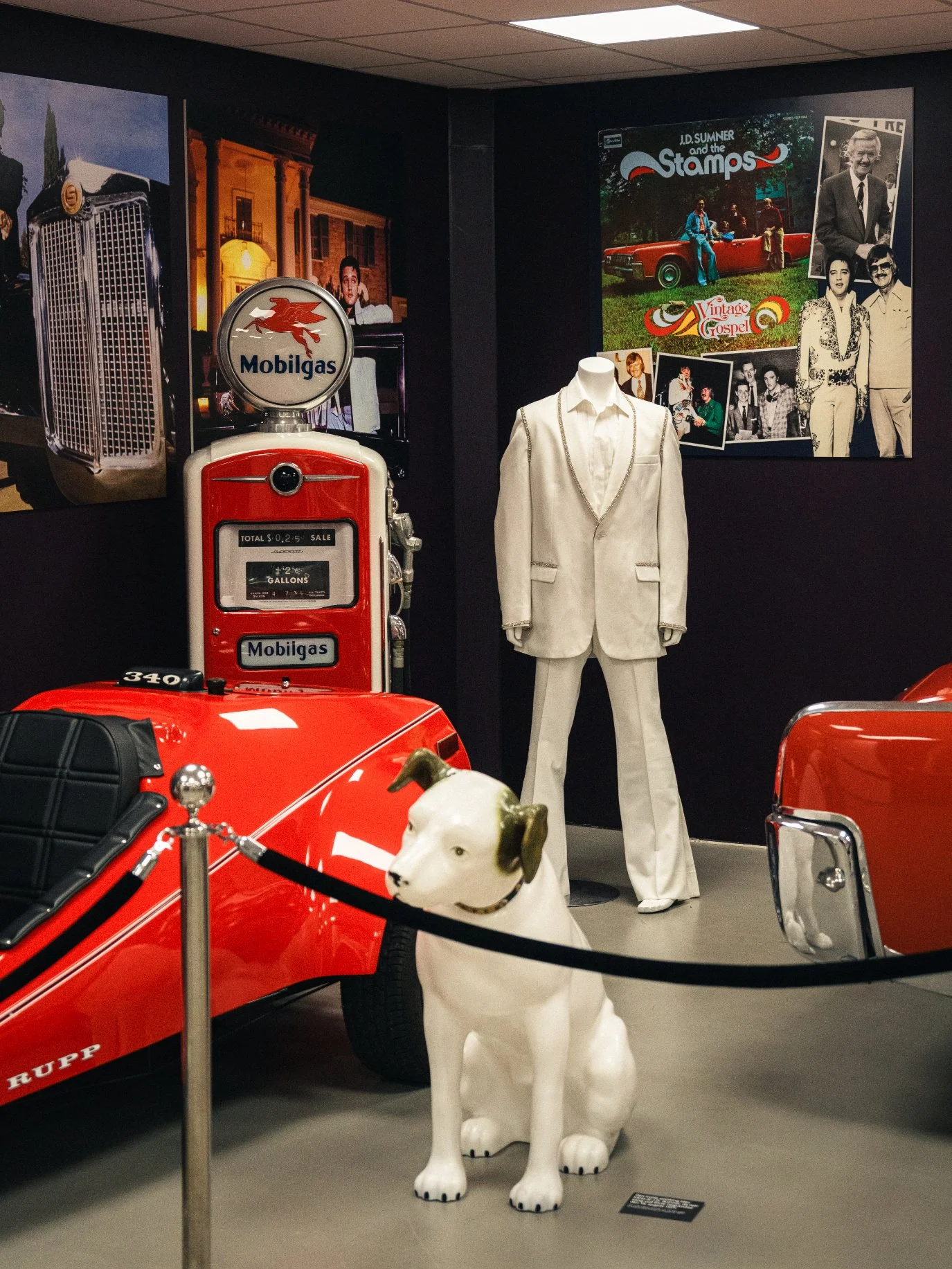
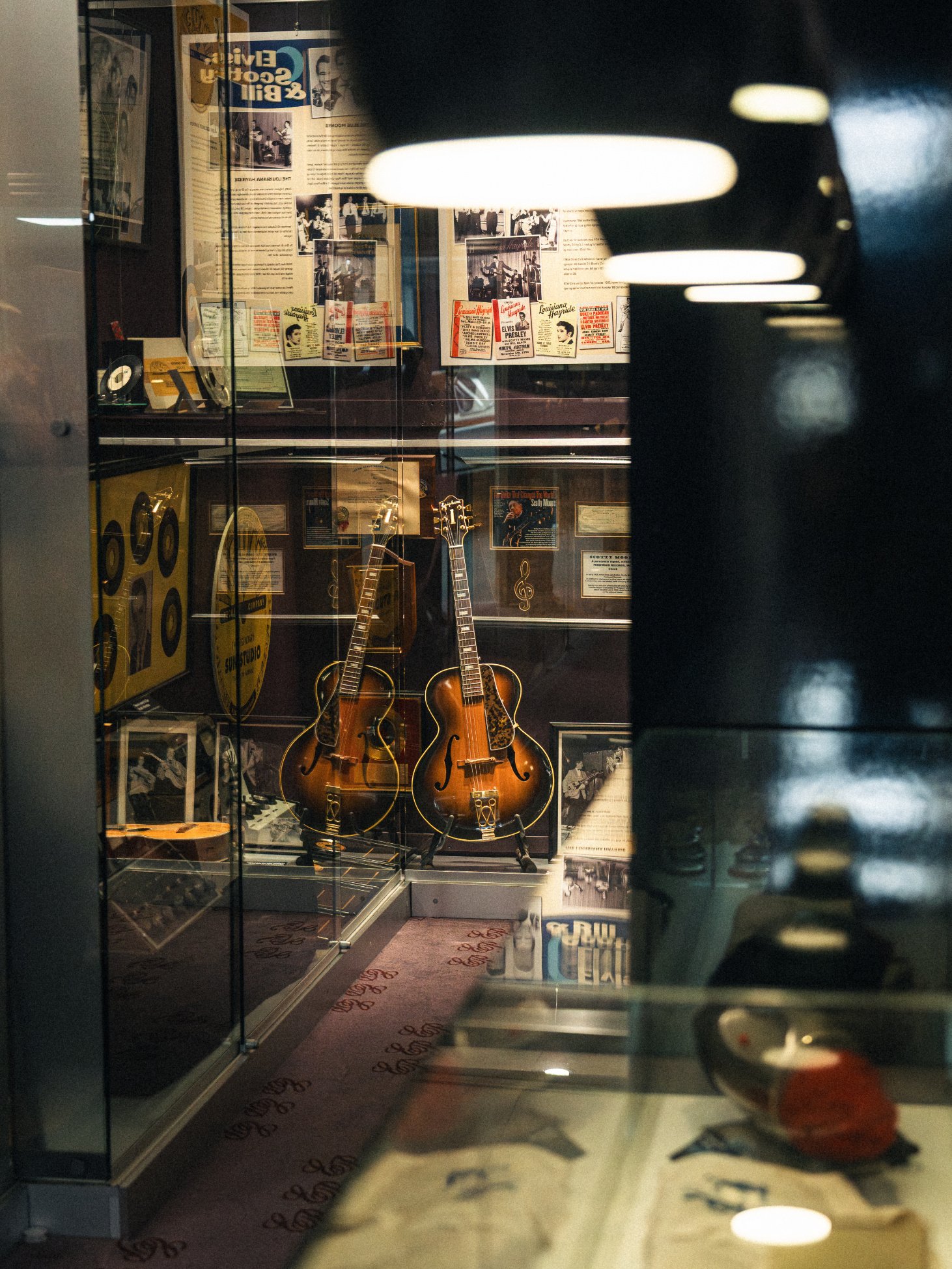
The exhibition is packed with fascinating relics and memorabilia from Elvis’ extraordinary life and career – including the black leather boots he wore on stage for several of his Las Vegas shows, the iconic Hawaiian shirt from the film Blue Hawaii, and the gleaming red Lincoln Continental that Elvis loved cruising around in, just to name a few items.
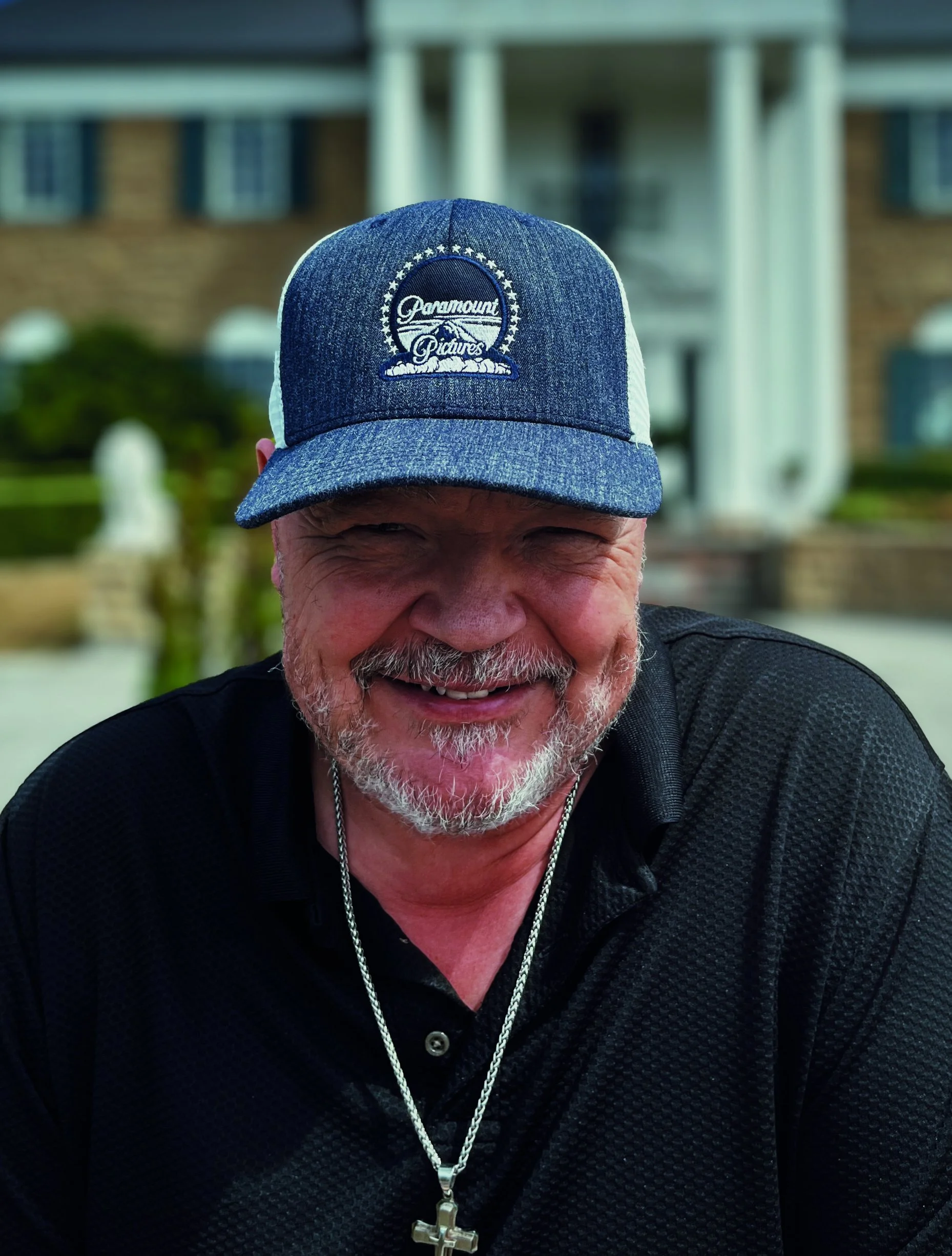
The head that thought up what many have regarded as an utterly mad idea is hiding under a pale-blue ‘Paramount Pictures’ cap.
And Henrik Knudsen looks nothing out of the ordinary. He smiles when we briefly touch on the subject. After all, he got used to being thought of as a bit bonkers a long time ago.
‘Perhaps it is actually somewhat of a prerequisite,’ he says, before adding:
‘But I expect I have a slight touch of ADHD in me.’
»The most important thing was never to create a museum. The most important thing was to communicate the story properly.«
— Henrik Knudsen, Museum Director at Graceland
And even he can still marvel at how the world’s only Elvis museum outside the US ended up at a busy crossroads in the heart of Jutland.
‘You could ask yourself whether an idea like this comes from the head or the heart,’ he ponders.
‘There will no doubt be those who say it was obviously from the head. However, that is not how I have felt it. The heart has played a big part, too. Because the most important thing was never to create a museum. The most important thing was to communicate the story properly.’
First encounter with Elvis
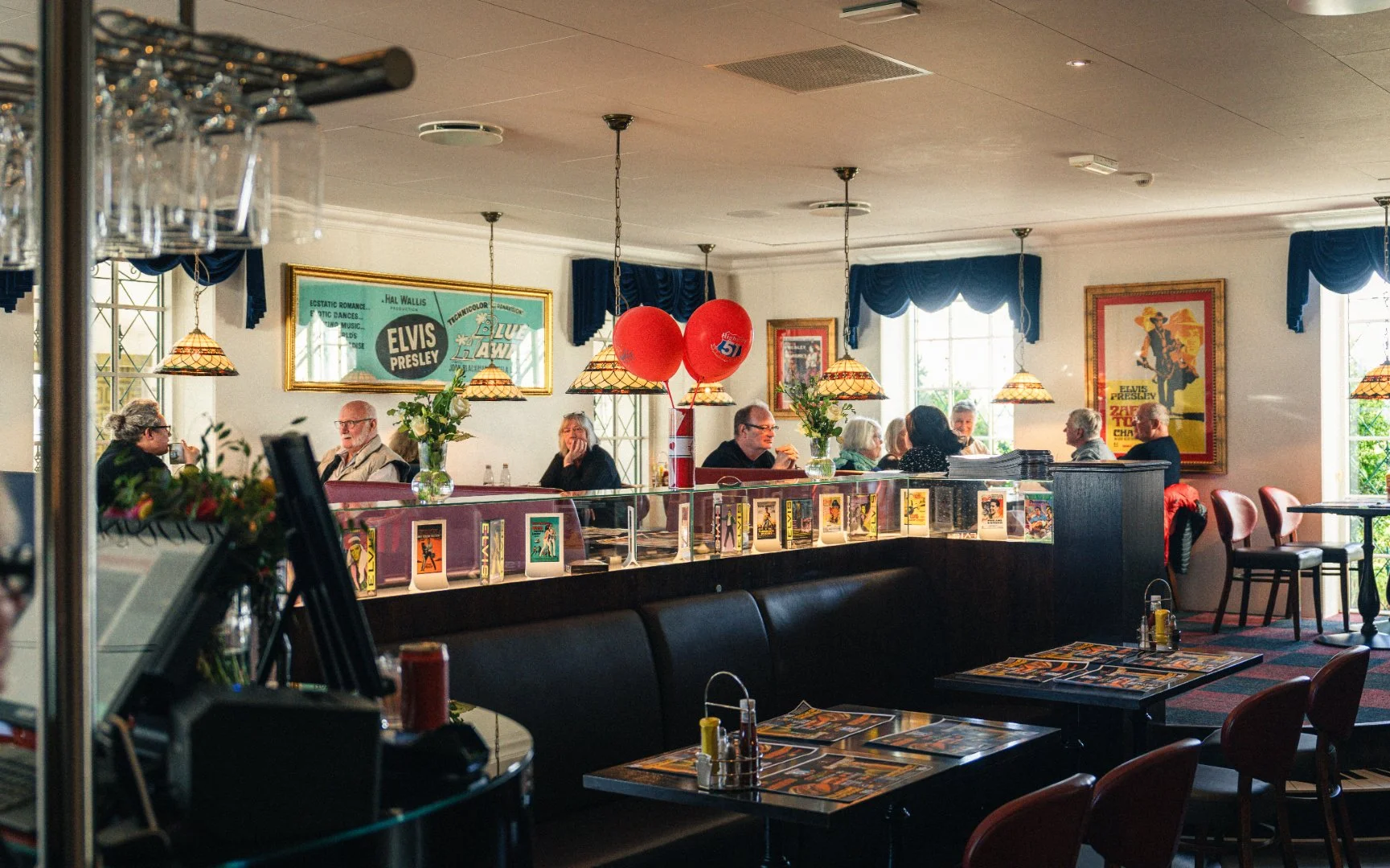
Henrik Knudsen has made sure lunch is ready at the adjoining diner, Highway 51 – named after the main road near Graceland, which has long since been renamed Elvis Presley Boulevard.
It is a warm summer’s day – bordering on downright sweaty this noon, so we opt for a table on the terrace, shaded by a large, black market parasol.
The museum director’s thoughts drift back to his childhood days in Odense on the island of Funen.
The first mental cornerstone of Memphis Mansion was laid one memorable afternoon in 1972. Eight-year-old Henrik had just come home from school and tuned in to the radio programme Top 20. The presenter introduced a brand new hit by an American artist with a rather remarkable name.
‘I had never heard of Elvis Presley before, but his voice just captivated me. He sang so beautifully, and the tune was incredible. It touched something inside of me,’ he recalls.
The song was Burning Love, and his love for it was instant.
Elvis passed away, and a passion was born
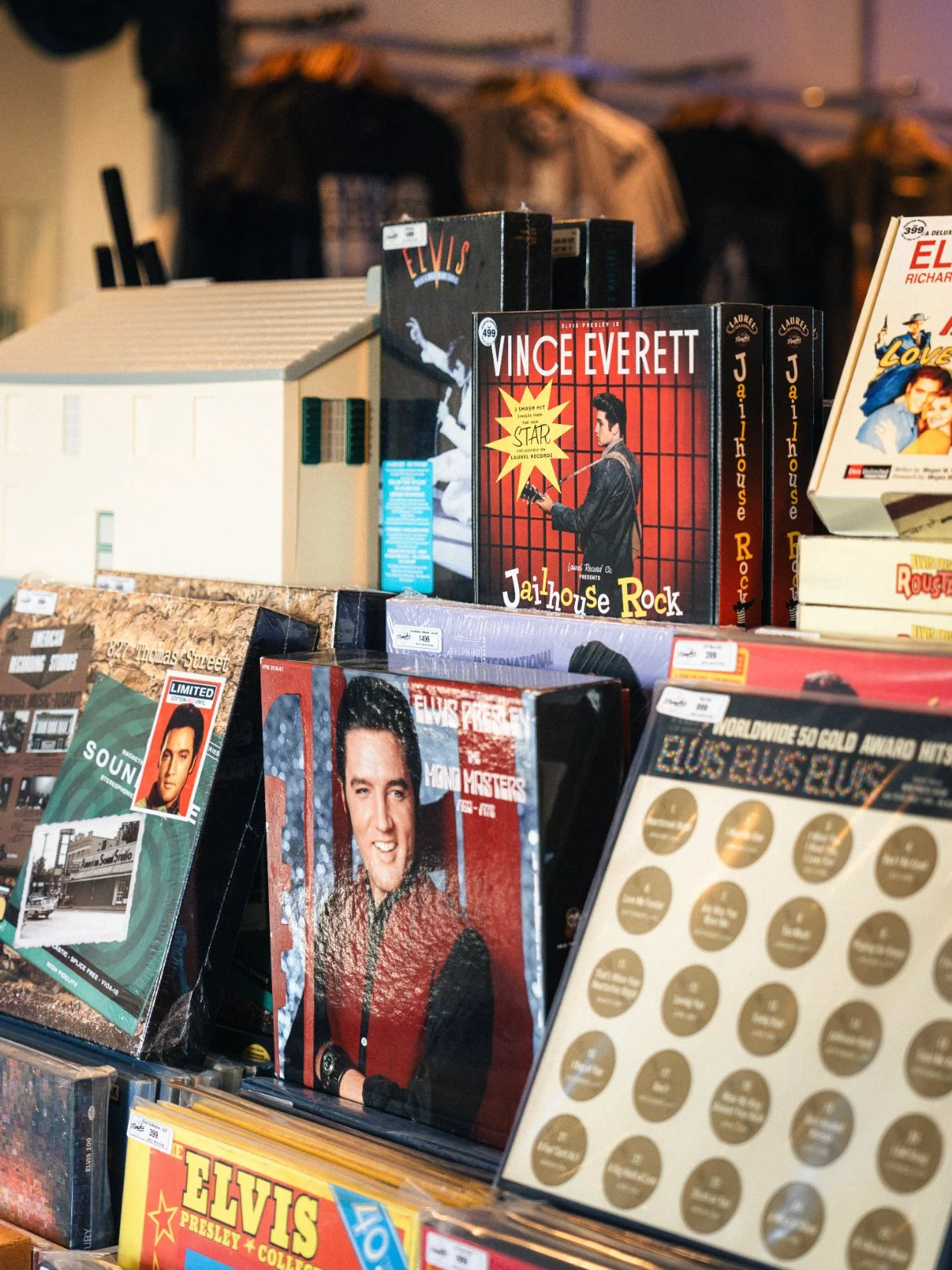
Five years later, on 16 August 1977, Elvis passed away. While most fans mourned the loss of an idol, the day marked the beginning of a lifelong mission for Henrik Knudsen. The young Elvis fan began taking out books and vinyl records from the library. It was no longer just the music that captivated him.
‘I had become fascinated by Elvis’ story, his poor upbringing, his rebellion. And then, when my teacher one day told us that playing Elvis Presley’s music was forbidden behind the Iron Curtain, I realised for the first time that music could be dangerous. And that simply made me even more intrigued.’
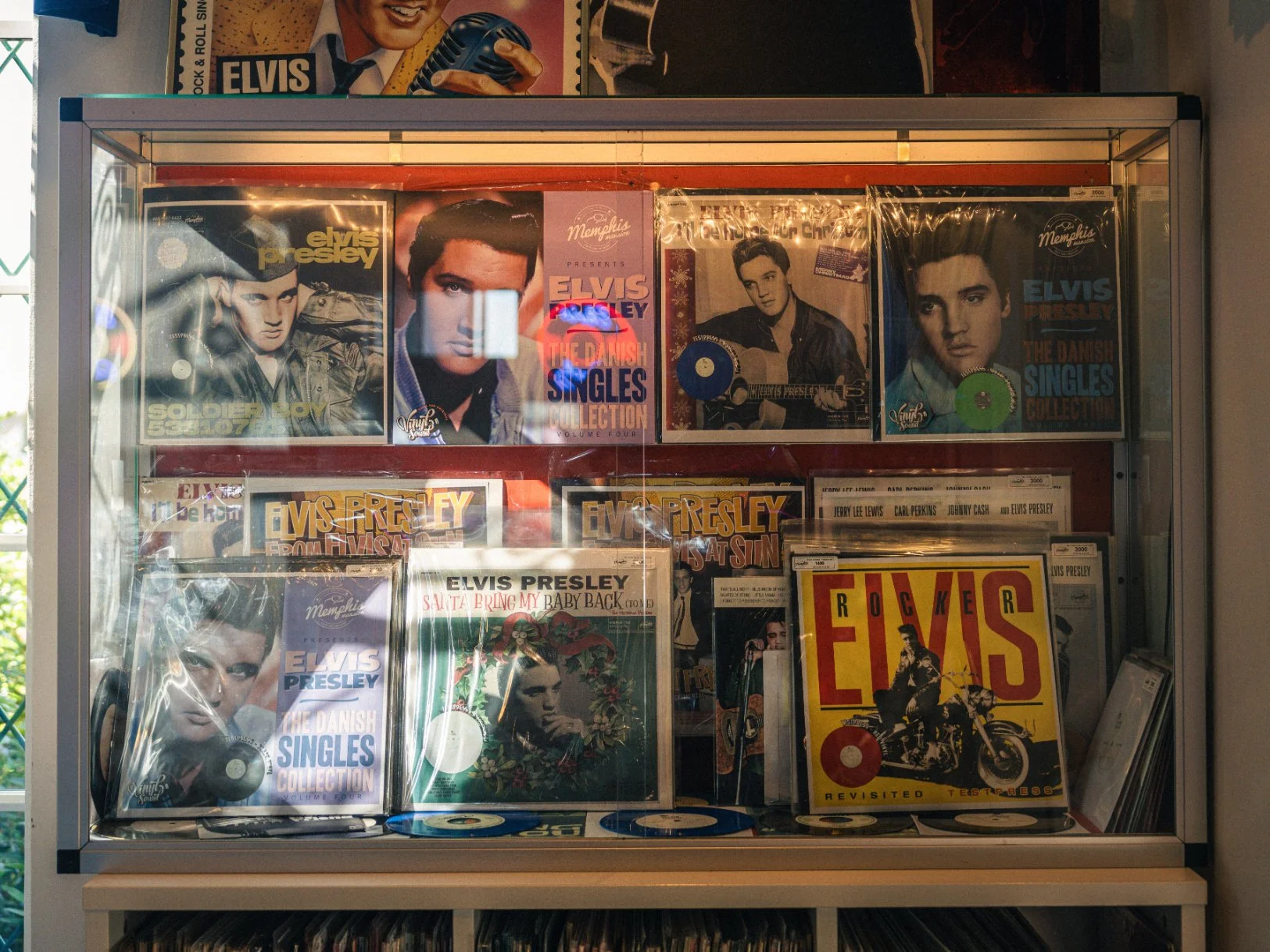
Throughout the rest of his school years and into his youth, Henrik Knudsen soaked up every scrap of information he could find about Elvis. He even began collecting items that were related to his idol.
When it came to his formal education, however, he settled for what he describes as a ‘simple’ qualification in business studies. As Henrik Knudsen puts it with characteristically dry understatement, he got more out of a two-and-a-half-minute single than any school ever managed to teach him.
In the 1990s, he worked as a travelling sales rep for Bosch. Between countless customer visits and demonstrations of the latest in power tools, he inhabited a parallel universe of record fairs and exhibitions. He himself refers to those years as ‘my unofficial Elvis education.’
Little by little, people around him began to take notice of Henrik’s deep and persistent fascination. One day, the head of tourism in Randers asked if he would like to put his collection on display in an empty shop in the heart of town.
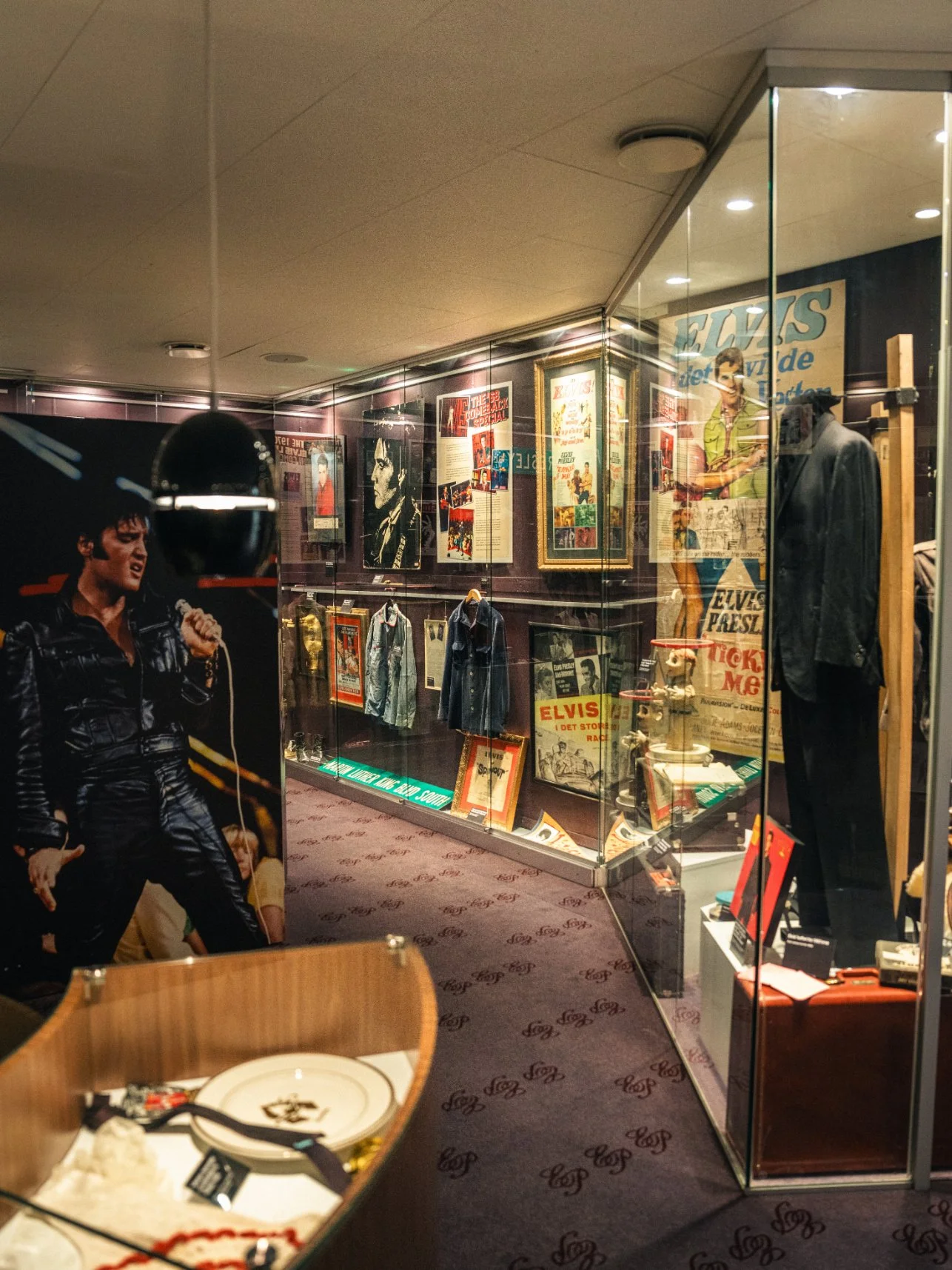
‘And sure, I would love to do that. But calling it a collection might have been a bit of an exaggeration. What I had was a jacket, an autograph, and a gold record. I had to make up the rest,’ Henrik Knudsen admits, just as a Coca-Cola and a towering Devil in Disguise burger with double cheddar cheese are placed in front of him.
‘Elvis loved burgers and Coke.’
Exhibitions attracted thousands
The next exhibition took place in Søndervig on Denmark’s west coast, attracting as many as 50,000 visitors a week during the summer holidays. This was where Henrik Knudsen first realised that it just might be possible to create an actual permanent exhibition.
»There were times when I emptied my bank account to buy a particular item that I simply had to own.«
— Henrik Knudsen, Museum Director at Graceland
On a trip to Nashville, he visited the Musicians Hall of Fame & Museum. And when he saw a reconstruction of the facade of Sun Studio in Memphis, where Elvis recorded his first five singles, including the classic That’s All Right, Mama, it had him thinking. At first, he imagined creating something similar back in Denmark. But then his thoughts took a different turn – and on a much larger scale.
‘Before I had even returned home, the idea had grown much bigger. I wanted to build a replica of Graceland.’
He returned home brimming with inspiration and determination. And then reality hit.
‘I had a very clear picture in my mind of what the museum should be like. I envisioned the diner, too, and I could almost feel the atmosphere there. But I had not given any thought as to how a kitchen actually works. Or how many restrooms you need upstairs.’
Henrik Knudsen laughs and lifts up his arm to adjust his cap – not like a man who regrets his choices, but like someone who knows the price of learning.
‘My background was not in museum management or as a museum curator. And I was not an entrepreneur, either. I put myself in a position where I had to learn about things I had never had to think about before. That became my education providing me with life skills.’
Millions at stake
The building plans quickly grew from being merely an idea to becoming reality – and from reality to serious financial business.
Money was borrowed. Investors were brought on board. Every detail was costed and calculated – on things that were new to Henrik Knudsen’s world: flagstones, installations, logistics, running costs and everything in between.
‘It cost 25 million Danish kroner to build the place,’ he reveals.
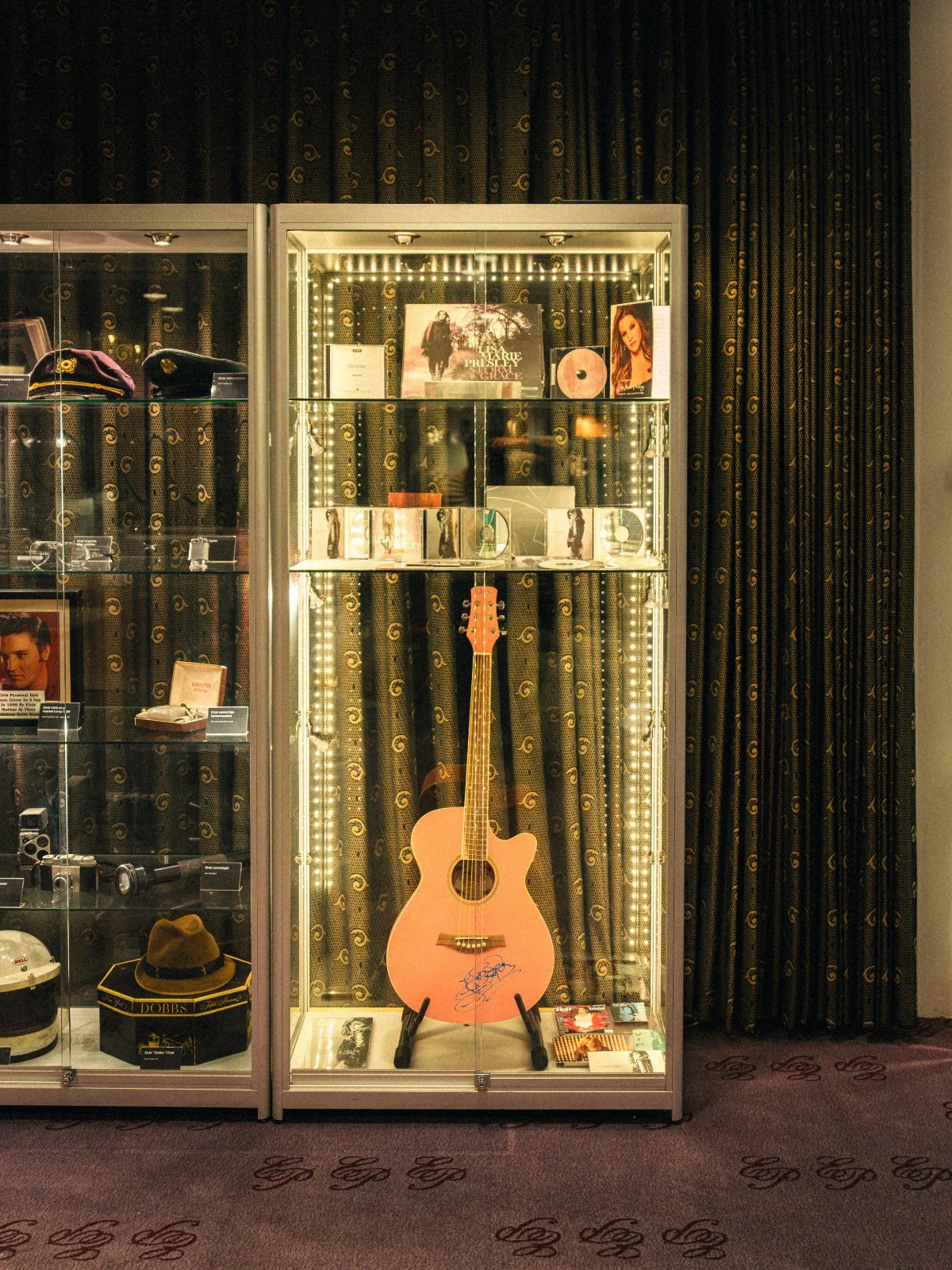
‘And then the cost of the interior on top of that. And, of course, the collection.’
»I was told it was the ugliest house in the world.«
— Henrik Knudsen, Museum Director at Graceland
As many of the items are treasured pieces with considerable sentimental value, Henrik Knudsen has no idea what his collection is actually worth.
‘But it is insured for 15 million Danish kroner.’
And it just so happens that only a third of the collection is on display. The rest is kept in storage.
How much has the large number of purchases cost you over the years?
‘Not the faintest idea,’ he instantly replies.
‘But a large amount of money. There were times when I emptied my bank account to buy a particular item that I simply had to own.’
The ugliest house in the world
The museum opened in style on 14 April 2011, but it was not exactly rock ’n’ roll from day one.
The town’s new museum director was met with considerable scepticism, and objections came thick and fast: The house was wrong. Too big. Too odd. In the wrong place.
‘I was told it was the ugliest house in the world,’ he recalls.
‘But that is how it is. When people are confronted with something unfamiliar, they take it in according to their own ideas of what ought to be here.’
Henrik Knudsen makes no secret of the fact that he did indeed take a gamble. Therefore, after the opening, he was prepared for the inevitable ‘I could have told you so’ comments, should the museum turn out to be a failure.
However, every gloomy prediction was soon proved wrong.
In the museum’s first year, the director budgeted for 25,000 visitors – a figure he considered realistic as well as satisfactory.
By the end of that year, no fewer than a whopping 120,000 tickets had been sold. Today, the number has settled at around 165,000 visitors a year – locally surpassed only by the area’s biggest tourist attraction, the Randers Regnskov tropical zoo.
»We have never received any public funding. It is the turnover that keeps the whole thing going.«
— Henrik Knudsen, Museum Director at Graceland
‘It has gone far better than I could have ever imagined. There are now 54 of us running the place together. And it all started with just me and an idea.’
Throughout the years, the museum has remained firmly in the black – annual profits have ranged from 100,000 to one million Danish kroner. All while knocking a sizeable chunk off the debt every year, too. The man who took a huge gamble and borrowed a mountain of money will soon be able to call himself debt-free.
The humble viking
In other words, Henrik Knudsen’s American dream has turned out to be a rather sound Danish business venture, as well. Visibly proud, he emphasises:
‘We have never received any public funding. It is the turnover that keeps the whole thing going.’
Despite everything he has achieved, there are no grand gestures or Elvis-style hip shakes. Henrik Knudsen comes across as a modest, down-to-earth guy who refuses to receive praise about what he has accomplished. At the end of the day, he simply considers himself to be lucky.
Perhaps he bears the traits of a Viking. Not the loud warrior, but the indefatigable, resilient kind who trusts his own course and keeps on going – even when sailing into a headwind.
The critical voices never were allowed to define the project. Far more important were the moments when the world suddenly began to understand what Henrik Knudsen had in fact created. Along with the recognition that Denmark’s seventh-largest city now held an attraction of such quality and popularity, that it deserved to be represented on a sign on the E45 motorway, leading the way to the Elvis Museum.
Surprise visit by Elvis
One of the great, memorable moments came completely out of the blue on an otherwise ordinary day in 2014. Suddenly, none other than Elvis Costello showed up in the exhibition halls, sporting a large hat and tiny sunglasses.
The museum director was so taken aback by the unexpected visitor that his first reaction was to dash into the back office and quickly do a Google search on the British star. And sure enough, it was him. And, of course, a singer whose stage name deliberately plays on Elvis Presley simply had to pay a visit while he was in town to do a concert.
The two spent several hours talking – about music, places and stories. At the end of the surprise encounter, the world-famous musician said something that will stay with Henrik Knudsen forever.
‘He felt there was something about the museum that simply could not be replicated. Something Graceland itself does not have. It is not about the size of the house or the collection, but about the passion we share here. That is something you just cannot buy,’ he quotes Castello for saying.
Over the years that have passed since then, many internationally renowned artists have dropped by the museum – including Brian Wilson, Van Morrison, and Elaine Paige. The latter even let a beautiful musical interpretation of one of Elvis’ iconic songs ring out through the exhibition halls, accompanied by a Schafer & Sons grand piano that is an original piece from Graceland in Memphis, Tennessee. Henrik Knudsen put in the highest bid on the piano at an auction at the Beverly Hills Hotel in Los Angeles.
He is quick to point out, however, that while he sincerely appreciates the star-studded visits, the celebrities are not the ones who keep the place going – nor is it the eight per cent of visitors who are confirmed Elvis fans.
‘It is everyone else,’ he says.
‘The people who come in between. The drop-in visitors. They are the ones we make our living from.’
Five days with Priscilla
But one celebrity visit certainly outshines them all.
Over the years, Henrik Knudsen had met Elvis’ former wife, the iconic Priscilla Presley, on several occasions. They had built what he describes as ‘a professional friendship’ and had even begun sending each other Christmas cards.
»Priscilla was hugely impressed by the collection and by what we have created here. That, I must say, was the ultimate seal of approval.«
— Henrik Knudsen, Museum Director at Graceland
Numerous times, the Danish collector and die-hard Elvis enthusiast had invited her to Randers to see the museum. In March 2026, it finally happened.
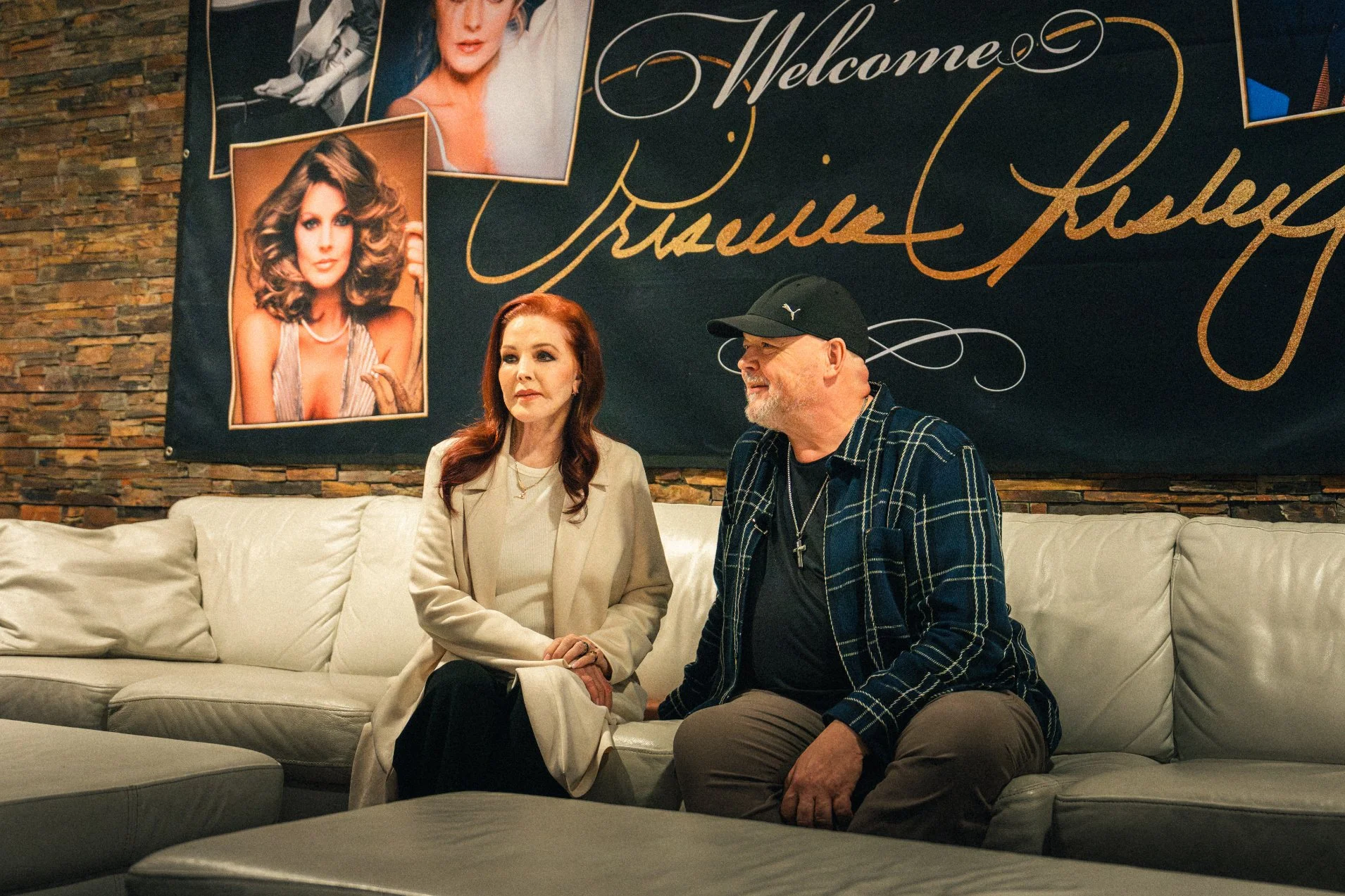
Priscilla Presley arrived in town with her crew and was the headline star of An Evening with Priscilla Presley at Vaerket cultural centre in the heart of Randers. During the remainder of her five-day stay in town, Henrik Knudsen had plenty of opportunity to spend time with the woman who is herself part of the Elvis legend, the mother of his only child, Lisa Marie Presley, and for decades a devoted custodian of the rock icon’s legacy and undying fame.
‘It was an absolutely incredible experience. I had assumed that I would probably have to take her out to the finest restaurants in town. But when we had lunch together in the diner on the very first day, she asked, ‘Can we please eat here every day while I am here?’ That is how much she liked it here.’
Henrik Knudsen was honoured as well as deeply touched by this. Suddenly, one of the most significant figures in Elvis’ life had become part of Memphis Mansion’s own story.
‘Priscilla was hugely impressed by the collection and by what we have created here. That, I must say, was the ultimate seal of approval.’
The dark side of fame
The two had long conversations, and Priscilla Presley generously shared her memories. She spoke about fame and its darker side. She talked openly about her grief and devastating losses – losing both Elvis, Lisa Marie, as well as her grandson Benjamin Keough – and about a life in which the lines between the public and the private moments are inextricably blurred.
‘She leads a five-star life, with people taking care of everything for her, and she has access to places the rest of us would never be invited into. And yet it is a fact that she has had to deal with tremendous hardship and grief. In my conversations with her, I saw someone who was genuinely present and refreshingly down-to-earth. She is tough – and seriously cool.’
»Imagine that I have created something so interesting that there are people who are determined to experience it before they die.«
— Henrik Knudsen, Museum Director at Graceland
By now, Henrik Knudsen has become quite the celebrity himself – even being made an honorary citizen of Tennessee. He goes on telling stories about the famous people he has met and befriended over the years, including Michael Poulsen, the celebrated Elvis fan and frontman of Danish rock and metal band Volbeat, when a German woman politely interrupts.
She holds out her phone and asks if Henrik Knudsen is the man in the photograph.
He confirms that it is in fact him. The woman then passes on a final greeting from a mutual friend from the German city of Kiel, who has sadly passed away very recently. Henrik Knudsen thanks her and later explains the story behind the encounter.
‘When Elvis was stationed as a soldier in Germany in the late 1950s, Klaus played truant for an entire year. He passed his days just waiting around for Elvis and collected a great many autographs. He stayed a huge fan all throughout his life and has visited here several times.’
One last wish
The news of his friend’s passing has Henrik Knudsen think of a more sad side of things he engage in. From time to time, the Memphis Mansion welcomes Elvis fans who unfortunately do not have long left to live.
»I am Deeply, Deeply Grateful to Elvis.«
— Henrik Knudsen, Museum Director at Graceland
‘The final wish of these terminally ill patients is to visit our museum. Of course, we are more than happy to make that possible. They may come in a wheelchair accompanied by a nurse, and we can welcome them at the museum outside normal hours if necessary. They are more than welcome,’ says Henrik Knudsen, who greatly values these very special visits and is always happy to make himself available for a personal tour.
‘Imagine that I have created something so interesting that there are people who are determined to experience it before they die.’
It has been half a century since Elvis Presley passed away. But The King’s legacy lives on. In Randers, too, where his story has indeed found a very special home.
‘Elvis has given the world so much. He is also the reason that it has been possible for me to make a living from my hobby for so many years. I am deeply, deeply grateful to Elvis.’
Five fun facts
Henrik Knudsen:
- has visited the US more than 150 times
- has visited Greenland more than 100 times
- operates the radio station Always Elvis, playing talks and the legendary Elvis music 24/7
- has had an exact replica of Elvis’ 485-square-foot childhood home built on the museum grounds
- has more Elvis effects in his private home than displayed in the entire exhibit, along with a 1,400-square-foot storage area.